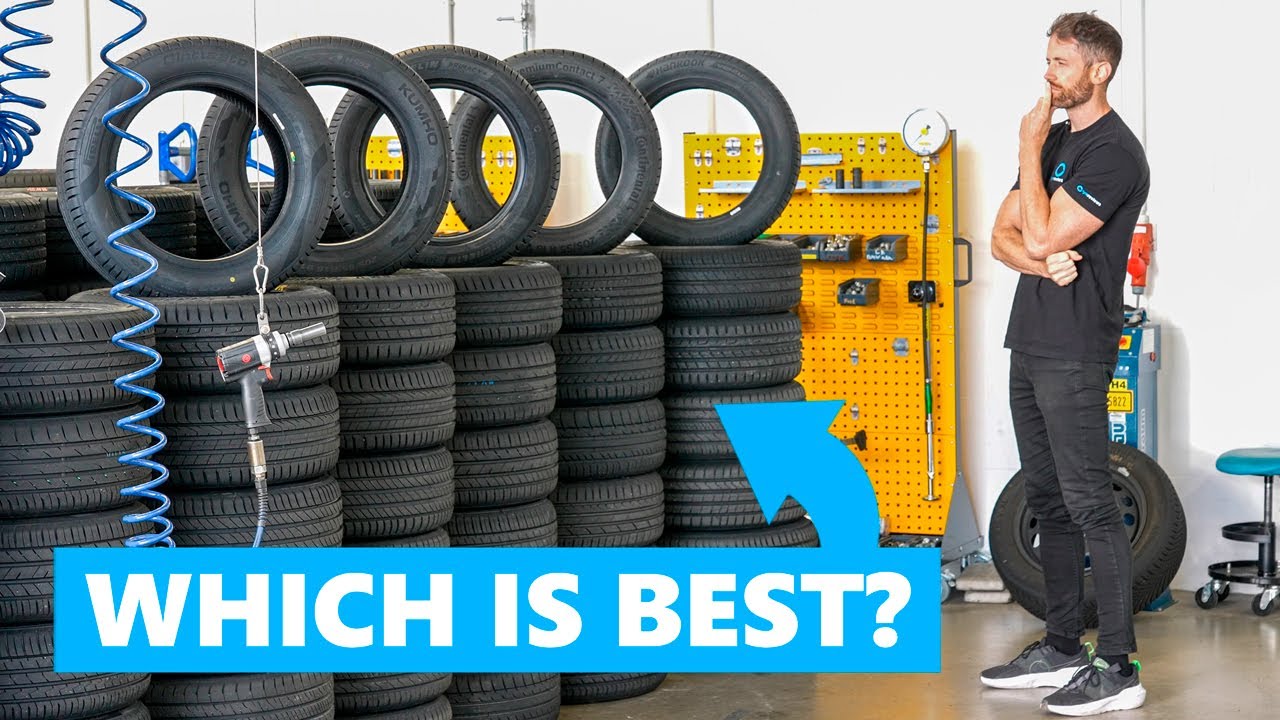
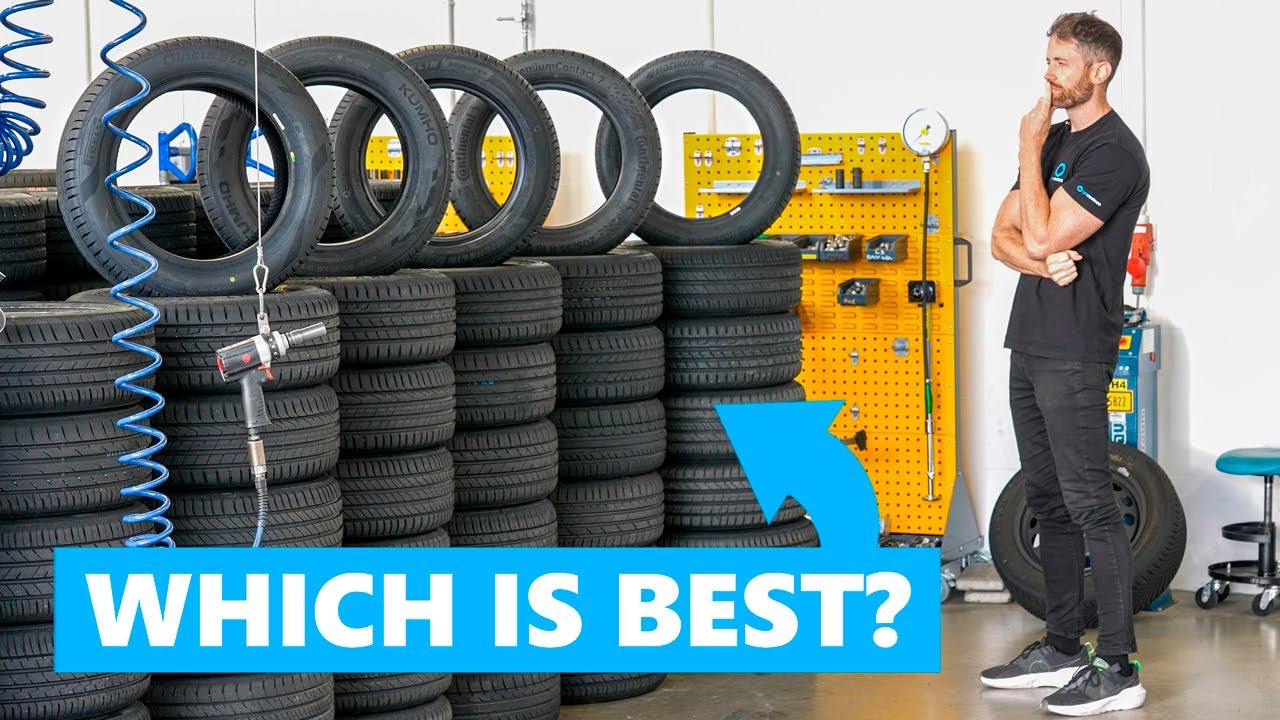
In this test, we'll be finding out what the best premium touring summer tyres on the market are!
I'm going to try and keep this as condensed as I possibly can as we have 13 sets of tyres in this test including the newest and best from Continental, Michelin, Hankook, Pirelli, Bridgestone, Vredestein, Kumho, Toyo, Nankang and more! This should also be the world's first test of the Continental PremiumContact 7!
So what are we testing? Premium touring tyres are also called comfort bias tyres, or normal tyres, or high performance tyres, but whatever you call them, they're the tyres most people use day to day on their normal, non sports car, vehicles. They focus on high levels of safety in the dry and wet, good levels of comfort, low noise, and low energy use to save you money at the pumps, or extend your battery range. In fact, while none of these tyres are EV specific, some of them are marked "EV ready" meaning they've been designed with both internal combustion and electric vehicles in mind.
Testing Methodology
Test Driver
Jonathan Benson
Tyre Size
205/55 R16
Test Location
Professional Proving Ground
Test Year
2023
Tyres Tested
13
Show full testing methodologyHide methodology
Every tyre is tested using calibrated instrumented measurement and structured subjective assessment. Reference tyres are retested throughout each session to correct for changing conditions, ensuring fair, repeatable comparisons. Multiple reference sets are used where needed so that control tyre wear does not affect accuracy.
We use professional-grade testing equipment including GPS data loggers, accelerometers, and calibrated microphones. All tyres are broken in and conditioned before testing begins. For full details on our equipment, preparation process, and calibration procedures, see our complete testing methodology.
Categories Tested
Dry Braking
For dry braking, I drive the test vehicle at an entry speed of 110 km/h and apply full braking effort to a standstill with ABS active on clean, dry asphalt. I typically use an 100–5 km/h measurement window. My standard programme is five runs per tyre set where possible, although the sequence can extend to as many as fifteen runs if conditions and tyre category justify it. I analyse the full set of runs and discard statistical outliers before averaging. Reference tyres are run repeatedly throughout the session to correct for changing conditions.
Dry Handling
For dry handling, I drive at the limit of adhesion around a dedicated handling circuit with ESC disabled where possible so I can assess the tyre's natural balance, transient response, and limit behaviour without electronic intervention masking the result. I usually complete between two and five timed laps per tyre set, depending on the circuit, tyre type, and consistency of conditions. I exclude laps affected by clear driver error or obvious environmental inconsistency. Control runs are carried out frequently throughout the session, and I often use multiple sets of control tyres so that wear on the references does not become a meaningful variable. For more track-focused products, I also do endurance testing, which is a set number of laps at race pace to determine tire wear patterns and heat resistance over longer driving.
Subj. Dry Handling
Objective data is only part of the picture, so I also carry out a structured subjective handling assessment at the limit of adhesion on a dedicated dry handling circuit. I score steering precision, steering response, turn-in behaviour, mid-corner balance, corner-exit traction, breakaway characteristics, and overall confidence using a standardised 1–10 scale used consistently across my testing. The final assessment combines numeric scoring with written technical commentary. I complete familiarisation laps on the control tyre before evaluating each candidate.
Wet Braking
For wet braking, I drive the test vehicle at an entry speed of 88 km/h and apply full braking effort to a standstill with ABS active on an asphalt surface with a controlled water film. I typically use an 80–5 km/h measurement window to isolate tyre performance from variability in the initial brake application. My standard programme is eight runs per tyre set where possible, although the sequence can extend to as many as fifteen runs if conditions and tyre category justify it. I analyse the full set of runs and discard statistical outliers before averaging. To correct for changing conditions, I run reference tyres repeatedly throughout the session — in wet testing, typically every three candidate test sets.
Wet Handling
For wet handling, I drive at the limit of adhesion around a dedicated handling circuit. I generally use specialist wet circuits with kerb-watering systems designed to maintain a consistent surface condition. ESC is disabled where possible so I can assess the tyre's natural balance, transient response, and limit behaviour without electronic intervention masking the result. I usually complete between two and five timed laps per tyre set, depending on the circuit, tyre type, and consistency of conditions. I exclude laps affected by clear driver error or obvious environmental inconsistency. Control runs are carried out frequently throughout the session, and I often use multiple sets of control tyres so that wear on the references does not become a meaningful variable.
Subj. Wet Handling
Objective data is only part of the picture, so I also carry out a structured subjective handling assessment at the limit of adhesion on a dedicated wet handling circuit. I score steering precision, steering response, turn-in behaviour, mid-corner balance, aquaplaning resistance, breakaway characteristics, and overall confidence using a standardised 1–10 scale used consistently across my testing. The final assessment combines numeric scoring with written technical commentary. I complete familiarisation laps on the control tyre before evaluating each candidate.
Wet Circle
For wet lateral grip testing, I use a circular track of fixed radius, typically between 30 and 50 metres, broadly aligned with ISO 4138 principles. The surface is wetted in a controlled and repeatable manner. I progressively increase speed until the maximum sustainable cornering speed is reached. I normally record multiple laps in both clockwise and counterclockwise directions to reduce the influence of camber, banking, or directional track bias. I then calculate average lateral acceleration and compare the result with the reference tyre.
Straight Aqua
To measure straight-line aquaplaning resistance, I drive one side of the vehicle through a water trough of controlled depth, typically around 7 mm, while the opposite side remains on dry pavement. I enter at a fixed speed and then accelerate progressively. I define aquaplaning onset as the point at which the wheel travelling through the water exceeds a specified slip threshold relative to the dry-side reference wheel. I usually perform four runs per tyre set and average the valid results.
Curved Aquaplaning
For curved aquaplaning, I use a circular track, typically around 100 metres in diameter, with a flooded arc of controlled water depth, usually about 7 mm. The vehicle is instrumented with GPS telemetry and a tri-axial accelerometer. I drive through the flooded section at progressively increasing speed, typically in 5 km/h increments, and record the minimum sustained lateral acceleration at each step. The test continues until lateral acceleration collapses, indicating complete aquaplaning. The result is expressed as remaining lateral acceleration in m/s² as speed rises.
Subj. Comfort
To assess comfort, I drive on a wide range of road surfaces (often dedicated comfort tracks at test facilities) at speeds from 50 to 120 km/h, including smooth motorway, coarse surfaces, expansion joints, broken pavement, and sharp-edged obstacles. I evaluate primary ride quality, secondary ride quality, impact harshness, seat-transmitted vibration, and the tyre's ability to absorb sharp inputs. Ratings are assigned on a 1–10 scale relative to the reference tyre.
Noise
I measure external pass-by noise in accordance with UNECE Regulation 117 and ISO 13325 using the coast-by method on a compliant test surface. Calibrated microphones are positioned beside the test lane, and the vehicle coasts through the measurement zone under controlled conditions. I record the maximum A-weighted sound pressure level in dB(A), complete multiple runs over the relevant speed range, and normalise the result to the reference speed required by the procedure.
Rolling Resistance
Rolling resistance is measured under controlled laboratory conditions in accordance with ISO 28580 and UNECE Regulation 117 Annex 6. The tyre is mounted on a test wheel and loaded against a large-diameter steel drum. After thermal stabilisation at the prescribed test speed, rolling resistance force is measured at the spindle and corrected according to the relevant procedure. The result is expressed as rolling resistance coefficient, typically in kg/tonne.
How each category is weighted in the overall score:
Dry35%
Dry Braking45%
Dry Handling45%
Subj. Dry Handling10%
Wet50%
Wet Braking40%
Wet Handling35%
Subj. Wet Handling10%
Wet Circle5%
Straight Aqua5%
Curved Aquaplaning5%
Comfort5%
Subj. Comfort50%
Noise50%
Value10%
Rolling Resistance100%
Wet
Wet handling is both very important, and should be where premium tyres really make the difference, and once again this has been the case.
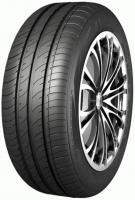
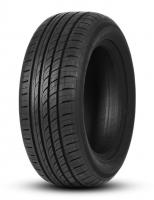
The cheapest tyre on test, the Doublecoin, was a disaster in terms of grip and steering and feedback. The Nankang was also pretty bad, it felt ok at first, and certainly had more grip than the Doublecoin, but there was a lot more oversteer with this tyre than any other tyre. It always amazes me how much a tyre can change the balance of a vehicle, we have tyres in this group which give huge amounts of understeer, all the way to oversteer at every turn, all on a 1.5 litre basic FWD Golf!
Now those two are out of the way, everything else ranges from good to excellent for both grip and subjective handling.
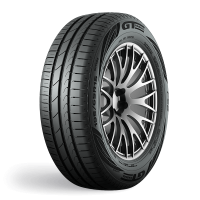
The GT Radial might not have been the quickest of the group, but subjectively it was up there with lovely steering and a nice predictable balance.
In the battle of the old school midrange brands, which i think of as Falken, Kumho, Toyo, Vredestein, Vredestein was the best as it was just a tenth of the very best round the lap and had a huge grip advantage when driving, even if the handling was a little numb. It wasn't the most fun to drive though, of the three in the wet, the most fun was the Toyo.
Hankook and Bridgestone finished close on time, but felt quite different to drive. The Hankook was enjoyable and predictable, but it just picked up a bit too much mid corner understeer, but the Bridgestone wasn't really an enjoyable tyre to drive, good grip but just a lot of poorly communicated understeer mid corner. But understeer is safe, and is the balance the Michelin subscribes to too.
Of the remaining three tyres we've not talked about, the Goodyear felt it had quite a lot of sidewall deflection on initial turn but the grip built up nicely and there was lots of grip from the front axle which made for a quick tyre. The Pirelli and the new Continental were some of the most dynamic, fun, and the fastest.
This is particularly good news for the new Continental as the previous tyre, the PremiumContact 6 was always one of the best in the dry, but in my tests I never got on with it in the wet, so good job Continental on the new product, but also you have to be impressed by the Pirelli and Goodyear, which aren't the youngest tyres anymore but still performing very well, and of course the outstanding grip of the Vredestein.
Wet Handling
Spread: 11.46 s (13.5%)|Avg: 87.03 s
Wet handling time in seconds (Lower is better)
Goodyear EfficientGrip Performance
84.81 s
Continental PremiumContact 7
84.85 s
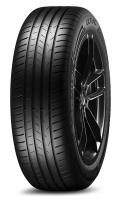
Vredestein Ultrac
84.91 s
Pirelli Cinturato P7 C2
85.31 s
Michelin Primacy 4 Plus
85.72 s
Bridgestone Turanza T005
86.21 s
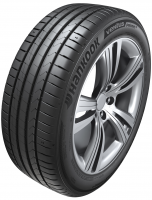
Hankook Ventus Prime 4
86.47 s
Falken ZIEX ZE310 EcoRun
86.58 s
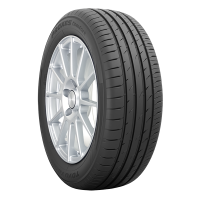
Toyo Proxes Comfort
86.67 s
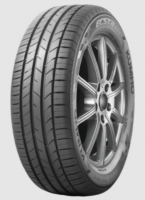
Kumho Ecsta HS52
87.00 s
GT Radial FE2
87.27 s
Nankang Econex NA1
89.36 s
Double Coin DC99
96.27 s
Continental had a small lead over the Michelin and Pirelli during the wet braking tests.
Wet Braking
Spread: 14.46 M (45.8%)|Avg: 35.75 M
Wet braking in meters (80 - 5 km/h) (Lower is better)
Wet Braking: Safety Impact: Best vs Worst Tyre
The impressive Vredestein Ultrac was the best tyre in straight aquaplaning, closely followed by the Falken and Michelin. The curved aquaplaning results can be found at the bottom of the page.
Straight Aqua
Spread: 16.23 Km/H (20.1%)|Avg: 74.94 Km/H
Float Speed in Km/H (Higher is better)
Vredestein Ultrac
80.78 Km/H
Falken ZIEX ZE310 EcoRun
78.92 Km/H
Michelin Primacy 4 Plus
78.18 Km/H
Kumho Ecsta HS52
76.18 Km/H
Bridgestone Turanza T005
75.47 Km/H
Pirelli Cinturato P7 C2
75.33 Km/H
Goodyear EfficientGrip Performance
74.98 Km/H
Continental PremiumContact 7
74.91 Km/H
Toyo Proxes Comfort
74.33 Km/H
Nankang Econex NA1
74.13 Km/H
Hankook Ventus Prime 4
73.60 Km/H
GT Radial FE2
72.92 Km/H
Double Coin DC99
64.55 Km/H
Dry
Naturally dry handling isn't a key factor for these tyres, and given it's quite a short course and the Golf doesn't have a huge amount of power, the times are very close. Subjectively, there are more differences.
Each set of tyres was tested below the limit for steering response and linearity, and put through multiple aggressive lane change maneuvers to test the stability of the tyres in emergency situations, and of course around the handling lap. The good news is that apart from the Doublecoin and possibly the Nankang, all the tyres passed the lane change test with flying colors. The Doublecoin was a total mess all round, and the Nankang just had a little too much oversteer.
If we cross reference dry braking and dry handling, overall the Continental had a small grip lead in the dry, followed by Bridgestone, Kumho, Pirelli and Hankook.
As for the balance and driveability of the tyres, well that's a bit more of a tricky as a lot of them are very similar, but there are still some standouts.
If you want a cheap 16" track day tyre the Nankang offers good grip, and while it had too much oversteer for perhaps the ideal balance on the road, it was a fun challenge on track.
Like in the wet the GT Radial was very good dynamically, even if it couldn't match the fastest in terms of grip, and the Kumho and Pirelli were really really good all round. But, by the smallest of margins, I'm happy to report that the Continental PremiumContact 7 was once again my favorite in the dry as it had the crispest steering, the steering built up forces beautifully and it was of the tyres you really enjoyed driving.
Dry Handling
Spread: 1.81 s (3.5%)|Avg: 52.20 s
Dry handling time in seconds (Lower is better)
Kumho Ecsta HS52
51.58 s
Continental PremiumContact 7
51.73 s
Hankook Ventus Prime 4
51.78 s
Goodyear EfficientGrip Performance
51.85 s
Falken ZIEX ZE310 EcoRun
52.04 s
GT Radial FE2
52.16 s
Nankang Econex NA1
52.23 s
Pirelli Cinturato P7 C2
52.26 s
Toyo Proxes Comfort
52.28 s
Bridgestone Turanza T005
52.36 s
Vredestein Ultrac
52.40 s
Michelin Primacy 4 Plus
52.60 s
Double Coin DC99
53.39 s
Dry Braking
Spread: 4.35 M (12.3%)|Avg: 36.52 M
Dry braking in meters (100 - 5 km/h) (Lower is better)
Dry Braking: Safety Impact: Best vs Worst Tyre
Environment
The rolling resistance, which is how much the tyre impacts your energy or fuel use, was a huge win for the Bridgestone Turanza T005 - it was over 10% better than the next best tyre. Given how well it performed in all other categories, this is a very impressive combination of abilities. Goodyear placed second with the EfficientGrip Performance 2 living up to its name, and Toyo was third.
Rolling Resistance
Spread: 2.42 kg / t (35.8%)|Avg: 8.27 kg / t
Rolling resistance in kg t (Lower is better)
Bridgestone Turanza T005
6.76 kg / t
Goodyear EfficientGrip Performance
7.52 kg / t
Toyo Proxes Comfort
7.69 kg / t
Pirelli Cinturato P7 C2
8.22 kg / t
Michelin Primacy 4 Plus
8.24 kg / t
GT Radial FE2
8.34 kg / t
Hankook Ventus Prime 4
8.36 kg / t
Continental PremiumContact 7
8.38 kg / t
Kumho Ecsta HS52
8.48 kg / t
Double Coin DC99
8.63 kg / t
Falken ZIEX ZE310 EcoRun
8.72 kg / t
Vredestein Ultrac
9.02 kg / t
Nankang Econex NA1
9.18 kg / t
19,000 km
£1.45/L
8.0 L/100km
--
Annual Difference
--
Lifetime Savings
--
Extra Fuel/Energy
--
Extra CO2
Estimates based on typical driving conditions. Rolling resistance accounts for approximately 20% of IC vehicle fuel consumption and 25% of EV energy consumption. Actual savings vary based on driving style, vehicle weight, road conditions, and tyre age. For comparative purposes only. Lifetime savings based on a 40,000km / 25,000 mile tread life.
Noise and comfort was, as usual, very close. The budget tyre was actually the quietest on test with the lowest passby noise, but in the car it was less refined and the least comfortable of the group. While all the other tyres were incredibly close, if noise and comfort is really your thing, the Michelin Primacy 4+ or Pirelli Cinturato P7 C2 have the smallest of edges over the field in my opinion.
Noise
Spread: 2.60 dB (3.7%)|Avg: 71.42 dB
External noise in dB (Lower is better)
Double Coin DC99
70.20 dB
Michelin Primacy 4 Plus
70.30 dB
Pirelli Cinturato P7 C2
70.40 dB
Toyo Proxes Comfort
70.70 dB
Goodyear EfficientGrip Performance
70.80 dB
Kumho Ecsta HS52
71.30 dB
Falken ZIEX ZE310 EcoRun
71.60 dB
GT Radial FE2
71.80 dB
Nankang Econex NA1
71.90 dB
Vredestein Ultrac
72.00 dB
Continental PremiumContact 7
72.20 dB
Bridgestone Turanza T005
72.40 dB
Hankook Ventus Prime 4
72.80 dB
The Doublecoin was the cheapest tyre on test and the new Continental the most expensive.
Highest level of wet grip overall, clear lead in wet braking with joint fastest wet handling, shortest dry braking and best dry handling.
Average rolling resistance, average aquaplaning resistance, increased external noise.
Once again Continental have dropped a new tyre to the market, and seriously moved the game on, most noticeably in the wet. Last year it was the SportContact 7, this year it's the PremiumContact 7.
This tyre had a huge lead in wet braking, was joint fastest around wet handling, and had the fastest wet circle lap. Thankfully, it also kept most of the dry handling character I loved of the PremiumContact 6 and was excellent on the brakes. It wasn't a flawless run, it was pretty average in aquaplaning resistance, external noise and rolling resistance, but the lead it had in the grip categories led it to a dominating win. Yes, it is the newest tyre, and yes, based on this test, its also the best.
Very well balanced tyre, excellent in the dry and wet, low noise, good levels of comfort, low rolling resistance.
Average aquaplaning resistance.
The Pirelli Cinturato P7 has clearly had a significant update since I last tested it, and boy it seems to have worked. While the tyre didn't win any of the twelve categories we score on, its only real weakness was curved aquaplaning. In every other test it was within a few percent of the best, and subjectively a well balanced tyre to drive too. It's a big step forward for the Italian brand, and one I'm happy to highly recommend.
Ok wet grip, good aquaplaning resistance, very good dry braking, extremely low rolling resistance.
Extended wet braking, sluggish dry handling, high external noise.
The Bridgestone lost a few points for wet braking, where it was pretty average, and dry handling where it felt sluggish and down on grip of the best, but this tyre absolutely crushed the rolling resistance test, a full 15% better than the second best tyre, which was the Goodyear. IF you drive an EV or plug in hybrid, this might be the best of the group. Highly recommended.
Very well balanced tyre, excellent wet handling, great dry handling, low noise, good levels of comfort, low rolling resistance.
Slightly average aquaplaning resistance, extended dry braking.
The Goodyear was fantastic in both handling tests, proving to be the joint fastest tyre around wet handling. It was also quiet and comfortable, with a very low rolling resistance. highly recommended, another really well balanced tyre from Goodyear.
Excellent wet grip with very short wet braking and good wet handling, very high aquaplaning resistance, low noise, high levels of comfort, low rolling resistance.
Sluggish dry handling with limited grip in handling and braking.
The Michelin Primacy 4+ wasn't quite as sharp as the Kumho, or any of the tyres around the dry handling lap, but it was excellent in the wet with the second best wet braking and great aquaplaning resistance. It also had a very low noise, great comfort levels and a good rolling resistance.
Short wet braking distances, very good dry handling, short dry braking, ok rolling resistance.
Low aquaplaning resistance, high external noise.
The new Hankook Ventus Prime 4 is very strong in the dry, has good wet handling and braking and reasonable rolling resistance, however it struggled in the deeper water of the aquaplaning tests and had a high external noise
Very good dry handling, short dry braking distances, good aquaplaning resistance, low external noise.
Average wet grip.
The Kumho Ecsta HS52 was the fastest tyre of the group around dry handling, though the margins were so small in the dry it didn't really affect the overall result. It was also very good in dry braking, and had great aquaplaning resistance. A very impressive tyre, and it would have finished higher if it wasn't for a high rolling resistance and average wet performance.
Excellent wet handling, the best aquaplaning resistance on test, good dry braking.
High rolling resistance, high external noise.
One again the Vredestein Ultrac proves to be a wet specialist, having one of the fastest wet handling laps and amongst the best aquaplaning resistance. Unfortunately all that wet performance leaves the Vredestein a little behind the group both in dry and rolling resistance tests
Low noise, very low rolling resistance, good dry braking.
Extended wet braking, average dry and wet handling.
The Toyo Proxes Comfort was a fun tyre to drive in the wet, but sadly had longer wet braking distances than expected. It excelled in the rolling resistance testing, and was good in the dry
Good wet and dry handling with nice subjective balance, low rolling resistance.
Extended wet braking distance, average aquaplaning resistance.
The Gt Radial FE2 in eleventh was another step on from the Nankang. Once again GT have made a tyre that's enjoyable to drive, has good rolling resistance and good levels of comfort, and while it was only a few percent off in dry and wet handling, it did lose out a little in wet braking. But it was still 8 meters better than the budget.
Fun tyre to drive, reasonable grip during dry handling.
Low wet grip overall, long wet and dry braking distance, oversteer balance in the dry and wet which is not ideal for the road, poor aquaplaning resistance, high rolling resistance.
The Nankang Econex NA1 was next up, considerably better than the Doublecoin but perhaps not a tyre that could be classified as great as it had long braking distances in the dry and wet, poor aquaplaning resistance, high noise and a high rolling resistance. It would however make a fun 16" dry weather track tyre if you don't want to fit a semi slick.
Dangerously low levels of grip in the wet with extremely long wet braking distances, worst aquaplaning resistance, very low grip in the dry with poor balance, high rolling resistance.
In last place by a landslide was the Doublecoin DC99. If you want a tyre that is extremely quiet for the people you drive past, this is the tyre for you. For anything else, this is not the tyre as it lost every other category we tested it in, most noticeably taking 14 meters longer to stop the car from just 80kph in the wet. That means when you were stopped on the Continental, you were still doing 45kmh on the Doublecoin. Go run into a tree at 45kmh and tell me that's worth saving a bit of money on your tyres.
Your tests results are comprehensive and explained in detail. However, i would like to see some more details about some other Taiwan and Singapore based tired brands which may be included in tests. I don't know the reason to include Double Coin in tests. I hope that some other china based reputable brands can be included in tests
Often find these test results differ from my own real world experience, for example our F56 Mini is running Khumo HS52 tyres, whereas our F48 X1 came fitted with Bridgestone T001, and the Bridgestone is defiantly an inferior tyre to the Khumo in all aspects, as its prone to tramlining, has minimal wet grip, is overly firm giving an unsettled ride, and often prone to tyre roar. Where the Khumo gives a positive feel through the steering, has good levels of grip in both the dry and wet, gives a comfortable ride, and generally is pretty quiet, depending on how bad the road surface is obviously. Currently have Vredestein Wintrac Pro + fitted to the F48, and again I highly rate them (though yet to try them in snow), which is contrary to their first test result.
Real world experiences can certainly differ from tests, but in this case I think it's down to two reasons. 1) You had the T001, I tested the T005 and 2) and more importantly, that's likely an OE spec T001 which BMW will have requested dry grip and low rolling resistance which really hurts wet grip. And it might be a runflat vs non-runflat thing?
Generally 'softer' summer tyres that perform well in the hotter conditions get harder quicker at low temperatures which is why we see tires like the Potenza Sport performing very well in warm wet braking tests, but people report on the road in cold conditions it can get hard and slippy.
Hi there, I am very confused about which tyres to choose, as I can't find them anywhere comparable in one test. Is it better to take the Falken Ziex ZE310 Ecorun or the Falken Azenis FK520. Tyre dimensions 225/50 R17.
hi there, for my Mazda MX5 (ND latest generation 1500) (195/50/16 84V) - your quick opinion if possible? based on your review I'm hesitating between Goodyear Efficient Grip (since you say they're more engaging than the Michelin Primacy) or the Kumho Ecsta. Seems the Kumhos will wear a lot quicker (43,000km v 66,000km - re. the ADAC Summer test 2023 on your site) - but that's offset by a big price advantage for the Kumhos. You rated the Kumhos 5 points higher on subjective dry handling - so I guess that means your found them more fun?? Any advice or other suggestions? I'm looking for good all round daily driver tyres with nice sharp feel to complement the little Mazda. From your great video I get the feeling these 2 are good options ... thanks for any tips and the great content!
9 out of 13 categories it beats the Bridgestone above it, including all 3 wet categories. (I have also included subjective comfort which scored a draw, but the impression was that Goodyear was more comfortable (and I have found this cf the prev (stiff) Turanza over speed bumps!)
Thank you, I am considering the new Pirelli incarnation. Seems to be doing well. I do like my Goodyears for speedbumps, def more comfy that older Turanza. Do you have a feel for how the Pirelli and T005 are with speedbumps, ie soft or harsher? Thank you!! This may be a "category" you could consider incorporating to tests!
Thank you for the countless hours of work you put in every video ! It really helps! You have many videos on all season tires, can you compare them to summer tires sometimes? At least some quick thoughts? Here in Bulgaria we used to have a lot of snow in the winter, but the last 2 years we had snow 3 times, the worst of which was about 10cm... so I believe we can do with all seasons, instead of summer+winter, but that would depend on the tire qualities.
I drive about 13-17k kilometers per year with summer/winter tires, have 2 kids so I never drive fast or sporty thus I really don't see the appeal in premium tires when I know that they will be trash in 4 years no matter what the tire is...Also - I am (not a complaint to you) really annoyed about the fact that all test on all websites and youtube channels include always the premium brands and on a rare ocasion a mid range tire or two. We all know the premiums are great and all of them will do a fantastic job. However in the mid tier there are corner cuts that lead to bigger differences and if I search for one certain tire on 4-5 websites I always get different comments on in. I can NEVER get the correct info on a mid tier tire because it is either never compared to the same mid tier tires in different tests, or different tests give VERY different results when comparing mostly the same tires. SO... can you try and give your thoughts on more mid range tires please?
Once again - I really appreciate your knowledge and always rely on it! I have been really happy with both my Nokian Wetproof and Hankook icept rs2 - both chosen after your tests came out!
Please can you recommend best tyre set for Mercedes w205 1.6 petrol c-class estate automatic AMG line. Social domestic + pleasure use, c. 8,000 miles per annum. Tyre sizes are Front: 225/45 R18 95Y, Rear: 245/40 ZR18 97Y XL
Based in the UK, I want to make a sound investment in a good all round tyre with low road noise for both summer and winter use. I have been recommended Michelin Primacy 4, is this a good choice or is there better? Thank you in advance for any advice given.
Decided to seek advice from manufacturers and up purchasing 245/40 R18 97YXL MO (Michelin product code 85894) ie Primacy 4 as advised by Michelin and Mercedes. Delighted with the tyres performance and also the excellent fitting service from Costco.
I didn't even know that tire existed until just now! If it's cost effective it might be worth a try, modern Vred products are getting pretty good and wearing well.
I will buy some new tyres for my mitsubishi colt 1.3 95hp 2011 soon. I am using 195/50 r15 turanza t005 for almost 60k kms so far. Decent tyre so far, and hold up nicely, not exceptional though, and rubber is still there, hard compound probably. Tyres have still meat on them. I have bought 16 inch wheels so i am going to need 205/45 r16 tyres. I want the best summer tyre there is. I value short braking distance and handling above everything else. I am thinking of premium contact 6, turanza t005 or t006, hankook prime 4, rainsport 5, advan fleva v701, efficient performance 2, pilot sport 3, ziex ecorun. Weather is warm most times of the year. Summer is very hot 40+ Celsius, winters are mild about 5-15 Celsius. I want the tyre to perform the best on wet and dry and be ready to use instantly without the need for a lot of warming up. My car is light (990kg) and has low power (95hp, 125 nm). I want to be able to rely on it, running an errand around city or fast bends on highway and good breaking in bad pavements or good asphalt too. Safety and ability to handle manoeuvres is my priority. Any specific recommendations? Thanks .
I need advice! So many different reviews. I’m in UK very high motorway mileage in a Corolla Hybrid which has awful tyre noise. 225/45r17 I’m after the quietest cabin and best aquaplaning control. Nothing else matters much. Any suggestions? Thanks
Really enjoyed reading this tyre test. Unfortunately, some of the newer tread patterns (EGP 2 and PC6) are currently unavailable in the 205/55 R16 size in my market. How do their predecessors (EGP and PC5) compare with newer, slightly more expensive tread patterns that are available, such as the T005 and Primacy 4?
The T005 is now old news too, the Turanza 6 is on the market! Actually so is the Primacy 4 as the + was tested here.
The PC5 is very old now, the PC6 was on the market for a long time and the PC7 is now here. If I recall the EGP2 was a bit of a step in wet grip and RR.
New Zealand. The premium manufacturers tend to offer Asian market tread patterns for the most part. These are tyres for which there are many special deals/discounts, but the absence of test data for these tyres makes purchasing quite difficult. Of the tyres I mentioned, do you think either the Primacy 4 or T005 would be the best choice, as the newer (read: less old) tyres?
First of all I would like to thank you for the comments you do on the comfort levels of the tyres. I am very grateful for that as other tyre testers do little to none on that.
Therefore the Conti might be a little bit too uncomfortable and noisy for me and, according to your test, the Pirelli seems to have the best blend of comfort and noise levels on the one hand and steering characterics on the other.
I would like to have two questions on that, as other tests of the Pirelli had rather mixed and not too positive results:
You are talking about a significant update of the Pirelli. Do you have any information by when this update was done (ideally DOT code) in the tested tyre size?
And: how do you make sure that you don't get "selected" tyres for testing?
For those who are interested in experiences on the Michelin PS4 in 205/55R16 I would like to do some comments:
I tried them some time ago because they were promising to have the best handling performance in 205/55R16 you could buy at this point of time.
I found that the grip levels in dry and wet conditions were really great but I was a bit disapointed by the on center steering characterictics: response, precision and force build up were rather average than sporty.
Compared to other UHP tyres in other sizes they are told to be relatively comfortable according to tests I have read, but in 205/55R16 compared to previous HP tyres I found them to be hard. I am talking about the non XL version.
If you were disappointed with the PS4 in 16" you might be disappointed with the Pirelli, which would lean me towards the Conti.
To answer you questions, I don't have a DOT cut off, sorry, Pirelli should be able to give you one though, and we often buy tyres from market, or when we don't we either randomly test them against bought tyres or if the performance seems too good to be true, we test them.
Cheating certainly used to be a thing in testing but now the testers are pretty good at keeping on top of it so no one tries.
Thanks for your recommendiation. Even if you have not done a direct comparison, would you expect the CPC7 to have a softer impact harshness than the PS4 from your, concerning both tyres, experienced point of view?
Do you think it is pretty impossible to find something better in 205/55 or 225/50 R16 91W sizes then Pilot Sport 4? My car (bmw e46) with everything fresh and tight feels numb with PS4, yes the grip is crazy, and it's stable at high speeds, but the steering is just not there.
There is Michelin Primacy 4 for BMW, but I believe non-bmwM homologated tyres not for fun? There is primacy 5, still it is more about ev, mileage, comfort... Maybe PS4 with heavier index 94Y instead of 91W would be better?
There are also Porsche homologated dated tyres: Pilot Exalto 2 (PE2) and Pzero Rosso Asimmetrico. My car is 100-150 kg heavier than those Porsches.
Some say Dunlop SportMaxx RT 1 is not bad or Turanza 005 for BMW, but no friends with those tyres, only 10-year old stories from them.
Thanks for any advice, even if it is "sorry buy 17 inch wheels mate".
At this time I was looking for a more comfort biased tyre and didn't know, if to choose CPC7 or Pirelli P7 C2. Finally I ended up with a Toyo Proxes Comfort. According to a couple of tests its latest spec seemed to be a real step ahead, whereas Toyos usually show a rather mediocre performance. The outcome was a really comfortable tyre with a better on centre feel than the PS4 but of course not the same maximum level of grip in the dry and in the wet. For my needs it was the right choice.
Have you tried the Bridgestone Turanza 6 or Continental UltraContact ? How are they regarding to the Continental PremiumContact 7 ?
What would you choose between Continental UltraContact, PremiumContact 7 and Bridgestone Turanza 6 ? The car in question is a SUV with 4WD ( 4x4 ), dimension in discussion 215/60/R17. Price is not a problem.
The Michelin PS4 deserves joining a test in 205/55 R16. Yes, it's actually available in this size. As well as in 225/50 R16. Classic Porsche sizes indeed! Anyway I bet the PS4 performs MUCH better compared to the Primacy.
Is it your own experience? My car has rather dead steering with 205/55-16 91Y PS4. This is why I actually thought to fit Porsche homologated dated tyres like Pilot Exalto 2 (PE2) and Pzero Rosso Asimmetrico for my BMW.
More interesting and attractive could be Premium7 against Asy6, evo3, Pilot5.....Not against eco and touring tires. They are considered as touring, but they should be not.
Seems most tyres are pretty good overall. I want to maximize internal comfort & noise for my cars, especially rough asfalt in Sweden (Lexus IS 250 and Volvo XC70 both 18") Is the Pirelli P7 or Primacy 4+ best? How come not all premium tyres have acoustic foam?
Falken ZIEX ZE310 EcoRun fared better in your own aquaplaning test (above Goodyear) than ADAC's (below Goodyear) even if both test's had same tyre size 205/55/16?
Falken was 33rd straight 19th curved ADAC's 50 tyre test.
Falken 2nd straight 2nd curved TyreReviews 13 tyre test.
Good observation! I'd need to know ADAC test conditions, but water depth, tyre pressure and vehicle weight can all play parts in aquaplaning performance.
It makes difficult choice for me and my size 195/65/r15 because im hunting for low noise and comfort. Look like primacy 4 is the safest play. Risky ones are BFGoodrich, Falken SN110
Thanks a lot, especially for this platform! But considering my car is a cabrio from 1995 and it tends to rattle and shake on bumps plus wind noise...every small point is important, now I close my eyes on every bump with all-seasoned kumho. Problem with the 310 is poor rolling resistance, no sense saving some money and finally kill our planet with emissions of my old Merc.
Since price and expected mileage from tyre plays no role I decided to go with Primacy 4. `And again as always found some obstacles so I continue to geek.
I know it is super subjective but can you comment about these two (looks like they are the most comfortable and quiet, yet good performers x all-rounders on the market): 2022 ViBilagare Eco vs Normal Tyre Test: "Primacy 4 - Furthermore, the road noise is sensitive to the surface with higher noise on rough asphalt." Meanwhile Goodyear EfficientGrip Performance 2: "Comfort is high with low road noise on rough roads."
P.S. There are 3 different Primacy 4s in size 195/65/15 91h with very different EU Stickers... Normal, S1, S2. Not much info about that mystery so I asked Michelin support and it is actually a real mystery...
"Dear Luther,
The S1 and S2 markings are markings developed in partnership with different car manufacturers to meet their requirements in a very precise manner.
A vehicle, equipped with tyres with this marking, will have certain performance improvements.
As the subject is confidential, we cannot provide any further details on the design developments of the models concerned."
I believe the S oe marking is sometimes used for OE tyres for a OE without their own marking. Thoroughly confusing. If that was the Michelin reply stick with aftermarket.
Thanks again! It’s a great place to discuss with you and other tyre enthusiasts all important nuances.
Can you clear a little bit about rolling resistance? For example falken 310 vs toyo comfort. 8,7 vs 7,7 kg per t. If the car weight 2000kg and equipped with Falkens, is it the same if the same car equipped with Toyo and 2kg dog in the car? Just it?
No, the kg/t is a measure of the drag of the tyre, it would be hard to compare to a load value but it would certainly be much more than a 2kg dog over the life of the tyre.
Kia CEEDs have S2 version from factory R16 or R17. But not all, mine has R16 with hankooks. R18 were Pilot Sport 4 Y XL. At this moment, just R17 Primacy 4 S2 I think until the end of ceed this year.. Those S2 has high noise and probably worse on wet according to what I read on kia forums. The needed low fuel consumption because of eu limits on co2 - that I have from the seller. I do not recommend S2 then, sorry I am late, but maybe someone will be interested in.
I wonder what tyres are better on wet Goodyear Eagle F1 Asymmetric 6 or Continental PremiumContact 7 this is different tyre class but both are on 1st place im not much of a performance driver with my passat alltrack but im always looking for best option, my main expectations are overall wet performance, noise, comfort of driving
For the Goodyear EFGP2, under the 'O' you states: "and had excellent aquaplaning resistance"- however that doesn't seem consistent with the rating numbers given, and various reviews which state aquaplaning isn't 'excellent'!? So I'm not understanding that comment at all?
And another question: my friends know that I'm a tyre geek, so they ask my advice when they need new tyres. They generally are not interested in things like sporty driving. They are interested in costs and safety. I drive on Continental PC6 myself. I love them. I'm happy to see that the PC7 got even better and I would certainly buy the them if I would need new tyres. But in my experience the PC6 perform poorly concerning wear, aquaplaning resistance and comfort. I don't know if there is significant improvement for the PC7 at these domains, so I'll stay a bit reluctant to advise them to people who are not interested in driving pleasure. I tend to advise the Goodyear EG2 because it seems to me that it combines the best TCO (purchase price, wear, fuel consumption) with a safe road behaviour (thus my question below). However, since most of my friends don't want to invest in a set of winter tyres but do keep on driving in our (mild) winter conditions on their summer tyres, I try to steer them towards allseasons. Wouldn't it be possible to include a summer biased allseason tyre in tests like these? I suspect that a tyre like the Vredestein Quatrac would end up quite high in the ranking above. Or wouldn't it?
Thanks for another interesting test! One thing puzzles me: in some tests the Goodyear EG2 is clearly downgraded because of its driving characteristics (diffuse, delayed steering). In these tests it is called somewhat unsafe when handled on the limit (evasive maneuvers). In other tests (same size, load- and speed index) there is no mention at all of this (except for your remark during the wet handling test). What could the explanation be for this? Is the production quality of Goodyear not very stable? I would find that difficult to believe for such a premium manufacturer.
No, definitely not the production quality of Goodyear. It might be that some testers really look for that, I did high speed lane changes with all the tyres and the goodyear was fine. Maybe on a RWD platform or a heavier car it might be different due to the soft sidewalls rolling the rear more.
Yes, I saw your HS lane changes in the video. That's reassuring. If you don't have complaints after that, I'm sure that the tyres do ok. Last summer, I did a 3.000 km trip to the Italian mountains with a BMW 3-series with the Goodyear EG2 on it.
Since I had passengers with me, I didn't explore the limits, but for the swift & smooth driving I had, the EG2's were perfect companions. And I found the car very economical with fuel.
Yes, just ignore it. Unless you want the same tyre as the OEM one. Personally, I would not want it, since most OEM spec tyres have worse performance (worse safety) in favour of lower rolling resistance (lower fuel consumption).
Just buy the right size/speed rating you need without looking for something like MO of whatever the car manufacturer makes of it. That MO could mean that it is a different tyre than the regular one that is beeing tested because of different ingredients. I see no point for that
Nothing new under the sun here. Michelin Primacy is safe and comfortable and not on the sporty side like Pirelli and Conti. But Mich has other more sporty tires. As long as we are driving in traffic and not on a racing track, wet braking distance is crucial and so are also the wet handling, wet braking and aqua planing on USED tires. Durability is important for total economy but tire wear is unfortunately not measured here and neither is thread depth. I've read before that some tires only have 7mm as new. I guess that makes the tire better under testing conditions for dry braking and dry handling.
I agree with you Tom, until accurate wear testing becomes normal I would always go for a Michelin tyre as they tend to last longer than most other brands and they’re the only brand that has specifically designed the tyre to minimise performance degradation as it wears.
Personally, this focus is appreciated as a differentiator from other brands and has earned my loyalty.
I'd check out some of the other tests on the site now. Goodyear and Conti have caught up, and in the case of the PS5 / Asym 6 Goodyear seems to have the edge! I'll be wear testing with a convoy road test this year to finally find out.
Would the PC7 be an okay replacement for a Michelin ps3 (235/40 r18, focus mk4 St line)? Kind of confusing coz until now, the pc6 was tested against the pilot sports, etc.
I have T005 on my 2022 car and can confirm the very low rolling resistance of those tyres. If I'm driving economically, I'm able to drive longer trips with average consumption around 5-5,5 liters / 100 km (43-47 mpg) with a 2.0 liter petrol engine car with weight over 1,7 tons (ca. 3750 lbs). After I swiched for Hankook Kinergy K2S all season tyres for "winter", the economical driving consumption got up by 0,2-0,3 liters instantly, and when I'm in hurry, it's probably much more.
Nice review. I was surprised the new Bridgestone Turanza 6 is not included in this test. I'm waiting for a good test since the press release a few months ago. The T005 is allready a few years old and the successor is available for consumers, but unfortunately not in this tyre size which would explain it's older brother fighting for the family honor. A third place overall for this tyre is also a very nice achievement. With the improvements mentioned in the press release it seems strange not to bring this tyre in this size on the market.
Congratulations for one more massive test! Why was the Continental your worst subjective dry handling tyre? And the subjective wet handling results are a bit awkward (they don't match your comments). Were those just some mistakes you made while introducing data? Anyway, extrapolating from your previous 205/55 R16 summer tyre test, back in 2020, I believe it's fair to extrapolate and say that, compared to the PremiumContact 6, the PremiumContact 7 gained of bit of dry braking (if we ignore Bridgestone's results) and some reasonable dry handling performance; in wet braking lost terrain for some but gained for others, and certainly got a lot more wet handling performance (even subjectively, apparently). It just seems to be noisier than the PC6. I just wonder how much more or less road feedback do I get from the PC7 compared to the PC6. It was just a pity that you didn't test the Michelin Pilot Sport 4! It would be the world's first test in this size, and a great opportunity to compare the two best tyres ever made in the most popular size, and not just for track days!... Keep up with the good work!
The site was having a moment with maths, it's now fixed :)
I think if we'd compared the PC6 to PC7 directly it would have pretty big gains in the wet overall, small gain in comfort and probably a little drop in dry handling.
I believe I will still pick the PC6, but I' ll wait for a few more tests to come up, in the meantime. Dry handling is of the essence for me. Strangely enough, where I live, the PC6 is 10€ more expensive than the PC7 and it has been going like this since the PC7's debut.
Hi. Thank you for the fantastic Test. Can you maybe Test the Best of Ultra High Performance vs the best of Touring Tires in cool and hot conditions (5-10c and 30-40c).
Michelin PS 5 and Primacy 4+ Goodyear AS6 and EffGripP 2 Bridgestone Potenza 4 and T005 Pirelli P Zero (Pz4) and cinturato p7 Continental sport contact 7 and premium contact 7




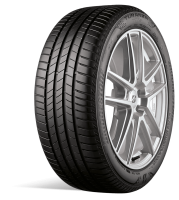
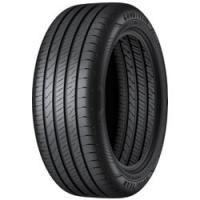
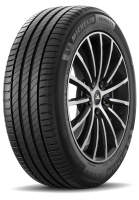
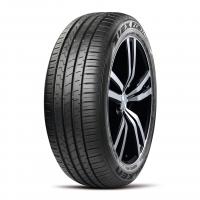
Your tests results are comprehensive and explained in detail. However, i would like to see some more details about some other Taiwan and Singapore based tired brands which may be included in tests. I don't know the reason to include Double Coin in tests. I hope that some other china based reputable brands can be included in tests
https://www.tyrereviews.com... might be interesting for you
One thing I find really odd is that the Conti PC7 won the latest tyre reviews UHP test AND the premium touring test!
On one hand, it beat out the eagle f1 asym 6 and PS5 when judged on UHP standards, but also beat touring tyres when judged on those standards…
@TyreReviews:disqus , does this mean that the PC7 is the best tyre across both segments, regardless if the user is looking for sportiness or comfort?
Often find these test results differ from my own real world experience, for example our F56 Mini is running Khumo HS52 tyres, whereas our F48 X1 came fitted with Bridgestone T001, and the Bridgestone is defiantly an inferior tyre to the Khumo in all aspects, as its prone to tramlining, has minimal wet grip, is overly firm giving an unsettled ride, and often prone to tyre roar. Where the Khumo gives a positive feel through the steering, has good levels of grip in both the dry and wet, gives a comfortable ride, and generally is pretty quiet, depending on how bad the road surface is obviously. Currently have Vredestein Wintrac Pro + fitted to the F48, and again I highly rate them (though yet to try them in snow), which is contrary to their first test result.
Real world experiences can certainly differ from tests, but in this case I think it's down to two reasons. 1) You had the T001, I tested the T005 and 2) and more importantly, that's likely an OE spec T001 which BMW will have requested dry grip and low rolling resistance which really hurts wet grip. And it might be a runflat vs non-runflat thing?
I am curious how would 10 Celsius affect the racking. Would a softer/ better summer tire better at all temperatures for 10, 15 and 20?.
Generally 'softer' summer tyres that perform well in the hotter conditions get harder quicker at low temperatures which is why we see tires like the Potenza Sport performing very well in warm wet braking tests, but people report on the road in cold conditions it can get hard and slippy.
Hi there, I am very confused about which tyres to choose, as I can't find them anywhere comparable in one test. Is it better to take the Falken Ziex ZE310 Ecorun or the Falken Azenis FK520. Tyre dimensions 225/50 R17.
The falken website does a good job of explaining. The short version is the 520 is more sporty and the 320 is a touring tyre.
hi there, for my Mazda MX5 (ND latest generation 1500) (195/50/16 84V) - your quick opinion if possible?
based on your review I'm hesitating between Goodyear Efficient Grip (since you say they're more engaging than the Michelin Primacy) or the Kumho Ecsta. Seems the Kumhos will wear a lot quicker (43,000km v 66,000km - re. the ADAC Summer test 2023 on your site) - but that's offset by a big price advantage for the Kumhos.
You rated the Kumhos 5 points higher on subjective dry handling - so I guess that means your found them more fun??
Any advice or other suggestions?
I'm looking for good all round daily driver tyres with nice sharp feel to complement the little Mazda.
From your great video I get the feeling these 2 are good options ...
thanks for any tips and the great content!
Sorry, just seen this. I answered your email.
Goodyear 4th...?? Bit harsh?
Why d you think that?
pls see above
9 out of 13 categories it beats the Bridgestone above it, including all 3 wet categories. (I have also included subjective comfort which scored a draw, but the impression was that Goodyear was more comfortable (and I have found this cf the prev (stiff) Turanza over speed bumps!)
It was very close between the tyres, I'm sure you could find a score weighting that promotes the GY up which you can play with here:
https://www.tyrereviews.com...
I didn't test wear, if I had the Goodyear would have certainly been ahead.
Thank you, I am considering the new Pirelli incarnation. Seems to be doing well. I do like my Goodyears for speedbumps, def more comfy that older Turanza. Do you have a feel for how the Pirelli and T005 are with speedbumps, ie soft or harsher? Thank you!! This may be a "category" you could consider incorporating to tests!
I don't recall the comfort ratings now but they should be in the video if I tested them. Sometimes I don't have enough time.
Historically the T005 is quite comfortable though this has now been replaced by the Turanza 6.
Thank you for the countless hours of work you put in every video ! It really helps!
You have many videos on all season tires, can you compare them to summer tires sometimes? At least some quick thoughts? Here in Bulgaria we used to have a lot of snow in the winter, but the last 2 years we had snow 3 times, the worst of which was about 10cm... so I believe we can do with all seasons, instead of summer+winter, but that would depend on the tire qualities.
I drive about 13-17k kilometers per year with summer/winter tires, have 2 kids so I never drive fast or sporty thus I really don't see the appeal in premium tires when I know that they will be trash in 4 years no matter what the tire is...Also - I am (not a complaint to you) really annoyed about the fact that all test on all websites and youtube channels include always the premium brands and on a rare ocasion a mid range tire or two. We all know the premiums are great and all of them will do a fantastic job. However in the mid tier there are corner cuts that lead to bigger differences and if I search for one certain tire on 4-5 websites I always get different comments on in. I can NEVER get the correct info on a mid tier tire because it is either never compared to the same mid tier tires in different tests, or different tests give VERY different results when comparing mostly the same tires.
SO... can you try and give your thoughts on more mid range tires please?
Once again - I really appreciate your knowledge and always rely on it! I have been really happy with both my Nokian Wetproof and Hankook icept rs2 - both chosen after your tests came out!
There's usually a named summer tyre in the all season tests for reference, and I have directly compared them a number of times in older videos.
I have a midrange specific test, I suggest you find the ADAC and autobild tests on the site as they start with a huge amount of patterns!
Sadly they pay more attention to external noise as that is on the EU label but the big manufacturers will also spend a lot of time on internal.
It must be variance in test methods, though we usually test our noise to the same standard as the label.
Seems almost impossible to find the right size for my weels, hence what is the best summer tyre for 195/55 R16 87W? Thanks a lot
There's some pretty good choices in your size https://www.tyrereviews.com...
The https://www.tyrereviews.com... is hard to beat for the price.
The start of summer tyres test 2024 in german magazines have started
https://reifenpresse.de/202...
https://reifenpresse.de/202...
I've seen, excited to get them on the site but I'm busy testing at the moment!
No prob, it was just an info :)
Thanks for sharing :) They'll be appearing on the site next week.
Please can you recommend best tyre set for Mercedes w205 1.6 petrol c-class estate automatic AMG line. Social domestic + pleasure use, c. 8,000 miles per annum. Tyre sizes are Front: 225/45 R18 95Y, Rear: 245/40 ZR18 97Y XL
Based in the UK, I want to make a sound investment in a good all round tyre with low road noise for both summer and winter use. I have been recommended Michelin Primacy 4, is this a good choice or is there better? Thank you in advance for any advice given.
Decided to seek advice from manufacturers and up purchasing 245/40 R18 97YXL MO (Michelin product code 85894) ie Primacy 4 as advised by Michelin and Mercedes. Delighted with the tyres performance and also the excellent fitting service from Costco.
Glad you like them :)
Advice for s class 275/35/20 what tyres would you suggest had Flakens and last only 4 months, around 40k miles
You drive 40k miles in 4 months?!
That's a tough size for a long lasting tyre, the conventional wisdom would be to fit whatever Michelin product you can get.
yes chauffeur service, had Yokohama on previous s class and they fab long lasting unfortunately not sure if I will find Yokohama in this size
also thought about Vredestein Ultrac PRO
I didn't even know that tire existed until just now! If it's cost effective it might be worth a try, modern Vred products are getting pretty good and wearing well.
I will buy some new tyres for my mitsubishi colt 1.3 95hp 2011 soon. I am using 195/50 r15 turanza t005 for almost 60k kms so far. Decent tyre so far, and hold up nicely, not exceptional though, and rubber is still there, hard compound probably. Tyres have still meat on them. I have bought 16 inch wheels so i am going to need 205/45 r16 tyres. I want the best summer tyre there is. I value short braking distance and handling above everything else. I am thinking of premium contact 6, turanza t005 or t006, hankook prime 4, rainsport 5, advan fleva v701, efficient performance 2, pilot sport 3, ziex ecorun. Weather is warm most times of the year. Summer is very hot 40+ Celsius, winters are mild about 5-15 Celsius. I want the tyre to perform the best on wet and dry and be ready to use instantly without the need for a lot of warming up. My car is light (990kg) and has low power (95hp, 125 nm). I want to be able to rely on it, running an errand around city or fast bends on highway and good breaking in bad pavements or good asphalt too. Safety and ability to handle manoeuvres is my priority. Any specific recommendations?
Thanks .
In my experience based on that list the Conti would be my choice.
How would you rate the Toyo Proxes Comfort compared to Proxes CF2?
I've not seen any data comparing the two, sorry
I need advice! So many different reviews. I’m in UK very high motorway mileage in a Corolla Hybrid which has awful tyre noise. 225/45r17
I’m after the quietest cabin and best aquaplaning control. Nothing else matters much.
Any suggestions? Thanks
Well, actually, stopping matters as well lol
Uniroyal rainsport 5 is very good in aquaplaning and very comfortable. Bridgestone Turanza T005 will stop you better though.
Thank you, do you think the Turanza T005 is cabin quieter than the Primacy 4+ ?
I can't remember off the top of my head, I'd find tests on the site which have featured both.
Really enjoyed reading this tyre test. Unfortunately, some of the newer tread patterns (EGP 2 and PC6) are currently unavailable in the 205/55 R16 size in my market. How do their predecessors (EGP and PC5) compare with newer, slightly more expensive tread patterns that are available, such as the T005 and Primacy 4?
The T005 is now old news too, the Turanza 6 is on the market! Actually so is the Primacy 4 as the + was tested here.
The PC5 is very old now, the PC6 was on the market for a long time and the PC7 is now here. If I recall the EGP2 was a bit of a step in wet grip and RR.
What market are you in?
New Zealand. The premium manufacturers tend to offer Asian market tread patterns for the most part. These are tyres for which there are many special deals/discounts, but the absence of test data for these tyres makes purchasing quite difficult. Of the tyres I mentioned, do you think either the Primacy 4 or T005 would be the best choice, as the newer (read: less old) tyres?
I would take the Primacy 4 if the price is similar. The T005 is a great tyre and offers better grip, but doesn't last as long.
First of all I would like to thank you for the comments you do on the comfort levels of the tyres. I am very grateful for that as other tyre testers do little to none on that.
Therefore the Conti might be a little bit too uncomfortable and noisy for me and, according to your test, the Pirelli seems to have the best blend of comfort and noise levels on the one hand and steering characterics on the other.
I would like to have two questions on that, as other tests of the Pirelli had rather mixed and not too positive results:
You are talking about a significant update of the Pirelli. Do you have any information by when this update was done (ideally DOT code) in the tested tyre size?
And: how do you make sure that you don't get "selected" tyres for testing?
For those who are interested in experiences on the Michelin PS4 in 205/55R16 I would like to do some comments:
I tried them some time ago because they were promising to have the best handling performance in 205/55R16 you could buy at this point of time.
I found that the grip levels in dry and wet conditions were really great but I was a bit disapointed by the on center steering characterictics: response, precision and force build up were rather average than sporty.
Compared to other UHP tyres in other sizes they are told to be relatively comfortable according to tests I have read, but in 205/55R16 compared to previous HP tyres I found them to be hard. I am talking about the non XL version.
If you were disappointed with the PS4 in 16" you might be disappointed with the Pirelli, which would lean me towards the Conti.
To answer you questions, I don't have a DOT cut off, sorry, Pirelli should be able to give you one though, and we often buy tyres from market, or when we don't we either randomly test them against bought tyres or if the performance seems too good to be true, we test them.
Cheating certainly used to be a thing in testing but now the testers are pretty good at keeping on top of it so no one tries.
Thanks for your recommendiation. Even if you have not done a direct comparison, would you expect the CPC7 to have a softer impact harshness than the PS4 from your, concerning both tyres, experienced point of view?
I think they'd be pretty similar.
Do you think it is pretty impossible to find something better in 205/55 or 225/50 R16 91W sizes then Pilot Sport 4? My car (bmw e46) with everything fresh and tight feels numb with PS4, yes the grip is crazy, and it's stable at high speeds, but the steering is just not there.
There is Michelin Primacy 4 for BMW, but I believe non-bmwM homologated tyres not for fun? There is primacy 5, still it is more about ev, mileage, comfort... Maybe PS4 with heavier index 94Y instead of 91W would be better?
There are also Porsche homologated dated tyres: Pilot Exalto 2 (PE2) and Pzero Rosso Asimmetrico. My car is 100-150 kg heavier than those Porsches.
Some say Dunlop SportMaxx RT 1 is not bad or Turanza 005 for BMW, but no friends with those tyres, only 10-year old stories from them.
Thanks for any advice, even if it is "sorry buy 17 inch wheels mate".
Did you found something better than PS4?
At this time I was looking for a more comfort biased tyre and didn't know, if to choose CPC7 or Pirelli P7 C2. Finally I ended up with a Toyo Proxes Comfort. According to a couple of tests its latest spec seemed to be a real step ahead, whereas Toyos usually show a rather mediocre performance. The outcome was a really comfortable tyre with a better on centre feel than the PS4 but of course not the same maximum level of grip in the dry and in the wet. For my needs it was the right choice.
Thanks a lot. They don't do in my size, I need W speed rating or higher according to local law, because my car has 242 max speed...
Pirelli isn’t Italian, it’s owned by Chemchina, Chinese company obviously.
Imagine if Chemchina wasn't Chinese lol.
Fortunately their new Chinese overlords bought them nearly entirely for the truck tyre business, so Pirelli PCR is still run from Italy :)
Have you tried the Bridgestone Turanza 6 or Continental UltraContact ? How are they regarding to the Continental PremiumContact 7 ?
What would you choose between Continental UltraContact, PremiumContact 7 and Bridgestone Turanza 6 ?
The car in question is a SUV with 4WD ( 4x4 ), dimension in discussion 215/60/R17. Price is not a problem.
I've not tried either, but I believe both have been in tests which can be found on this site :) UC7 and PC7 were both in the ADAC this year.
The Michelin PS4 deserves joining a test in 205/55 R16. Yes, it's actually available in this size. As well as in 225/50 R16. Classic Porsche sizes indeed! Anyway I bet the PS4 performs MUCH better compared to the Primacy.
Is it your own experience? My car has rather dead steering with 205/55-16 91Y PS4. This is why I actually thought to fit Porsche homologated dated tyres like Pilot Exalto 2 (PE2) and Pzero Rosso Asimmetrico for my BMW.
What was the outside temperature for this test?
It should be in the video charts, from memory around 10-14c air. It was tested in October 2022.
More interesting and attractive could be Premium7 against Asy6, evo3, Pilot5.....Not against eco and touring tires. They are considered as touring, but they should be not.
I'll be doing that in may
Seems most tyres are pretty good overall. I want to maximize internal comfort & noise for my cars, especially rough asfalt in Sweden (Lexus IS 250 and Volvo XC70 both 18")
Is the Pirelli P7 or Primacy 4+ best? How come not all premium tyres have acoustic foam?
Likely cost and demand for the foam. I've not really tested these in 18" so would be guessing in your size, hopefully there's other tests on the site
Falken ZIEX ZE310 EcoRun fared better in your own aquaplaning test (above Goodyear) than ADAC's (below Goodyear) even if both test's had same tyre size 205/55/16?
Falken was 33rd straight 19th curved ADAC's 50 tyre test.
Falken 2nd straight 2nd curved TyreReviews 13 tyre test.
Good observation! I'd need to know ADAC test conditions, but water depth, tyre pressure and vehicle weight can all play parts in aquaplaning performance.
Another anomaly with ZE310 is Subj comfort which is most important for me:
2020 - last place
2023 - first place
https://www.tyrereviews.com...
It makes difficult choice for me and my size 195/65/r15 because im hunting for low noise and comfort. Look like primacy 4 is the safest play. Risky ones are BFGoodrich, Falken SN110
thank you for job
I'm pretty confident the 310 is a comfortable tyre, especially in the size you're looking for.
Thanks a lot, especially for this platform! But considering my car is a cabrio from 1995 and it tends to rattle and shake on bumps plus wind noise...every small point is important, now I close my eyes on every bump with all-seasoned kumho. Problem with the 310 is poor rolling resistance, no sense saving some money and finally kill our planet with emissions of my old Merc.
Since price and expected mileage from tyre plays no role I decided to go with Primacy 4. `And again as always found some obstacles so I continue to geek.
I know it is super subjective but can you comment about these two (looks like they are the most comfortable and quiet, yet good performers x all-rounders on the market):
2022 ViBilagare Eco vs Normal Tyre Test:
"Primacy 4 - Furthermore, the road noise is sensitive to the surface with higher noise on rough asphalt."
Meanwhile Goodyear EfficientGrip Performance 2: "Comfort is high with low road noise on rough roads."
P.S. There are 3 different Primacy 4s in size 195/65/15 91h with very different EU Stickers... Normal, S1, S2. Not much info about that mystery so I asked Michelin support and it is actually a real mystery...
"Dear Luther,
The S1 and S2 markings are markings developed in partnership with different car manufacturers to meet their requirements in a very precise manner.
A vehicle, equipped with tyres with this marking, will have certain performance improvements.
As the subject is confidential, we cannot provide any further details on the design developments of the models concerned."
I believe the S oe marking is sometimes used for OE tyres for a OE without their own marking. Thoroughly confusing. If that was the Michelin reply stick with aftermarket.
Thanks again! It’s a great place to discuss with you and other tyre enthusiasts all important nuances.
Can you clear a little bit about rolling resistance? For example falken 310 vs toyo comfort. 8,7 vs 7,7 kg per t. If the car weight 2000kg and equipped with Falkens, is it the same if the same car equipped with Toyo and 2kg dog in the car? Just it?
Thanks
No, the kg/t is a measure of the drag of the tyre, it would be hard to compare to a load value but it would certainly be much more than a 2kg dog over the life of the tyre.
Kia CEEDs have S2 version from factory R16 or R17. But not all, mine has R16 with hankooks. R18 were Pilot Sport 4 Y XL. At this moment, just R17 Primacy 4 S2 I think until the end of ceed this year..
Those S2 has high noise and probably worse on wet according to what I read on kia forums. The needed low fuel consumption because of eu limits on co2 - that I have from the seller. I do not recommend S2 then, sorry I am late, but maybe someone will be interested in.
I wonder what tyres are better on wet Goodyear Eagle F1 Asymmetric 6 or Continental PremiumContact 7 this is different tyre class but both are on 1st place im not much of a performance driver with my passat alltrack but im always looking for best option, my main expectations are overall wet performance, noise, comfort of driving
The answer is already on the site :) https://www.tyrereviews.com...
thank you very much its my favorite tyre test site and YouTube channel, than you for all your work and help with my problem :)
For the Goodyear EFGP2, under the 'O' you states: "and had excellent aquaplaning resistance"- however that doesn't seem consistent with the rating numbers given, and various reviews which state aquaplaning isn't 'excellent'!? So I'm not understanding that comment at all?
Great point well made, not sure how that ended up in there. Now deleted.
And another question: my friends know that I'm a tyre geek, so they ask my advice when they need new tyres. They generally are not interested in things like sporty driving. They are interested in costs and safety. I drive on Continental PC6 myself. I love them. I'm happy to see that the PC7 got even better and I would certainly buy the them if I would need new tyres. But in my experience the PC6 perform poorly concerning wear, aquaplaning resistance and comfort. I don't know if there is significant improvement for the PC7 at these domains, so I'll stay a bit reluctant to advise them to people who are not interested in driving pleasure. I tend to advise the Goodyear EG2 because it seems to me that it combines the best TCO (purchase price, wear, fuel consumption) with a safe road behaviour (thus my question below). However, since most of my friends don't want to invest in a set of winter tyres but do keep on driving in our (mild) winter conditions on their summer tyres, I try to steer them towards allseasons. Wouldn't it be possible to include a summer biased allseason tyre in tests like these? I suspect that a tyre like the Vredestein Quatrac would end up quite high in the ranking above. Or wouldn't it?
This year I'm doing it the other way around, a summer tyre in the all season test. But you might like this.
https://www.tyrereviews.com...
Thanks for another interesting test! One thing puzzles me: in some tests the Goodyear EG2 is clearly downgraded because of its driving characteristics (diffuse, delayed steering). In these tests it is called somewhat unsafe when handled on the limit (evasive maneuvers). In other tests (same size, load- and speed index) there is no mention at all of this (except for your remark during the wet handling test). What could the explanation be for this? Is the production quality of Goodyear not very stable? I would find that difficult to believe for such a premium manufacturer.
No, definitely not the production quality of Goodyear. It might be that some testers really look for that, I did high speed lane changes with all the tyres and the goodyear was fine. Maybe on a RWD platform or a heavier car it might be different due to the soft sidewalls rolling the rear more.
Yes, I saw your HS lane changes in the video. That's reassuring. If you don't have complaints after that, I'm sure that the tyres do ok.
Last summer, I did a 3.000 km trip to the Italian mountains with a BMW 3-series with the Goodyear EG2 on it.
Since I had passengers with me, I didn't explore the limits, but for the swift & smooth driving I had, the EG2's were perfect companions. And I found the car very economical with fuel.
Yes, just ignore it. Unless you want the same tyre as the OEM one. Personally, I would not want it, since most OEM spec tyres have worse performance (worse safety) in favour of lower rolling resistance (lower fuel consumption).
Just buy the right size/speed rating you need without looking for something like MO of whatever the car manufacturer makes of it. That MO could mean that it is a different tyre than the regular one that is beeing tested because of different ingredients. I see no point for that
Nothing new under the sun here. Michelin Primacy is safe and comfortable and not on the sporty side like Pirelli and Conti.
But Mich has other more sporty tires.
As long as we are driving in traffic and not on a racing track, wet braking distance is crucial and so are also the wet handling, wet braking and aqua planing on USED tires.
Durability is important for total economy but tire wear is unfortunately not measured here and neither is thread depth. I've read before that some tires only have 7mm as new. I guess that makes the tire better under testing conditions for dry braking and dry handling.
I agree with you Tom, until accurate wear testing becomes normal I would always go for a Michelin tyre as they tend to last longer than most other brands and they’re the only brand that has specifically designed the tyre to minimise performance degradation as it wears.
Personally, this focus is appreciated as a differentiator from other brands and has earned my loyalty.
I'd check out some of the other tests on the site now. Goodyear and Conti have caught up, and in the case of the PS5 / Asym 6 Goodyear seems to have the edge! I'll be wear testing with a convoy road test this year to finally find out.
Would the PC7 be an okay replacement for a Michelin ps3 (235/40 r18, focus mk4 St line)? Kind of confusing coz until now, the pc6 was tested against the pilot sports, etc.
Certainly would be. It replaces the PC6 so still tests against those in 18"
I have T005 on my 2022 car and can confirm the very low rolling resistance of those tyres. If I'm driving economically, I'm able to drive longer trips with average consumption around 5-5,5 liters / 100 km (43-47 mpg) with a 2.0 liter petrol engine car with weight over 1,7 tons (ca. 3750 lbs). After I swiched for Hankook Kinergy K2S all season tyres for "winter", the economical driving consumption got up by 0,2-0,3 liters instantly, and when I'm in hurry, it's probably much more.
Glad they're working for you :)
Nice review. I was surprised the new Bridgestone Turanza 6 is not included in this test. I'm waiting for a good test since the press release a few months ago. The T005 is allready a few years old and the successor is available for consumers, but unfortunately not in this tyre size which would explain it's older brother fighting for the family honor. A third place overall for this tyre is also a very nice achievement. With the improvements mentioned in the press release it seems strange not to bring this tyre in this size on the market.
Due to when we tested (October last year) the T6 wasn't available, I certainly tried. Hopefully there will be some tests popping up on the site soon.
Congratulations for one more massive test!
Why was the Continental your worst subjective dry handling tyre? And the subjective wet handling results are a bit awkward (they don't match your comments). Were those just some mistakes you made while introducing data?
Anyway, extrapolating from your previous 205/55 R16 summer tyre test, back in 2020, I believe it's fair to extrapolate and say that, compared to the PremiumContact 6, the PremiumContact 7 gained of bit of dry braking (if we ignore Bridgestone's results) and some reasonable dry handling performance; in wet braking lost terrain for some but gained for others, and certainly got a lot more wet handling performance (even subjectively, apparently). It just seems to be noisier than the PC6. I just wonder how much more or less road feedback do I get from the PC7 compared to the PC6.
It was just a pity that you didn't test the Michelin Pilot Sport 4! It would be the world's first test in this size, and a great opportunity to compare the two best tyres ever made in the most popular size, and not just for track days!... Keep up with the good work!
The site was having a moment with maths, it's now fixed :)
I think if we'd compared the PC6 to PC7 directly it would have pretty big gains in the wet overall, small gain in comfort and probably a little drop in dry handling.
Exactly what I needed to know for my next tyre purchase, within a few months! Thanks a lot!
Which one will you be getting?
I believe I will still pick the PC6, but I' ll wait for a few more tests to come up, in the meantime. Dry handling is of the essence for me. Strangely enough, where I live, the PC6 is 10€ more expensive than the PC7 and it has been going like this since the PC7's debut.
Small typo in the 3rd place text:
"where is was pretty average"
Thank you :) English isn't my strong point.
Hi. Thank you for the fantastic Test. Can you maybe Test the Best of Ultra High Performance vs the best of Touring Tires in cool and hot conditions (5-10c and 30-40c).
Michelin PS 5 and Primacy 4+
Goodyear AS6 and EffGripP 2
Bridgestone Potenza 4 and T005
Pirelli P Zero (Pz4) and cinturato p7
Continental sport contact 7 and premium contact 7
Working on something along these lines :)
Care to expand on the low subjective handling scores of the PC7? (A surprise given your remarks in the video.)
The website seems to be having a moment with maths, if you look at the overview table it's correct: https://www.tyrereviews.com...
I'll work on a fix, thanks for pointing it out.
Should be fixed now :)