For the 2023/24 season, Tyre Reviews has tested ten of the very best all season tyres available. Following on from last years test in 17", this year we focused on the smaller 15" wheel size, and included summer and winter reference tyres to highlight exactly what the best all season tyre is for your driving, and where summer and winter tyres fit into the overall performance.
As always, this is one of the most in depth all season tyre tests on the internet, and each of the ten sets of tyres are tested in the dry, wet and snow, plus the tyres subjective noise and comfort and rolling resistance (energy use) is also tested.
As everyone's driving situation is a little different, you can also adjust the overall score weighting of the test below so you really can find the perfect tyre for your own driving needs.
Last year the Michelin CrossClimate 2 won for the second year in a row. Can it make it three of three?
Testing Methodology
Test Driver
Jonathan Benson
Tyre Size
195/65 R15
Test Location
Professional Proving Ground
Test Year
2023
Tyres Tested
10
Show full testing methodologyHide methodology
Every tyre is tested using calibrated instrumented measurement and structured subjective assessment. Reference tyres are retested throughout each session to correct for changing conditions, ensuring fair, repeatable comparisons. Multiple reference sets are used where needed so that control tyre wear does not affect accuracy.
We use professional-grade testing equipment including GPS data loggers, accelerometers, and calibrated microphones. All tyres are broken in and conditioned before testing begins. For full details on our equipment, preparation process, and calibration procedures, see our complete testing methodology.
Categories Tested
Dry Braking
For dry braking, I drive the test vehicle at an entry speed of 110 km/h and apply full braking effort to a standstill with ABS active on clean, dry asphalt. I typically use an 100–5 km/h measurement window. My standard programme is five runs per tyre set where possible, although the sequence can extend to as many as fifteen runs if conditions and tyre category justify it. I analyse the full set of runs and discard statistical outliers before averaging. Reference tyres are run repeatedly throughout the session to correct for changing conditions.
Dry Handling
For dry handling, I drive at the limit of adhesion around a dedicated handling circuit with ESC disabled where possible so I can assess the tyre's natural balance, transient response, and limit behaviour without electronic intervention masking the result. I usually complete between two and five timed laps per tyre set, depending on the circuit, tyre type, and consistency of conditions. I exclude laps affected by clear driver error or obvious environmental inconsistency. Control runs are carried out frequently throughout the session, and I often use multiple sets of control tyres so that wear on the references does not become a meaningful variable. For more track-focused products, I also do endurance testing, which is a set number of laps at race pace to determine tire wear patterns and heat resistance over longer driving.
Subj. Dry Handling
Objective data is only part of the picture, so I also carry out a structured subjective handling assessment at the limit of adhesion on a dedicated dry handling circuit. I score steering precision, steering response, turn-in behaviour, mid-corner balance, corner-exit traction, breakaway characteristics, and overall confidence using a standardised 1–10 scale used consistently across my testing. The final assessment combines numeric scoring with written technical commentary. I complete familiarisation laps on the control tyre before evaluating each candidate.
Wet Braking
For wet braking, I drive the test vehicle at an entry speed of 88 km/h and apply full braking effort to a standstill with ABS active on an asphalt surface with a controlled water film. I typically use an 80–5 km/h measurement window to isolate tyre performance from variability in the initial brake application. My standard programme is eight runs per tyre set where possible, although the sequence can extend to as many as fifteen runs if conditions and tyre category justify it. I analyse the full set of runs and discard statistical outliers before averaging. To correct for changing conditions, I run reference tyres repeatedly throughout the session — in wet testing, typically every three candidate test sets.
Wet Handling
For wet handling, I drive at the limit of adhesion around a dedicated handling circuit. I generally use specialist wet circuits with kerb-watering systems designed to maintain a consistent surface condition. ESC is disabled where possible so I can assess the tyre's natural balance, transient response, and limit behaviour without electronic intervention masking the result. I usually complete between two and five timed laps per tyre set, depending on the circuit, tyre type, and consistency of conditions. I exclude laps affected by clear driver error or obvious environmental inconsistency. Control runs are carried out frequently throughout the session, and I often use multiple sets of control tyres so that wear on the references does not become a meaningful variable.
Subj. Wet Handling
Objective data is only part of the picture, so I also carry out a structured subjective handling assessment at the limit of adhesion on a dedicated wet handling circuit. I score steering precision, steering response, turn-in behaviour, mid-corner balance, aquaplaning resistance, breakaway characteristics, and overall confidence using a standardised 1–10 scale used consistently across my testing. The final assessment combines numeric scoring with written technical commentary. I complete familiarisation laps on the control tyre before evaluating each candidate.
Straight Aqua
To measure straight-line aquaplaning resistance, I drive one side of the vehicle through a water trough of controlled depth, typically around 7 mm, while the opposite side remains on dry pavement. I enter at a fixed speed and then accelerate progressively. I define aquaplaning onset as the point at which the wheel travelling through the water exceeds a specified slip threshold relative to the dry-side reference wheel. I usually perform four runs per tyre set and average the valid results.
Snow Braking
For snow braking, I drive the test vehicle at an entry speed of 50 km/h and apply full braking effort to a standstill with ABS active on a groomed, compacted snow surface, measuring 45-5 km/h. I generally use a wide VDA (vehicle dynamic area) and progressively move across the surface between runs so that no tyre ever brakes on the same piece of snow twice. My standard programme is twelve runs per tyre set, although the sequence can extend further if the data justify it. I analyse the full set of runs and discard statistical outliers before averaging. The surface is regularly groomed throughout the session. To correct for changing snow surface conditions, I run reference tyres repeatedly — typically every two candidate test sets.
Snow Traction
For snow traction, I accelerate the vehicle from rest on a groomed snow surface with traction control active and measure speed and time using GPS telemetry. I typically use a 5–35 km/h measurement window to reduce the influence of launch transients and powertrain irregularities. I use a wide VDA (vehicle dynamic area) and progressively move across the surface between runs so that no tyre ever accelerates on the same piece of snow twice. The surface is regularly groomed throughout the session. I complete multiple runs per tyre set and average the valid results. Reference tyres are run typically every two candidate test sets to correct for changing snow surface conditions.
Snow Handling
For snow handling, I drive at the limit of adhesion around a dedicated snow handling circuit with ESC disabled where possible. The circuit is groomed and prepared after every run while tyres are being changed, so each set runs on a consistently prepared surface. I usually complete between two and five timed laps per tyre set, excluding laps affected by clear driver error or obvious environmental inconsistency. Because snow surfaces degrade more rapidly than asphalt, control runs are carried out more frequently — typically every two candidate test sets.
Subj. Snow Handling
Objective data is only part of the picture, so I also carry out a structured subjective handling assessment at the limit of adhesion on a dedicated snow handling circuit. The circuit is groomed and prepared after every run while tyres are being changed, so each set runs on a consistently prepared surface. I score steering precision, turn-in behaviour, mid-corner balance, corner-exit traction, breakaway characteristics, and overall confidence on snow using a standardised 1–10 scale used consistently across my testing. The final assessment combines numeric scoring with written technical commentary. I complete familiarisation laps on the control tyre before evaluating each candidate.
Subj. Comfort
To assess comfort, I drive on a wide range of road surfaces (often dedicated comfort tracks at test facilities) at speeds from 50 to 120 km/h, including smooth motorway, coarse surfaces, expansion joints, broken pavement, and sharp-edged obstacles. I evaluate primary ride quality, secondary ride quality, impact harshness, seat-transmitted vibration, and the tyre's ability to absorb sharp inputs. Ratings are assigned on a 1–10 scale relative to the reference tyre.
Rolling Resistance
Rolling resistance is measured under controlled laboratory conditions in accordance with ISO 28580 and UNECE Regulation 117 Annex 6. The tyre is mounted on a test wheel and loaded against a large-diameter steel drum. After thermal stabilisation at the prescribed test speed, rolling resistance force is measured at the spindle and corrected according to the relevant procedure. The result is expressed as rolling resistance coefficient, typically in kg/tonne.
How each category is weighted in the overall score:
Dry30%
Dry Braking55%
Dry Handling35%
Subj. Dry Handling10%
Wet40%
Wet Braking45%
Wet Handling35%
Subj. Wet Handling10%
Straight Aqua10%
Snow15%
Snow Braking50%
Snow Traction15%
Snow Handling25%
Subj. Snow Handling10%
Comfort5%
Subj. Comfort100%
Value10%
Rolling Resistance100%
Dry
In the dry, the summer tyre was the best and the winter tyre nearly the worst, so that adds up. The Siping required for all season tyres makes grip in the dry difficult than a summer tyre, and we've seen this again from the data.
Dry braking was led by Michelin, with the Kleber suspiciously close behind. Hankook was once again very good in braking, finishing third, with the Vredestein Quatrac a close fourth. Then there was a bit of a gap to the rest, which was led by Toyo, then Goodyear, Falken, Laeo, Firestone and Uniroyal. If you look at the Uniroyals tread pattern it really does look like a winter tyre, and seems to perform like one in the dry too.
Dry Braking
Spread: 8.73 M (23.5%)|Avg: 41.22 M
Dry braking in meters (100 - 5 km/h) (Lower is better)
Dry Braking: Safety Impact: Best vs Worst Tyre
During dry handling the Hankook and Goodyear were back at the front, even beating the summer tyre, which honestly on this one occasion can be chalked up to a bad lap due to traffic. Both the Hankook and Goodyear were lovely and predictable to drive, and while dry handling isn't exactly what an all season tyre is designed for, I did appreciate the performance of them.
Michelin and the Vredestein were close behind in third and fourth. The Vred was a fun tyre but did feel a little mismatched between the front and rear axle, and the Michelin behaved exactly as it always does, with plenty of understeer and didn't like getting really got.
The Falken in fifth had steering that felt sharp and disconnected but otherwise good, and the Firestone and Laeo finished joint sixth. They did feel quite different, the Firestone was well balanced and good to drive and the Laeo felt sluggish, but they ended up on the same time so it seems there's more than one way to get around the lap.
Eighth, ninth were the Kleber, Toyo and again the Uniroyal finished tenth.
Dry Handling
Spread: 2.29 s (3%)|Avg: 76.46 s
Dry handling time in seconds (Lower is better)
Hankook Kinergy 4S2
75.40 s
Goodyear Vector 4Seasons Gen 3
75.55 s
Hankook Kinergy Eco 2 Ref
75.90 s
Michelin CrossClimate 2
76.10 s
Vredestein Quatrac
76.25 s
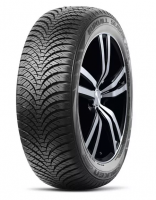
Falken EUROALL SEASON AS210
76.30 s
Firestone MultiSeason Gen 02
76.50 s
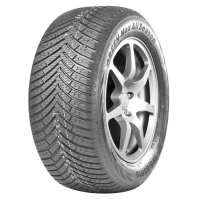
Leao iGreen AllSeason
76.50 s
Kleber Quadraxer 3
76.60 s
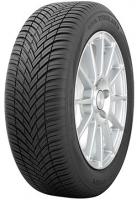
Toyo Celsius AS2
77.20 s
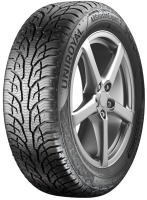
Uniroyal AllSeasonExpert 2
77.50 s
Hankook Winter I cept RS3 Ref
77.69 s
Below is the subjective scores from dry handling.
Subj. Dry Handling
Spread: 20.00 Points (20%)|Avg: 92.67 Points
Subjective Dry Handling Score (Higher is better)
Hankook Kinergy Eco 2 Ref
100.00 Points
Hankook Kinergy 4S2
100.00 Points
Goodyear Vector 4Seasons Gen 3
100.00 Points
Falken EUROALL SEASON AS210
95.00 Points
Vredestein Quatrac
95.00 Points
Michelin CrossClimate 2
95.00 Points
Firestone MultiSeason Gen 02
92.00 Points
Kleber Quadraxer 3
92.00 Points
Toyo Celsius AS2
90.00 Points
Uniroyal AllSeasonExpert 2
88.00 Points
Hankook Winter I cept RS3 Ref
85.00 Points
Leao iGreen AllSeason
80.00 Points
Wet
Wet braking and wet handling lined up pretty nicely, which is always good to see, apart from the Hankook. This was the best in wet braking, but the worst in the aquaplaning tests which meant during the wet handling lap, it took more of a penalty in the deeper parts of the water. It also had quite a lot of understeer, which is a safe easy to handle feature, but it does cost time.
The Goodyear Vector 4Seasons Gen 3 was second in wet braking and the fastest around the wet handling lap, with pretty good aquaplaning resistance. As usual I did wet handling twice, both times blind in a different order and both times the Goodyear was clearly the standout for me, it was just lovely and grippy and easy to drive fast. The Vector 4 Seasons Gen-3 is usually very good in the wet, but in this size it's exceptional.
The Kleber and Michelin once again finished in very similar positions, both of them better on the brakes than during the handling lap due to high levels of understeer, but both did have very good aquaplaning resistance.
The Firestone was the opposite of the Hankook, it 6th in braking, 4% behind, but was one of the best around the handling lap helped no doubt by a good aquaplaning resistance, and it was easy to drive and well balanced.
The Falken was consistent across the two grip tests but struggled a little more in the deeper water of aquaplaning, and once again I called the handling sporgy, which is a quick initial turn but then felt a bit too soft and wobbly which is always an interesting experience. It made me laugh that it was the falken again, it has quite a unique feeling.
Uniroyal and Vredestein were like chalk and cheese with the Vredestein feeling great across the lap and posting a good time, but not being the best on the brakes or in the deeper water, whereas the uniroyal was the best of all the tyres in the aquaplaning test but felt very soft and uninspiring around the lap, plus it struggled on the brakes.
Sadly the Toyo Celsius AS2 didn't seem to have any luck in the wet with the 9th slowest lap, 9th worst wet braking and 8th worst aquaplaning resistance, and lastly the Laeo was just lacking grip in braking and handling, which shouldn't be a surprise given it's the cheapest tyre on test.
In summary, if the wet performance is key to you, I'd pick the Goodyear or Hankook.
As for the summer and winter. Well that was interesting. The winter tyre was a DREAM around the lap posting the second fastest time, but the extra sipes of the winter tyre meant it wasn't up to matching the best of the all season tyres in the braking test. The summer tyre has no sipes, so was the best in braking, but it had a poor aquaplaning resistance which meant it wasn't the easiest to drive around the lap, but I'm wondering if part of this has to do with the fact it's an ECO summer tyre, so the wet performance of the tyre will have been traded off against the rolling resistance.
Wet Braking
Spread: 9.98 M (34.9%)|Avg: 31.32 M
Wet braking in meters (80 - 5 km/h) (Lower is better)
Wet Braking: Safety Impact: Best vs Worst Tyre
Wet Handling
Spread: 7.18 s (12.4%)|Avg: 60.18 s
Wet handling time in seconds (Lower is better)
Goodyear Vector 4Seasons Gen 3
57.97 s
Hankook Winter I cept RS3 Ref
58.76 s
Firestone MultiSeason Gen 02
58.97 s
Vredestein Quatrac
59.19 s
Falken EUROALL SEASON AS210
59.38 s
Hankook Kinergy 4S2
59.53 s
Uniroyal AllSeasonExpert 2
59.77 s
Michelin CrossClimate 2
60.38 s
Kleber Quadraxer 3
60.39 s
Toyo Celsius AS2
61.08 s
Hankook Kinergy Eco 2 Ref
61.60 s
Leao iGreen AllSeason
65.15 s
Subj. Wet Handling
Spread: 30.00 Points (30%)|Avg: 90.92 Points
Subjective Wet Handling Score (Higher is better)
Goodyear Vector 4Seasons Gen 3
100.00 Points
Hankook Winter I cept RS3 Ref
100.00 Points
Hankook Kinergy 4S2
98.00 Points
Vredestein Quatrac
95.00 Points
Michelin CrossClimate 2
92.00 Points
Hankook Kinergy Eco 2 Ref
90.00 Points
Falken EUROALL SEASON AS210
90.00 Points
Firestone MultiSeason Gen 02
90.00 Points
Kleber Quadraxer 3
90.00 Points
Uniroyal AllSeasonExpert 2
88.00 Points
Toyo Celsius AS2
88.00 Points
Leao iGreen AllSeason
70.00 Points
Straight Aqua
Spread: 5.80 Km/H (6.2%)|Avg: 90.79 Km/H
Float Speed in Km/H (Higher is better)
Uniroyal AllSeasonExpert 2
94.30 Km/H
Michelin CrossClimate 2
94.00 Km/H
Kleber Quadraxer 3
92.10 Km/H
Leao iGreen AllSeason
91.70 Km/H
Goodyear Vector 4Seasons Gen 3
91.60 Km/H
Hankook Winter I cept RS3 Ref
91.50 Km/H
Firestone MultiSeason Gen 02
90.10 Km/H
Vredestein Quatrac
89.40 Km/H
Toyo Celsius AS2
89.00 Km/H
Falken EUROALL SEASON AS210
88.80 Km/H
Hankook Kinergy Eco 2 Ref
88.50 Km/H
Hankook Kinergy 4S2
88.50 Km/H
Snow
There are two schools of thought about how an all season tyre should perform in snow. Some testers prefer a tyre that's almost winter like in ability, I prefer a tyre that a little more balanced to dry and wet, because even the worst all season tyres are way better than a summer tyre, as we're about to prove!
As always I bought a really cheap budget tyre, and it's fine. Not the fastest, but it's around a minute and a half lap, and it ends around 5 seconds off the best. Subjectively it was a little more behind even the tyres around the same pace, it gave you the illusion of grip until it ran out of grip suddenly and quickly. Not terrible, just not the best.
Next up was the Toyo, Hankook and Uniroyal, all on similar times, just under 5% off the best. The Toyo was pretty tricky to drive with peaky grip and an oversteer balance, and once you passed the limit of grip it took a long while to recover. Conversely the Hankook and Uniroyal were both two of the easiest tyres to drive on snow, they had a safe understeer balance, they were predictable and consistent.
Falken jumped in at sixth, feeling a little more like the Toyo than the Hankook in terms of balance and progressiveness, and a little ahead was the Vredestein in fifth which offered a lovely balance and good amount of grip, just a little bit looser than the tyres ahead of it.
The top 4 were all really impressive tyres. Goodyear and Firestone essentially tied in third and were both stunning to drive. The Goodyear had the tiniest edge subjectively, it was just a little more stable at the rear and give you a little bit more through the steering wheel, the Firestone steering felt a little light and detached. But this is on snow so I'm not sure anyone would ever notice.
And finally, the top two tyres tied for first place, and given they're sister brands, I can technically say Michelin won snow handling twice, once with the Michelin CrossClimate 2, and once with the Kleber Quadraxer 3.
As I test blind and I ran the Kleber quite early on in the sequence I was convinced it was the Michelin, and then when I ran the Michelin I was confused. Both tyres felt amazing, their advantage was mostly on corner entry where you could carry more speed than other tyres but also have confidence in the brakes, and both tyres were the least upset by the icer parts of the circuit. If I had to pick one, it might be the Kleber by the smallest margins.
But, if I was going to pick anything to drive, it would actually be the winter tyre. We already know the Hankook Winter I*Cept RS3 is a great winter tyre from last years winter test but it was just a dream, it would find grip where no all season could. Compared to some of the best all seasons it's only an incremental update sub limit but once you start pushing hard the tyre and car comes alive.
As for the summer tyre, it was actually amazing, for a summer tyre, and I'm mostly saying that as I didn't crash on it. The limit was very low in handling, you had no safety reserves at any point, and it felt really bad during traction. Which hopefully we're about to prove with traction and braking.
Snow Braking
Spread: 20.15 M (114.7%)|Avg: 20.61 M
Snow braking in meters (Lower is better)
Hankook Winter I cept RS3 Ref
17.57 M
Michelin CrossClimate 2
18.21 M
Firestone MultiSeason Gen 02
18.43 M
Kleber Quadraxer 3
19.05 M
Goodyear Vector 4Seasons Gen 3
19.16 M
Leao iGreen AllSeason
19.17 M
Uniroyal AllSeasonExpert 2
19.29 M
Hankook Kinergy 4S2
19.52 M
Vredestein Quatrac
19.65 M
Falken EUROALL SEASON AS210
19.72 M
Toyo Celsius AS2
19.84 M
Hankook Kinergy Eco 2 Ref
37.72 M
Snow Traction
Snow Traction
Spread: 7.33 s (136.2%)|Avg: 6.45 s
Snow acceleration time (5 - 40 km/h) (Lower is better)
Hankook Winter I cept RS3 Ref
5.38 s
Michelin CrossClimate 2
5.57 s
Firestone MultiSeason Gen 02
5.62 s
Kleber Quadraxer 3
5.71 s
Goodyear Vector 4Seasons Gen 3
5.82 s
Vredestein Quatrac
5.92 s
Uniroyal AllSeasonExpert 2
6.01 s
Hankook Kinergy 4S2
6.03 s
Leao iGreen AllSeason
6.03 s
Falken EUROALL SEASON AS210
6.10 s
Toyo Celsius AS2
6.47 s
Hankook Kinergy Eco 2 Ref
12.71 s
Snow Handling
Snow Handling
Spread: 33.19 s (40.3%)|Avg: 88.76 s
Snow handling time in seconds (Lower is better)
Hankook Winter I cept RS3 Ref
82.38 s
Kleber Quadraxer 3
84.22 s
Michelin CrossClimate 2
84.23 s
Firestone MultiSeason Gen 02
85.73 s
Goodyear Vector 4Seasons Gen 3
85.78 s
Vredestein Quatrac
86.29 s
Falken EUROALL SEASON AS210
87.39 s
Uniroyal AllSeasonExpert 2
87.52 s
Hankook Kinergy 4S2
88.34 s
Toyo Celsius AS2
88.60 s
Leao iGreen AllSeason
89.05 s
Hankook Kinergy Eco 2 Ref
115.57 s
Subj. Snow Handling
Subj. Snow Handling
Spread: 50.00 Points (50%)|Avg: 92.08 Points
Subjective Snow Handling Score (Higher is better)
Michelin CrossClimate 2
100.00 Points
Kleber Quadraxer 3
100.00 Points
Hankook Winter I cept RS3 Ref
100.00 Points
Firestone MultiSeason Gen 02
98.00 Points
Goodyear Vector 4Seasons Gen 3
98.00 Points
Hankook Kinergy 4S2
95.00 Points
Uniroyal AllSeasonExpert 2
95.00 Points
Vredestein Quatrac
95.00 Points
Falken EUROALL SEASON AS210
92.00 Points
Toyo Celsius AS2
92.00 Points
Leao iGreen AllSeason
90.00 Points
Hankook Kinergy Eco 2 Ref
50.00 Points
Comfort
Unfortunately it wasn't possible to do objective noise measurements due to the weather, but myself and a colleague did a subjective noise and comfort evaluation.
As always when you're testing a high profile small wheel size tyre on a vehicle like the golf, the differences are very small, however if noise and comfort is your priority I would be shopping for the Goodyear as it worked extremely well with the Golf, with the Hankook, Michelin and Kleber were also very good. If a firmer ride is your thing for some reason, the Toyo was the firmest of the group. The summer tyre was similar to the best of the all seasons and the winter tyre was just a little noisier.
Subj. Comfort
Spread: 10.00 Points (10%)|Avg: 94.92 Points
Subjective Comfort Score (Higher is better)
Goodyear Vector 4Seasons Gen 3
100.00 Points
Kleber Quadraxer 3
100.00 Points
Hankook Kinergy Eco 2 Ref
98.00 Points
Hankook Kinergy 4S2
98.00 Points
Michelin CrossClimate 2
98.00 Points
Uniroyal AllSeasonExpert 2
95.00 Points
Falken EUROALL SEASON AS210
92.00 Points
Firestone MultiSeason Gen 02
92.00 Points
Vredestein Quatrac
92.00 Points
Hankook Winter I cept RS3 Ref
92.00 Points
Leao iGreen AllSeason
92.00 Points
Toyo Celsius AS2
90.00 Points
Value
The Leao was the cheapest tyre to buy and the Michelin the most expensive.
Price
Spread: 20.14 (35.5%)|Avg: 64.69
Price in local currency (Lower is better)
Leao iGreen AllSeason
56.74
Hankook Kinergy Eco 2 Ref
60.26
Falken EUROALL SEASON AS210
62.99
Firestone MultiSeason Gen 02
62.99
Hankook Winter I cept RS3 Ref
62.99
Uniroyal AllSeasonExpert 2
63.28
Vredestein Quatrac
63.65
Hankook Kinergy 4S2
63.92
Kleber Quadraxer 3
65.69
Goodyear Vector 4Seasons Gen 3
66.36
Toyo Celsius AS2
70.57
Michelin CrossClimate 2
76.88
As for the rolling resistance of the tyres, this is getting more and more important as energy prices keep increasing. The lowest rolling resistance tyre in the test was the cheapest, the Leao, which even beat the summer tyre! Michelin was the best of the good all season tyres, with the Goodyear, Firestone also sneaking under the 8 kilogram / tonne mark, and the Hankook and Uniroyal were both on the 8kg/t. The highest rolling resistance was the Falken, around 12% higher than the Michelin, which equates to approximately 2.5% more fuel use in the real world.
Rolling Resistance
Spread: 1.30 kg / t (17.2%)|Avg: 8.05 kg / t
Rolling resistance in kg t (Lower is better)
Leao iGreen AllSeason
7.55 kg / t
Hankook Kinergy Eco 2 Ref
7.67 kg / t
Michelin CrossClimate 2
7.69 kg / t
Goodyear Vector 4Seasons Gen 3
7.88 kg / t
Firestone MultiSeason Gen 02
7.97 kg / t
Hankook Kinergy 4S2
8.00 kg / t
Uniroyal AllSeasonExpert 2
8.00 kg / t
Vredestein Quatrac
8.01 kg / t
Kleber Quadraxer 3
8.09 kg / t
Toyo Celsius AS2
8.35 kg / t
Hankook Winter I cept RS3 Ref
8.48 kg / t
Falken EUROALL SEASON AS210
8.85 kg / t
19,000 km
£1.45/L
8.0 L/100km
--
Annual Difference
--
Lifetime Savings
--
Extra Fuel/Energy
--
Extra CO2
Estimates based on typical driving conditions. Rolling resistance accounts for approximately 20% of IC vehicle fuel consumption and 25% of EV energy consumption. Actual savings vary based on driving style, vehicle weight, road conditions, and tyre age. For comparative purposes only. Lifetime savings based on a 40,000km / 25,000 mile tread life.
Test winner, best in dry braking, very good grip in the dry, very good aquaplaning resistance, best snow braking, best snow traction, fastest snow handling lap, very good levels of comfort, very low rolling resistance.
Average wet braking and wet handling.
The Michelin CrossClimate 2 is back at the top, winning the test overall. Once again this tyre was best in dry braking, the best in the snow, had good levels of comfort, great aquaplaning resistance, and a very low rolling resistance. Is this the perfect all season tyre? Well, once again, not quite. It was 6th in wet braking and 8th in wet handling, which is a common theme of the CrossClimate 2. Michelin, give this all season tyre more wet performance for the next iteration, even if it comes at the expense of some of that snow performance, and the segment will have an unrivalled king once again. There's no denying the CrossClimate 2 is the best all season tyre money can buy in the dry and snow, but I just think wet should be more important.
Very well balanced tyre, excellent in dry handling, the best in wet handling with very short wet braking distances, good snow performance, best comfort on test, low rolling resistance.
Average dry braking.
In second place overall just 0.2% ahead of the Hankook was the Goodyear Vector 4Season Gen-3. Like with the Hankook, the Goodyear was a solid product in the dry, the best around the wet handling lap, but it did edge out the hankook in both snow performance and rolling resistance. The Goodyear and the Golf worked together beautifully in all conditions, if it just had a little more dry braking, it would probably have won the test, it's another no compromise performance from Goodyear, something they're very strong at.
Best dry handling, short dry braking distance, shortest wet braking distances, very good levels of comfort, low rolling resistance.
Poor aquaplaning resistance, average snow performance.
The Hankook Kinergy 4S2 was the best in dry handling, the best in wet braking, good around the wet handling lap, good in dry braking, and was comfortable. It did lose out in the snow compared to the best, but as I said at the start of this, I would rather have an all season tyre that's good in the dry and the wet than one that excels in snow, that's what a winter tyre is for afterall. Once again the Hankook has the balance of an all season I really like.
Very good dry braking, good wet braking, good aquaplaning resistance, very high levels of grip in the snow, excellent levels of comfort.
Average wet handling, higher than average rolling resistance.
Fourth went to the new Kleber Quadraxer 3. Kleber is a michelin sub brand, and while it definitely says Kleber on the sidewall, it performed exactly as I would expect a slightly cheaper Crossclimate 2 to perform. It was amazing in the dry, amazing in the snow, and ok in the wet. It was also very quiet and comfortable. The biggest downfall when compared to the michelin was nearly 7% worse rolling resistance, but as it's a cheaper tyre than the CrossClimate 2, that might be a worthy trade for some people.
Good dry braking and dry handling, very good around the wet handling lap, good performance in the snow.
Average wet and snow braking, higher than average rolling resistance.
The Vredestein Quatrac finished in 5th place overall, and was back flying round dry and wet handling laps. It was also good in the snow, with its real only weakness being wet braking, this is a good product and one I'm glad to recommend at it's price point.
Very good around the wet handling lap, excellent grip in all snow tests, low rolling resistance.
Extended dry braking, slightly below average comfort.
The new Firestone MultiSeason was a very strong tyre in the snow, was good around the wet handling lap, and had a decent rolling resistance. It wasn't the best in wet or dry braking, which meant it couldn't finish higher up, but a good effort from the Bridgestone owned Firestone brand.
Good handling in the dry, short wet braking distances, good around the wet handling lap.
Extended dry braking, poor aquaplaning resistance, weaker in the snow, highest rolling resistance on test.
The Falken Euroall Season AS210 finished in 7th place. I liked this tyre in the dry, even if it didn't give the most feedback, and it's wet performance was good, however it couldn't keep up in the snow and had the highest rolling resistance on test. Not a bad tyre, but perhaps a tyre more suited to a milder winter climate.
Best aquaplaning resistance, good snow performance, good levels of comfort.
Weak in the dry with very long dry braking, average wet braking.
The Uniroyal AllSeasonExpert had the best aquaplaning resistance on test, which is something we often see from Uniroyal tyres, but like the Toyo grip wasn't up to the standard of the best in the group in any category.
Ok grip during dry handling, ok snow braking, good aquaplaning resistance, lowest rolling resistance on test.
Very long wet braking, unstable handling in the dry and wet, low levels of comfort.
Somehow the Leao iGreen AllSeason still finished behind the summer tyre overall, in AN ALL SEASON TEST! It was really let down by its braking, which is key to safety. But it is cheap to buy and does have a low rolling resistance making it very good value, as long as you aren't expecting grip.
Hi Jonathan, my Hankooks 4s² became worn before next winter. Do you have some rumours, if they will make some new tyre as a successor? They should finally?
I'm no expert but would like to make a solid choice for my next set of tires since it's a costly thing, been looking hard at all the reviews but still..
I drive a petrol Fiat Doblo passenger car (MPV) daily in the Netherlands about 25.000 km per year on well maintained highways. For ease of use I'm looking into all season tires.
The tire size is 195/60 R16
I'm looking for safety, durability, comfort and low rolling resistance.
Let me share my experience: Ive bought the GoodYear in 245/45 r17 size, fitted in a RWD 400Nm big car. During the last 3weeks there was everything! First I experienced, that it is very comfortable, and silent, compared to my previous Pirelli, and not far from my summer GY asy6 (which is the best , so even close to that is a great thing). The dry grip is pretty fine, did not forced it much, but very confident in fast corners. The only thing which is recognisable, that the brake distance could be bigger (again...compared to the best UUHP summer)- Then came the monsoon rain. The grip is pure magic. No aquaplan, superb grip, and I tried to drift...cornering with full throttle, but it just grips like hell LOVE it!
Ok, you can say, that its nothing. So: There was a giant snow-storm, snow everywhere, fresh... the hardest condition. But the tyre was solid, and behaved exactly like a winter tyre. During the 4 hours trip I was one of the quickest car on the roads. Which were fully covered in snow, and ice, constnatly falling... so fresh sno on ice as well. I even wanted some fun, turned the ESP off, and make some idiotic moves. And the tyre showed some magic. After about 50-60cm of tail.moving, it suddenly gripped...the lateral grip is magical.
I'm actually mesmerized by this. Good year is a killer. Leader tires for affrdable prices. :D If you really want something which is an awesome allrounder, then Vector!!! I use it as a winter tire, since here its more like a cold spring with rare snowing days; but if you dont care about the last 1% of dry grip, than no summer is needed next to it.
Thanks for the review, this is the only single reason that considered this tire against a new winter.
Thanks for sharing your insights, Jon. It's really helpful to see the test results for the 195/65 R15 size, which is exactly what I use on my car. Your test comes at a perfect time as I'm considering replacing my 2018 set of Michelin CrossClimate+ tires. Given that I don't clock a lot of miles, the need for replacement is more time-based than wear-based.
Your point about the price hike since 2020 is spot-on. I remember paying just £52 per tire back then. It's quite a jump in price now.
I'm also curious about the difference between the 91H rated tires you tested and the potentially reinforced or extra load (XL) 95V ones. My research in 2018 indicated that the 95V might offer slightly stiffer handling due to reinforced sidewalls but at the expense of a less compliant ride. It's interesting to weigh these differences, especially considering Michelin's claims about their lower tread depth, which they say compensates with low wear and effective performance even when worn.
Ultimately, I went with the 91H tires for my 2005 Mazda3 1.6 petrol saloon. They were not only compatible and more affordable, but also seemed a better fit for my car’s already reasonably firm ride. Modern cars, particularly those with low-profile tires, tend to have much firmer rides, so I didn't want to exacerbate that aspect. Looking forward to your future reviews and insights!
Great test again Jon and look forward to the February one. Given your comments about MCC2 having too much of a snow bias at the expense of wet (which I agree with) and Goodyear's very very average dry braking result I amended the percentages to just look at dry and wet (50% to each). On this basis Hankook came out top. Now given that all we need in the UK is an AS tyre that is miles better than a summer one in the snow (and even the Leaio is that) one can make a case for the Hankook being the best AS tyre for UK conditions (or at least outside of the Scottish Highlands).
I do struggle with the enthusiasm that so many testers have for the Goodyear. It is stellar in the wet and very good in the snow but that dry braking result - over 11 ft worse than the MCC2 and even more than a summer tyre is really poor. If Michelin need to improve their wet performance (and they do) then the same and more can be said of Goodyear in the dry.
Hankook do seem to be making some excellent tyres. I've always been a Michelin man (in preference rather than shape happily?) but am increasingly coming round to their products. I'm about 2 years off replacing my original MCCs (MCC2s on our other car) so Hankook and the new Bridgestone (if it's as good as rumoured) will be in the mix. Maybe a MCC3 will address the average wet weather performance.
Any hot feedback from your additional testing of the AllSeasonContact 2 and Turanza All Season 6? Narrowed my choice down to CC2 and V4SG3 but both ASC2 and especially the TAS6 seem to be testing well for mild climates.
Waiting patiently for those 2 new models too (Civic 1.8 with 225/45R17 here) and need to make decision soon cause now fitted winter Goodride sw608... (2020) that I got when bought the car in Sept 2023 and summer Pirellis (2018) have only 3-4mm so...
Here in the south of Poland there are mixed conditions in winter but the snow on the roads in the city is not a problem (maybe on local lies longer), sometimes a trip near the hills/mountains but believe those new all season tyres are going to rock anyway;
Thanks for the comprehensive comparisons. I've had the original Cross Climates on my previous car, a diesel Ford Kuga and found them to be superb (although I never got to use them in significant snow). My mid life crisis has now struck home and I've bought a 2022 Mini Countryman John Cooper Works which is somewhat quicker off the mark than the Kuga! I will never do a track day and whilst I enjoy a spirited drive, I keep to within my limits and those of our crowded UK roads. The car currently has Pirelli Zeros fitted on 19" rims from new and the fronts are down to around 4mm so will need replacing in the near future. I could just replace them with more Zeros but given I don't push the car anywhere near to its limit, I was tempted to replace all 4 tyres with CC2's to give better grip and control in the gloomy, murky months of winter (I travel up to Wales every couple of weeks) without the faff of them getting them swapped out in the summer. The car is an All4 so it has the part time 4wd system. Would these tyres be suitable for the mini do you think: it's the performance 300bhp model?
I have a 2015 Skoda Octavia Scout with Gen 2 Goodyear Vector 4Season tyres. The rears have plenty of tread still on them, but the fronts are running low. I don't want to replace all 4 if I can help it, but due to the change in tyres over the generations, will fitting 2x Gen 3's be an issue with the Gen 2's on the back? Does the 4x4 haled system cope with mixed tyres?
Hi All Im about to take receipt of a new Renault Megane EV, yeah lucky. I live in Aberdeen and travel a lot in winter and this car comes with summer tires... typically i buy a second set of wheels and winter tires... (about £1600 of 18in) the other option is to junk the summer tires and put on a set of all season tires (binning 4 new Goodyear EfficientGrip Performance 2) and running with 4 season all year... (about half the price but a total waist of the summer tires) its on a 3-5 year lease (motability)... I get a lot of ice where i live but would say that flood / rain / aquaplaning / ice is a bigger issue than snow... i drive between 8-10k a year..
What would you recommend? Get out the wallet and get a new set of winters on 18in or chuck the summers and get 4 seasons at half the price.... (i hate the idea but its a cheaper option as replacements would be covered by the lease.. not the first set thought)..
Ice, slush and roads like swimming pools are no fun... (ps i can afford the wheels and tires im just Scottish..)
Tricky. If you see a lot of ice I would lean towards the winter tyres, but if not a snow bias all season will be 90% of a good winter tyre in the snow and better in deep water.
Hey Jonathan! An intersting conception came to my mind. I'm in Hungary, where the winter is all about wet, salted snow(=wet), and cold dry. Snow is rare, and ice is rare as well. My Pirelli Sottozero2 (came with the car) is horrible. I think its even worse in snow than my summer...(yesterday i was not able to get moving an a fresh snow, just drift sideways without touching the acceleration :D ) So! My idea is to buy a 4season tyre as a winter for this usage. What do you think? Is it insane? The width is 245. Sometimes i go to the alps, but the major usage is on dry and wet. So i was wondering maybe a 4 season is not really worse than an average winter tyre in snow. I do not need exceptional maximum leadclass grip, but want something which is not a lifethreatening experiance like my aged sottozero. Your measurements show that e.g. the goodyear and the hankook are pretty close to the winter tyre in snow. Is it really that close in everyday scenarios? Or if the amount of snow is brutal, there would be situations where the winter can start/stop easily, and the 4season is a dead duck? Car is a rwd 220d CLS from 2016. So whats your opinioin? Does the winter (i would buy the hankook winter since its cheap) still has major advantage , or not? Any other case the 4 season seems a killer, for the 90-95% of my usage. But my summer set would be as well, so i do not want to have 2sets of tyres with incapable of snow-handling. So what i wish: good performance, and in case the rare snow arrives, i want to have a safe and confident behavior, but i do not care if a dedicated winter tyre could be 1km/h faster. :) Sorry for the length... Br, Robert :)
I've recommended all season tyres as winter tyres many times for regions that don't get a lot of snow so your idea isn't crazy. There's not a huge amount of difference between the two categories of tyres a lot of the time so use tests to find the balance of performance you like.
I've just fitted the new Vector3s. It was a huge rush, so now everything done, just realized, that 3 of my tires are fresh one from 38/23, but the 4th one is 32/22. All brand new, but the 1 year old one is at the back, and the car is RWD. Does it make sense to make a switch, and have the same dated tires back, and the differing ones at the front? I have no idea what difference could be...a bit devasteted that they are not matching (and there is no guarantee that i would get the same DOT tires, so i cannot even replace them). Or they shoudl be 100% identical, there is nothing to worry about??? :)
Obviously goodyear are the people to ask if you want to be 100% sure, but I've not heard of any updates to that tyre in the past few years so I'd not worry about it :)
Hi, great review again this year thanks. I've moved on to a Tesla 3 and I'm looking forward to the Alps runs over the ski season. Given the Cross Climate 2 is so good in the snow, it really comes down to choosing the all season or dedicated winter tyre. So the question, please, for NONE SNOW conditions, wet, damp and freezing UK road conditions during the winter only, does the Alpin 5 or LM005 outperform the CC2 outside of the snow? Thanks
Great Review - VERY Useful information. I used these results to help select tires for my Acura Sedan but i also need tires for my wife's All Wheel Drive SUV (MB 350GLE).
Question: What would you consider to be different in heavier, all wheel drive SUV's versus testing on a VW Golf GTi ? And Would the ratings / selections be any different
Wonderful review. I was wondering is there any way to find credible information on how long these tyres last (Goodyear/Michelin/Kleber/Hankook and Continental). I go through reviews and comment and I get anything from 15000km all the way up to 50000km before they reach 4mm. Michelin as I understand wears out fast, but going through comments on CC+ ppl seem to think it last a long time. I'm really confused as to how long some of these tyers actually last.
Great tests as always. My Cross Climate +'s have been great, but they have worn out quite quickly, and their snow performance last winter wasn't that stellar. Even the wet performance over the summer and fall has been sub-par. In order to try something new, I had a set of Hankook 4s2's mounted. I will see how they are and hopefully have better snow performance than my old CC+'s.
The test is great, but I couldn't find one crucial piece of information: How do these tires perform in peak summer conditions(Central europe), when it's 35°C outside and the asphalt is scorching at 70°C?
All the dry tests, even on other websites, seem to be conducted at around 10°C or so.
Anyway, I have just ordered Goodyear Vector 4Seasons for Peugeot Rifter. If they will be acceptable during summer, I will sell my primacy 4 on ebay. If not, I will keep both of them and will use Vector 4Seasons only during winter.
It's not a very powerful car, but it's quite heavy. I'm used to regularly driving at Vmax (180+ km/h) and pushing the car to its limits, especially at highway exits.
I've tested all seasons at 30c ambient before and if I'm honest, they didn't fare much worse than summer tyres under simliar conditions. Dry handling is tough on any tire!
Thanks. I have just done 500km on these goodyear Vector 4Seasons tyres(5-10°C, dry and rain) and I am pretty amazed. In the corners, they handle so much better and are easier to drive fast than the Primacy 4! I can easily drive through roundabouts and highway exits at speeds that were very hard to maintain on the Primacy 4. I wouldn't mind comparing them even with the S1 Evo3.
And it's even better in the rain. They plow through water like winter tires but with the grip of good summer tires. It feels surreal.
However, they are a bit weak on brakes (compared to summer tires). When braking, they feel spongy, like ordinary winter tires.
If they wont change theyr behaviour during high summer temperatures, I definitelly dont need another pair of summer tyres...
I have used Vredestein Quatrac 5, Pirelli Scorpion Verde and Michelin Pilot Sport on my Mercedes GLC350D. The tyre sizes were 255 / 45 / R20 101W.
The Michelin PS4 tyres operate at +7°C to +40°C and are excellent in the summer wet and dry but not great (useless) in the winter snow & ice. The Michelin did perform better than the Vredestein Quatrac 5 or the Pirelli Scorpion Verde.
With winter approaching, I am now looking for a new set of tyres and am deliberating between the Pilot Sport 4 SUV and the Cross Climate 2. The Cross Climate 2 operates between -10°C to +30°C and will offer improved winter (snow & slush) performance. The operating temperature should be ideal for the UK climate but I would like to better understand how much summer performance (braking, handling & stopping distance) I will sacrifice. Will I notice any significant difference in a 3.0 litre, V6 Diesel SUV? It does not go on the track and is driven in Comfort Mode.
Both Michelin tyres get good write ups, hence my problem. Try something new (CC2) or stick with the product PS4 that I know performs well 95% of the time.
1. Has there been a direct comparison between the Pilot Sport 4 and the Cross Climate 2? 2. Perhaps a comparison test would help many readers? 3. Does anyone have any direct experience?
Yes, I've compared the CC2 and PS4S, though it is the US market spec of CC2.
You can also go through all the all season tests on this site as most of them have a reference summer tyre in, and they all have the CC2. It won't be exactly the same as PS4 as it will be a smaller wheel size and lighter car. I would guess the delta for you will be larger due to your vehicle.
For big SUVs and powerful cars the tyre industry still recommends dedicated winter and summer products.
I have gone through the multiple tyre reviews, (Best Performance Summer / Best UHP All Season) several times and they are all very informative.
The Michelin PS4SUV has been a very good tyre. The CC2 makes sense but I think a new set of Michelin Pilot Sport 4 SUV will be the final decision, although, it would be good to try the Cross Climate 2!
I am more informed on tyres now than at any other time.
Thanks for doing this test Jon, and for the 195/65 R15 size (which my car has), which will help me when my 2018 set of Michelin CC+s eventually need changing (I don't do much mileage so it'll likely be on a time basis). What I also realised is how prices have gone up a lot since *2020* - I paid only £52 for each tyre last time.
I wonder what difference there was - if any - between the 91H rated tyres tested and the (presumably reinforced/XL) 95V ones. From my research back in 2018, it seemed to indicate the latter would give a slightly less compliant ride but might give a bit better handling due to the stiffer sidewalls. I also presume that Michelin's much lower tread depth is offset by them touting their tyre as low wear and working well even when significantly worn compared to rivals.
In the end I chose the 91H tyres because, well, they were both compatible and a bit cheaper, plus my car (2005 built Mazda3 1.6 petrol saloon) has a reasonably firmish ride to start with,but nowhere near as much as many modern cars, especially when shod on low profile tyres.
What temperatures do you test the wet braking at? As the summer tyre does best in the braking I'm guessing that it's over 7C. If the temperatures are colder, in the 1-2C range do you think that the results would be significantly different? At those lower temperatures do the sipes or the compound impact the braking more.
I live in a village in the French Alps which is warm and dry in the summer and sees a fair bit of snow in the winter, but because it's quite low (850m) and the roads are cleared regularly it ends up with cold and wet surfaces. So i'm wondering if the Crossclimate/Kleber is a good choice for snow performance, or should I be looking more at the wet performance winners.
It would be nice if you could include on Feb test Yokohama's new SUV & CUV all season tyre GEOLANDAR CV 4S G061. Currently I have Goodyear 4season SUV GEN-2 in 215/55/18 and in Greece after 30000km there are not a few cuts (some small tire pieces have gone), so I wonder if a tire from an off road range like the Yokohama would be more durable. Overall good impression from the Goodyear but not that great in dry braking
I never thought of buying all season tyres. Now I bought winter tyres yesterday and I see this. Any reason to buy winter tire if premium one isn't that better on snow anymore? And is way weaker on dry and wet?
The line between european all season tyres and winter tyres is pretty blurred, but in theory a winter tyre should perform better in extreme snow and certainly on ice.
If I recall, Jon has said on more than one occasion that such 'tests' are very difficult to achieve any meaningful result, mainly because trying to mimic months or even years of real world use in a lab or 'forced' on a test track by deliberately 'burning rubber' driving it isn't very accurate.
I tend to agree. The only realistic way to do this is via several months of testing on a 'representative' (which never will be for everyone, given each of us drive on different roads and amounts plus driving styles and car differences) set of roads and cars, which would be unrealistic, never mind horrendously expensive, and just for one of many aspects of the overall test.
Realistically the only way of getting a reasonable idea is for 'guinea pig' real world reviewers to leave comments in their reviews on this, to hopefully build up a picture for particular tyre-car-driving style/patten combos to see what suits us individually and an 'overall' average result.
Some makes of tyre tend to be 'soft' , good handling and thus quick to wear, others the opposite (both tend to be at the cheaper end of the price range), with the higher quality tyres using more costly technology and tyre materials to achieve both to a good degree, which is normally reflected in the higher tyre cost to us consumers.
Occasionally you do get outliers - both good and bad at each end of the 'perceived quality' market. That's why having a decent number of user reviews helps.
I live in central Italy (modena) , have a crossover (toyota Yaris cross). we tend to have wet and dry roads (not snowy) in winter with temperatures from 0-15 degree) -and very hot summers (this year was insane with around 38 degrees)- I drive around 20,000 km per year. I tend to drive 5% of the time on Icy roads but rarely on snowy ones (once or twice a year). I am very confused if I should buy a 4 seasons tyre, and if so which would you recommend. appreciate your help and advice :)
I was thinking "Summer tyre" right up until you said 5% icy roads. That seems like a difficult mix, as on ice you really need winter. But the rest of your winter sounds like it's summer tyre optimal!
Hi Jonathan, really awesome work and reviews, thank you! Like Nagi I also live in Italy (Milan) and I am finding it very difficult to decide which tyres to buy for the winter months. After watching your reviews I will definitely buy dedicated summer tyres to use throughout most of the year here in Italy. For the winter though I am uncertain whether I should opt for an all season tyre like the Michelin CrossClimate 2 or whether I should instead buy a dedicated winter tyre, maybe something like the Continental WinterContact TS 870. I was initially thinking of getting the CC2 because of the good summer tyre characteristics for our moderate cold winter weather (0 - 5 degrees Celcius during coldest months with almost no snow - it only snows once a year and the snow melts relatively quickly), but then started worrying more and more about the cold wet pavement and mainly the possible black ice formation often present especially during early mornings maybe caused by the presence of high levels of humidity and sometimes fog over our cold roads (temperature can drop to -5 degree Celsius during the night). I own a Toyota Corolla hatchback and my tyre choice is limited to 205 55 R16 91V. From your reply to Nagi I seem to understand that for the icy roads I should go for the dedicated winter tyre and then as soon as possible switch to the summer tyre but at the same time from some of your video reviews like "Summer, All Season and Winter Tyres Tested at 0c to15c" I gained that maybe all season for the winter season and summer for the rest of the year would probably be a good choice as well. Could you please help me make the best decision for my situation? Thank you again!
I just thought I would add that the officially recommended tires on the italian Toyota site for the Corolla are the BluEarth Winter V906 but I was thinking of excluding them after seeing the not so positive reviews that I found through this site. When I bought the car it came with the summer Continental EcoContact 6 which I am planning on replacing with another summer tire especially after seen several reviews like the "2022 ViBilagare Eco vs Normal Tyre Test" which reports the weaknesses of eco tyres vs their non eco counterparts.
Hi Jonathan, in the end I bought the Continental WinterContact TS 870 tyres. In honesty I think the CC2's would have been more adequate for the mild winter conditions we have in Milan but at the same time I must say that the WinterContact tyres give me a bit more peace of mind for the possibly more dangerous conditions. Thanks once again, I definitely gained a lot from your site and videos.
As always it's a very interesting test but it's disappointed that new tires as Pirelli Cinturato SF2, Bridgestone Turanza All Season 6 and Continental AllSeasonContact 2 are not inlcuded. The results maybe differ a lot.
Thank you for this test, very interesting as always.
A test I would find very compelling would be something like this:
A cross category test between for instance:
- A very good winter tyre. - A very good EU market all season tyre (for instance the CrossClimate 2) - A very good US market all season tyre (perhaps the new Bridgestone Potenza Sport AS) - A very good summer tyre.
They are all available in 225/45/17.
Along with an analyses of:
- The best use case for each type of tyre - Virtues/drawbacks of the US market all season tyre category for the EU market (should they be available on the EU market and what would the safety implications be if people kept such tyre on year round in stead of summer tyres)? - Would US market all seasons be a good alternative to EU market all season tyres on a none sports car/ standard EU car like a Golf if they were available (thread life, price, rolling resistance).
As a mild winter user who doesn't change tyre (running EU all seasons), I keep wondering if a more suitable type of tyre that is produced for the US market is kept from us in the EU. Especially in normal temperature braking, everything available in the EU except summer tyres does not perform that well. Would US market all seasons be a better option for mild winter countries? Would be nice to see that question answered.
Basically expanding on the points you touched upon in the comparison of the Michelin PS4, PS AS4, the CC2 and the X-Ice Snow earlier: https://www.youtube.com/wat...
Alternatively/additionally, it would also be interesting to test an US market all season along the EU style all seasons as standard in the normal all season tests. I think that would be quite an eye opener in the mild climate rating for many people.
https://www.youtube.com/wat... this video is probably as close as I have for now. Comparing between regions is interesting for me, but the tyre companies don't like it and naturally the audience is limited as it's not a purchase choice people face!
I haven't done any US market all season yet but it certainly would be interested to include an all weather when the time comes!
Just to clarify, I was not thinking of the classic US all season tyre where, as you have indicated before, grip is compromised by prioritizing extremely long thread life. More of the UHP AS tires, like the remarkable Michelin Pilot sport AS4 and especially the new Bridgestone Potenza sport AS which is most likely benchmarked against it but goes down to smaller, less sporty sizes. Their grip vs. thread life trade off is more in line with EU all season tyre and would fit in better (Potenza Sport AS rated for 50K miles).
I was thinking of the normal EU all season group test, but then mix in for instance a Potenza Sport AS as well as the normal summer and winter reference tyres. I suspect it would win your mild winter rating scheme with quite a significant margin. So indeed, not many EU readers would already have that on their mind for their next tyre purchase (because they can’t buy in through the normal channels). However, I reckon that would send quite the signal, the winner of the EU mild winter test, but bad luck you can’t buy it! I think that in itself would already make it worthwhile to include such a UHP AS tyre in such a test. No standard magazine test is ever going to feature such a comparison. Of course it’s going to be a quite expensive tyre compared to the rest, but if the performance is that good, that and the extra safety in braking and stability in the wet and dry could very well make it worthwhile.
That Bridgestone Potenza Sport AS already goes down to 205/55/16. That’s not exactly UHP territory and there is still 28 sizes to come. I wonder what they’re up to? They do seem to target a much broader market than the other UHP AS tyre makers. Maybe as a Japanese manufacturer, being non-European, they are testing the water to see if they could introduce this category of tyre in Europe?
That said, I certainly understand your reasoning and choices considering what to test.
The outcome are not surprising for me - those are quite similar to the test from the last year. I have Quadraxer 3 205in my Astra and Goodyear in Focus, both are good. As in test, I think Goodyear is better on wet, grip in snow in better in Quadraxer 3, although both tyres are weak when slope is frosted or when there is an ice on the road. I live in Poland so in mountains area it happens from time to time. My brother has Crossclimate 2 - he says what you say in the test.
I was hoping to see new Bridgestone allseason as well as new Continental and Pirelli SF2 in the test, because those 3 tyres have potential to shake the top 3 places and move old Hankook.
What I found particularly interesting was the relative wet handling of the Hankook Eco2. I share your surmise that this is likely partly due to the compounding difficulties of achieving wet grip micro engagement with road surface irregularities when one's main target is fuel efficiency. I wonder if it's time for TR to do a small-size test of eco & non eco (or less eco) tyres.
yep, ta! I've read that test but in small sizes there's not a lot of choice of anything but various "eco" tyres (including the Hankook Eco2). So: within that "Eco" pack how are things comparatively & how do the few non-eco tyres fare? Size? Try 175/65-14 or 195/65-15.
I'm not sure it's wise for me to do a small wheel sized eco test, I've already been mean enough about products like the e.Primacy and EcoContact range! I do plan to do a larger wheel size EV test next year and include some "regular" tyres, so we'll see how that goes.
Do you think your dry/wet/snow 30/40/15% weightings are applicable to a mild climate like northern England, or would a 35/45/5% be better like you've used for mild climate weightings in previous years?
I'm also interested in how the new AllSeasonContact 2 and Turanza All Season 6 compare - any plans to look at these?
For the Firestone Multiseason - is this the original multiseason that came out in 2016, or is it the newer Multiseason Gen 02, or is it an even newer Multiseason that supersedes the Gen 02? The link on this page seems to link to the original 2016 Multiseason.
Typo in dry section? - "didn't like getting really got" / assume you meant hot.
Thanks for again an interesting test! I do regret a bit the weight that the braking distances get in the final score. I have had some near accidents in my long driving career. It was never due to braking distance that I could avoid the accident, but it was -certainly on wet roads- mainly the stability and grip of the tires during abrupt evasive manoeuvres that saved me. So thanks for offering us the possibility to adjust the score weighting ourselves.
Could you indicate the temperatures at which the different tests were conducted, please? That's always interesting to know.
I also noticed that braking tests in general are done to 5 km/h and not to complete standstill. Same (but inverse) for snow accelerating tests. What's the reason for that?
I meant to add the temps, I'll try and do it next week!
We miss that 5 km/h as there's too much interference from traction control / abs in that part. When you see tests that brake to 0 they brake to 5 then calculate to 0.
But, John - I need your advice / help / keep my sanity in check :D I currently have two sets of wheels: - budget old winters DOT 2017 (Barum Polaris 3, which are surprisingly good for the price) - DOT 2022 Michelin Pilot Sport 5 on nice set of alloys. I've been driving them 2 seasons now - I love, love them! + the looks :) I even drove them to a track day and had a blast!
The thing is, I moved to the EU Mediterranean climate (coast surrounded by mountains) and I don't see the need for a full winter tire ( I don't ski lol and these tires haven't seen snow in years) + I have to drive 1000+ KM's 2 times a year to swap them.
My logic says to switch to GY Vector 4s as they have the best handling and performance overall and switch to 1 set.
But my heart loves the Michelins, although they are not as extremely sporty as I expected, I do enjoy chucking the car in the corners occasionally.
Car is my trusty old Alfa Romeo GT, 2004, 150 HP diesel couple - I know nothing crazy, but the car is a pleasure to drive so I'm keeping it for now.
Should I be reasonable and switch to GY all seasons? :) I'm just afraid that I might be disappointed switching form PS5, that GY's Vectors dry braking is kinda worrying me.
I use the Goodyear Vector 4S G3 as winter tires. I'm quite happy with them. I can really advise them: they're very safe and offer excellent grip in all types of the mild winter conditions in which I drive (-5 to +15°C, rarely snow but often rain), and they still provide a fair amount of driving pleasure - for an allseason tire. But still, my summer tires (Conti PremiumContact 6) are far more enjoyable to drive (sharpness, feedback) and have noticeably more grip when it gets warmer. I suppose that this difference in road behavior will be even bigger at high summer temperatures, where the allseason rubber compound will get weaker. So I'm sure you would miss your PS5 in the summer. If you enjoy them so much, don't swap them for allseason tires. You would regret it. Can't you find a nearby storage space for your winter/summer wheels - and use the GY V4S as your winter tires?
Another amazing test John! It's a joy watching your videos and reading the tests!
I understand it's especially hard to do - but it would be nice to have a wear test included too. Based on the other tests and people's experiences, I think Mich and GY will have the best lifetime overall, especially once they start to wear they keep decent performance, which is something a lot of people negelect when looking into tire tests.


Hi Jonathan,
my Hankooks 4s² became worn before next winter. Do you have some rumours, if they will make some new tyre as a successor? They should finally?
I don't know of any rumours sadly, I know they've been putting a lot of work into the iON range recently, however I'm sure something is in the works.
Pirelli Cinturato All Season SF3 is out! :O
Can't wait for your tests. :D
Test is done, it'll be out in a few weeks. They're very good.
Niiice! :D
Waiting patiently for the test... Are we there yet ? :)
Sorry for the slow reply, it is now live
Hello,
I'm no expert but would like to make a solid choice for my next set of tires since it's a costly thing, been looking hard at all the reviews but still..
I drive a petrol Fiat Doblo passenger car (MPV) daily in the Netherlands about 25.000 km per year on well maintained highways. For ease of use I'm looking into all season tires.
The tire size is 195/60 R16
I'm looking for safety, durability, comfort and low rolling resistance.
What would you fit under my car?
Thank you!
Karel
Whatever is available that did well in this all season test
Let me share my experience: Ive bought the GoodYear in 245/45 r17 size, fitted in a RWD 400Nm big car.
During the last 3weeks there was everything!
First I experienced, that it is very comfortable, and silent, compared to my previous Pirelli, and not far from my summer GY asy6 (which is the best , so even close to that is a great thing). The dry grip is pretty fine, did not forced it much, but very confident in fast corners. The only thing which is recognisable, that the brake distance could be bigger (again...compared to the best UUHP summer)-
Then came the monsoon rain. The grip is pure magic. No aquaplan, superb grip, and I tried to drift...cornering with full throttle, but it just grips like hell LOVE it!
Ok, you can say, that its nothing. So:
There was a giant snow-storm, snow everywhere, fresh... the hardest condition. But the tyre was solid, and behaved exactly like a winter tyre. During the 4 hours trip I was one of the quickest car on the roads. Which were fully covered in snow, and ice, constnatly falling... so fresh sno on ice as well. I even wanted some fun, turned the ESP off, and make some idiotic moves. And the tyre showed some magic. After about 50-60cm of tail.moving, it suddenly gripped...the lateral grip is magical.
I'm actually mesmerized by this. Good year is a killer. Leader tires for affrdable prices. :D
If you really want something which is an awesome allrounder, then Vector!!!
I use it as a winter tire, since here its more like a cold spring with rare snowing days; but if you dont care about the last 1% of dry grip, than no summer is needed next to it.
Thanks for the review, this is the only single reason that considered this tire against a new winter.
Thanks for sharing your insights, Jon. It's really helpful to see the test results for the 195/65 R15 size, which is exactly what I use on my car. Your test comes at a perfect time as I'm considering replacing my 2018 set of Michelin CrossClimate+ tires. Given that I don't clock a lot of miles, the need for replacement is more time-based than wear-based.
Your point about the price hike since 2020 is spot-on. I remember paying just £52 per tire back then. It's quite a jump in price now.
I'm also curious about the difference between the 91H rated tires you tested and the potentially reinforced or extra load (XL) 95V ones. My research in 2018 indicated that the 95V might offer slightly stiffer handling due to reinforced sidewalls but at the expense of a less compliant ride. It's interesting to weigh these differences, especially considering Michelin's claims about their lower tread depth, which they say compensates with low wear and effective performance even when worn.
Ultimately, I went with the 91H tires for my 2005 Mazda3 1.6 petrol saloon. They were not only compatible and more affordable, but also seemed a better fit for my car’s already reasonably firm ride. Modern cars, particularly those with low-profile tires, tend to have much firmer rides, so I didn't want to exacerbate that aspect. Looking forward to your future reviews and insights!
find out my own review about all weather tires for Audi A4 specifically here https://www.cartechinsights...
Great test again Jon and look forward to the February one. Given your comments about MCC2 having too much of a snow bias at the expense of wet (which I agree with) and Goodyear's very very average dry braking result I amended the percentages to just look at dry and wet (50% to each). On this basis Hankook came out top. Now given that all we need in the UK is an AS tyre that is miles better than a summer one in the snow (and even the Leaio is that) one can make a case for the Hankook being the best AS tyre for UK conditions (or at least outside of the Scottish Highlands).
I do struggle with the enthusiasm that so many testers have for the Goodyear. It is stellar in the wet and very good in the snow but that dry braking result - over 11 ft worse than the MCC2 and even more than a summer tyre is really poor. If Michelin need to improve their wet performance (and they do) then the same and more can be said of Goodyear in the dry.
I've called the Hankook the best all season tire for the UK a few times before so I agree with you! Though the new Bridgestone might take that crown.
Hankook do seem to be making some excellent tyres. I've always been a Michelin man (in preference rather than shape happily?) but am increasingly coming round to their products. I'm about 2 years off replacing my original MCCs (MCC2s on our other car) so Hankook and the new Bridgestone (if it's as good as rumoured) will be in the mix. Maybe a MCC3 will address the average wet weather performance.
Have a great 2025 testing.
Any hot feedback from your additional testing of the AllSeasonContact 2 and Turanza All Season 6?
Narrowed my choice down to CC2 and V4SG3 but both ASC2 and especially the TAS6 seem to be testing well for mild climates.
Civic 1.8, 205/55R16, Cumbria UK
Nothing too concrete but from what I currently know I would be picking one of the new tyres.
Waiting patiently for those 2 new models too (Civic 1.8 with 225/45R17 here) and need to make decision soon cause now fitted winter Goodride sw608... (2020) that I got when bought the car in Sept 2023 and summer Pirellis (2018) have only 3-4mm so...
Here in the south of Poland there are mixed conditions in winter but the snow on the roads in the city is not a problem (maybe on local lies longer), sometimes a trip near the hills/mountains but believe those new all season tyres are going to rock anyway;
So till Februray?
Thanks for the comprehensive comparisons. I've had the original Cross Climates on my previous car, a diesel Ford Kuga and found them to be superb (although I never got to use them in significant snow). My mid life crisis has now struck home and I've bought a 2022 Mini Countryman John Cooper Works which is somewhat quicker off the mark than the Kuga! I will never do a track day and whilst I enjoy a spirited drive, I keep to within my limits and those of our crowded UK roads. The car currently has Pirelli Zeros fitted on 19" rims from new and the fronts are down to around 4mm so will need replacing in the near future. I could just replace them with more Zeros but given I don't push the car anywhere near to its limit, I was tempted to replace all 4 tyres with CC2's to give better grip and control in the gloomy, murky months of winter (I travel up to Wales every couple of weeks) without the faff of them getting them swapped out in the summer. The car is an All4 so it has the part time 4wd system. Would these tyres be suitable for the mini do you think: it's the performance 300bhp model?
They'd work, though you might lose some of the feel on your spirited drives!
I have a 2015 Skoda Octavia Scout with Gen 2 Goodyear Vector 4Season tyres. The rears have plenty of tread still on them, but the fronts are running low. I don't want to replace all 4 if I can help it, but due to the change in tyres over the generations, will fitting 2x Gen 3's be an issue with the Gen 2's on the back? Does the 4x4 haled system cope with mixed tyres?
What is the DOT on the front ones?
I'm not too sure on the haldex system, but traditionally you put the new tyres on the rear.
Hi All
Im about to take receipt of a new Renault Megane EV, yeah lucky.
I live in Aberdeen and travel a lot in winter and this car comes with summer tires... typically i buy a second set of wheels and winter tires... (about £1600 of 18in) the other option is to junk the summer tires and put on a set of all season tires (binning 4 new Goodyear EfficientGrip Performance 2) and running with 4 season all year... (about half the price but a total waist of the summer tires) its on a 3-5 year lease (motability)... I get a lot of ice where i live but would say that flood / rain / aquaplaning / ice is a bigger issue than snow... i drive between 8-10k a year..
What would you recommend? Get out the wallet and get a new set of winters on 18in or chuck the summers and get 4 seasons at half the price.... (i hate the idea but its a cheaper option as replacements would be covered by the lease.. not the first set thought)..
Ice, slush and roads like swimming pools are no fun... (ps i can afford the wheels and tires im just Scottish..)
Denver
Tricky. If you see a lot of ice I would lean towards the winter tyres, but if not a snow bias all season will be 90% of a good winter tyre in the snow and better in deep water.
Hey Jonathan!
An intersting conception came to my mind.
I'm in Hungary, where the winter is all about wet, salted snow(=wet), and cold dry. Snow is rare, and ice is rare as well. My Pirelli Sottozero2 (came with the car) is horrible. I think its even worse in snow than my summer...(yesterday i was not able to get moving an a fresh snow, just drift sideways without touching the acceleration :D )
So! My idea is to buy a 4season tyre as a winter for this usage. What do you think? Is it insane? The width is 245. Sometimes i go to the alps, but the major usage is on dry and wet. So i was wondering maybe a 4 season is not really worse than an average winter tyre in snow. I do not need exceptional maximum leadclass grip, but want something which is not a lifethreatening experiance like my aged sottozero. Your measurements show that e.g. the goodyear and the hankook are pretty close to the winter tyre in snow. Is it really that close in everyday scenarios? Or if the amount of snow is brutal, there would be situations where the winter can start/stop easily, and the 4season is a dead duck?
Car is a rwd 220d CLS from 2016. So whats your opinioin? Does the winter (i would buy the hankook winter since its cheap) still has major advantage , or not? Any other case the 4 season seems a killer, for the 90-95% of my usage. But my summer set would be as well, so i do not want to have 2sets of tyres with incapable of snow-handling. So what i wish: good performance, and in case the rare snow arrives, i want to have a safe and confident behavior, but i do not care if a dedicated winter tyre could be 1km/h faster. :)
Sorry for the length... Br, Robert :)
I've recommended all season tyres as winter tyres many times for regions that don't get a lot of snow so your idea isn't crazy. There's not a huge amount of difference between the two categories of tyres a lot of the time so use tests to find the balance of performance you like.
Thank you very much, again!
Your contents, and reviews are lifechanging. :)
I've just fitted the new Vector3s. It was a huge rush, so now everything done, just realized, that 3 of my tires are fresh one from 38/23, but the 4th one is 32/22. All brand new, but the 1 year old one is at the back, and the car is RWD. Does it make sense to make a switch, and have the same dated tires back, and the differing ones at the front? I have no idea what difference could be...a bit devasteted that they are not matching (and there is no guarantee that i would get the same DOT tires, so i cannot even replace them). Or they shoudl be 100% identical, there is nothing to worry about??? :)
Obviously goodyear are the people to ask if you want to be 100% sure, but I've not heard of any updates to that tyre in the past few years so I'd not worry about it :)
Thank you!
Hi, great review again this year thanks. I've moved on to a Tesla 3 and I'm looking forward to the Alps runs over the ski season. Given the Cross Climate 2 is so good in the snow, it really comes down to choosing the all season or dedicated winter tyre. So the question, please, for NONE SNOW conditions, wet, damp and freezing UK road conditions during the winter only, does the Alpin 5 or LM005 outperform the CC2 outside of the snow?
Thanks
I think the LM005 would be better in the wet, the CC2 will be better in the dry.
Great Review - VERY Useful information. I used these results to help select tires for my Acura Sedan but i also need tires for my wife's All Wheel Drive SUV (MB 350GLE).
Question: What would you consider to be different in heavier, all wheel drive SUV's versus testing on a VW Golf GTi ? And Would the ratings / selections be any different
In theory a good tyre here is a good tyre on any vehicle size.
Wonderful review. I was wondering is there any way to find credible information on how long these tyres last (Goodyear/Michelin/Kleber/Hankook and Continental). I go through reviews and comment and I get anything from 15000km all the way up to 50000km before they reach 4mm. Michelin as I understand wears out fast, but going through comments on CC+ ppl seem to think it last a long time. I'm really confused as to how long some of these tyers actually last.
There's a bunch of tests on the site, look for the ADAC and Autobild, plus mine tomorrow.
Great tests as always. My Cross Climate +'s have been great, but they have worn out quite quickly, and their snow performance last winter wasn't that stellar. Even the wet performance over the summer and fall has been sub-par. In order to try something new, I had a set of Hankook 4s2's mounted. I will see how they are and hopefully have better snow performance than my old CC+'s.
The Michelin Cross Climate 2 performs between -10C and +30C.
The +35C is pushing it's limits so back to Summer tyre, (+7C to +40C).
More information at:
https://www.michelin.co.uk/...
The test is great, but I couldn't find one crucial piece of information: How do these tires perform in peak summer conditions(Central europe), when it's 35°C outside and the asphalt is scorching at 70°C?
All the dry tests, even on other websites, seem to be conducted at around 10°C or so.
Anyway, I have just ordered Goodyear Vector 4Seasons for Peugeot Rifter. If they will be acceptable during summer, I will sell my primacy 4 on ebay. If not, I will keep both of them and will use Vector 4Seasons only during winter.
It's not a very powerful car, but it's quite heavy. I'm used to regularly driving at Vmax (180+ km/h) and pushing the car to its limits, especially at highway exits.
I've tested all seasons at 30c ambient before and if I'm honest, they didn't fare much worse than summer tyres under simliar conditions. Dry handling is tough on any tire!
Thanks. I have just done 500km on these goodyear Vector 4Seasons tyres(5-10°C, dry and rain) and I am pretty amazed. In the corners, they handle so much better and are easier to drive fast than the Primacy 4! I can easily drive through roundabouts and highway exits at speeds that were very hard to maintain on the Primacy 4. I wouldn't mind comparing them even with the S1 Evo3.
And it's even better in the rain. They plow through water like winter tires but with the grip of good summer tires. It feels surreal.
However, they are a bit weak on brakes (compared to summer tires). When braking, they feel spongy, like ordinary winter tires.
If they wont change theyr behaviour during high summer temperatures, I definitelly dont need another pair of summer tyres...
QUESTIONS
I have used Vredestein Quatrac 5, Pirelli Scorpion Verde and Michelin Pilot Sport on my Mercedes GLC350D. The tyre sizes were 255 / 45 / R20 101W.
The Michelin PS4 tyres operate at +7°C to +40°C and are excellent in the summer wet and dry but not great (useless) in the winter snow & ice. The Michelin did perform better than the Vredestein Quatrac 5 or the Pirelli Scorpion Verde.
With winter approaching, I am now looking for a new set of tyres and am deliberating between the Pilot Sport 4 SUV and the Cross Climate 2. The Cross Climate 2 operates between -10°C to +30°C and will offer improved winter (snow & slush) performance. The operating temperature should be ideal for the UK climate but I would like to better understand how much summer performance (braking, handling & stopping distance) I will sacrifice. Will I notice any significant difference in a 3.0 litre, V6 Diesel SUV? It does not go on the track and is driven in Comfort Mode.
Both Michelin tyres get good write ups, hence my problem. Try something new (CC2) or stick with the product PS4 that I know performs well 95% of the time.
1. Has there been a direct comparison between the Pilot Sport 4 and the Cross Climate 2?
2. Perhaps a comparison test would help many readers?
3. Does anyone have any direct experience?
Thank you
Yes, I've compared the CC2 and PS4S, though it is the US market spec of CC2.
You can also go through all the all season tests on this site as most of them have a reference summer tyre in, and they all have the CC2. It won't be exactly the same as PS4 as it will be a smaller wheel size and lighter car. I would guess the delta for you will be larger due to your vehicle.
For big SUVs and powerful cars the tyre industry still recommends dedicated winter and summer products.
Thank you for your reply.
I have gone through the multiple tyre reviews, (Best Performance Summer / Best UHP All Season) several times and they are all very informative.
The Michelin PS4SUV has been a very good tyre. The CC2 makes sense but I think a new set of Michelin Pilot Sport 4 SUV will be the final decision, although, it would be good to try the Cross Climate 2!
I am more informed on tyres now than at any other time.
Thank you for all your research & testing.
Good choice, let me know how you get on with them!
Need to test that Pirelli WeatherActive
Working on it
amazing, looking forward to it
Is there a test for All Seasons on SUVs, or would you expect these results to be much the same?
Thanks
Graham
I would expect it to be similar, but there is at least one from this year on the site
Thanks, I missed that. Link here:
https://www.tyrereviews.com...
Thanks for linking
Thanks for doing this test Jon, and for the 195/65 R15 size (which my car has), which will help me when my 2018 set of Michelin CC+s eventually need changing (I don't do much mileage so it'll likely be on a time basis). What I also realised is how prices have gone up a lot since *2020* - I paid only £52 for each tyre last time.
I wonder what difference there was - if any - between the 91H rated tyres tested and the (presumably reinforced/XL) 95V ones. From my research back in 2018, it seemed to indicate the latter would give a slightly less compliant ride but might give a bit better handling due to the stiffer sidewalls. I also presume that Michelin's much lower tread depth is offset by them touting their tyre as low wear and working well even when significantly worn compared to rivals.
In the end I chose the 91H tyres because, well, they were both compatible and a bit cheaper, plus my car (2005 built Mazda3 1.6 petrol saloon) has a reasonably firmish ride to start with,but nowhere near as much as many modern cars, especially when shod on low profile tyres.
In terms of the CrossClimate I would bet they're the same tyre with different sidewalls
What temperatures do you test the wet braking at? As the summer tyre does best in the braking I'm guessing that it's over 7C. If the temperatures are colder, in the 1-2C range do you think that the results would be significantly different? At those lower temperatures do the sipes or the compound impact the braking more.
I live in a village in the French Alps which is warm and dry in the summer and sees a fair bit of snow in the winter, but because it's quite low (850m) and the roads are cleared regularly it ends up with cold and wet surfaces. So i'm wondering if the Crossclimate/Kleber is a good choice for snow performance, or should I be looking more at the wet performance winners.
At 1-2c it will be close with the advantage should be with the all season, there's a video on the channel comparing this.
It would be nice if you could include on Feb test Yokohama's new SUV & CUV all season tyre GEOLANDAR CV 4S G061. Currently I have Goodyear 4season SUV GEN-2 in 215/55/18 and in Greece after 30000km there are not a few cuts (some small tire pieces have gone), so I wonder if a tire from an off road range like the Yokohama would be more durable. Overall good impression from the Goodyear but not that great in dry braking
Hopefully someone will test it this year before the season is done!
I never thought of buying all season tyres. Now I bought winter tyres yesterday and I see this. Any reason to buy winter tire if premium one isn't that better on snow anymore? And is way weaker on dry and wet?
The line between european all season tyres and winter tyres is pretty blurred, but in theory a winter tyre should perform better in extreme snow and certainly on ice.
Pity there is no wear test. I think that might change the overall results and change 1st place...
If I recall, Jon has said on more than one occasion that such 'tests' are very difficult to achieve any meaningful result, mainly because trying to mimic months or even years of real world use in a lab or 'forced' on a test track by deliberately 'burning rubber' driving it isn't very accurate.
I tend to agree. The only realistic way to do this is via several months of testing on a 'representative' (which never will be for everyone, given each of us drive on different roads and amounts plus driving styles and car differences) set of roads and cars, which would be unrealistic, never mind horrendously expensive, and just for one of many aspects of the overall test.
Realistically the only way of getting a reasonable idea is for 'guinea pig' real world reviewers to leave comments in their reviews on this, to hopefully build up a picture for particular tyre-car-driving style/patten combos to see what suits us individually and an 'overall' average result.
Some makes of tyre tend to be 'soft' , good handling and thus quick to wear, others the opposite (both tend to be at the cheaper end of the price range), with the higher quality tyres using more costly technology and tyre materials to achieve both to a good degree, which is normally reflected in the higher tyre cost to us consumers.
Occasionally you do get outliers - both good and bad at each end of the 'perceived quality' market. That's why having a decent number of user reviews helps.
I live in central Italy (modena) , have a crossover (toyota Yaris cross). we tend to have wet and dry roads (not snowy) in winter with temperatures from 0-15 degree) -and very hot summers (this year was insane with around 38 degrees)-
I drive around 20,000 km per year. I tend to drive 5% of the time on Icy roads but rarely on snowy ones (once or twice a year).
I am very confused if I should buy a 4 seasons tyre, and if so which would you recommend. appreciate your help and advice :)
I was thinking "Summer tyre" right up until you said 5% icy roads. That seems like a difficult mix, as on ice you really need winter. But the rest of your winter sounds like it's summer tyre optimal!
Hi Jonathan, really awesome work and reviews, thank you! Like Nagi I also live in Italy (Milan) and I am finding it very difficult to decide which tyres to buy for the winter months. After watching your reviews I will definitely buy dedicated summer tyres to use throughout most of the year here in Italy. For the winter though I am uncertain whether I should opt for an all season tyre like the Michelin CrossClimate 2 or whether I should instead buy a dedicated winter tyre, maybe something like the Continental WinterContact TS 870. I was initially thinking of getting the CC2 because of the good summer tyre characteristics for our moderate cold winter weather (0 - 5 degrees Celcius during coldest months with almost no snow - it only snows once a year and the snow melts relatively quickly), but then started worrying more and more about the cold wet pavement and mainly the possible black ice formation often present especially during early mornings maybe caused by the presence of high levels of humidity and sometimes fog over our cold roads (temperature can drop to -5 degree Celsius during the night). I own a Toyota Corolla hatchback and my tyre choice is limited to 205 55 R16 91V. From your reply to Nagi I seem to understand that for the icy roads I should go for the dedicated winter tyre and then as soon as possible switch to the summer tyre but at the same time from some of your video reviews like "Summer, All Season and Winter Tyres Tested at 0c to15c" I gained that maybe all season for the winter season and summer for the rest of the year would probably be a good choice as well. Could you please help me make the best decision for my situation? Thank you again!
I just thought I would add that the officially recommended tires on the italian Toyota site for the Corolla are the BluEarth Winter V906 but I was thinking of excluding them after seeing the not so positive reviews that I found through this site. When I bought the car it came with the summer Continental EcoContact 6 which I am planning on replacing with another summer tire especially after seen several reviews like the "2022 ViBilagare Eco vs Normal Tyre Test" which reports the weaknesses of eco tyres vs their non eco counterparts.
Perhaps not the best two tyre choices!
Hi Jonathan, in the end I bought the Continental WinterContact TS 870 tyres. In honesty I think the CC2's would have been more adequate for the mild winter conditions we have in Milan but at the same time I must say that the WinterContact tyres give me a bit more peace of mind for the possibly more dangerous conditions. Thanks once again, I definitely gained a lot from your site and videos.
Great tyre, let me know how you get on with them!
As always it's a very interesting test but it's disappointed that new tires as Pirelli Cinturato SF2, Bridgestone Turanza All Season 6 and Continental AllSeasonContact 2 are not inlcuded. The results maybe differ a lot.
I'm working on another test with all those tyres in, out around feb :)
Thank you for this test, very interesting as always.
A test I would find very compelling would be something like this:
A cross category test between for instance:
- A very good winter tyre.
- A very good EU market all season tyre (for instance the CrossClimate 2)
- A very good US market all season tyre (perhaps the new Bridgestone Potenza Sport AS)
- A very good summer tyre.
They are all available in 225/45/17.
Along with an analyses of:
- The best use case for each type of tyre
- Virtues/drawbacks of the US market all season tyre category for the EU market (should they be available on the EU market and what would the safety implications be if people kept such tyre on year round in stead of summer tyres)?
- Would US market all seasons be a good alternative to EU market all season tyres on a none sports car/ standard EU car like a Golf if they were available (thread life, price, rolling resistance).
As a mild winter user who doesn't change tyre (running EU all seasons), I keep wondering if a more suitable type of tyre that is produced for the US market is kept from us in the EU. Especially in normal temperature braking, everything available in the EU except summer tyres does not perform that well. Would US market all seasons be a better option for mild winter countries? Would be nice to see that question answered.
Basically expanding on the points you touched upon in the comparison of the Michelin PS4, PS AS4, the CC2 and the X-Ice Snow earlier: https://www.youtube.com/wat...
Alternatively/additionally, it would also be interesting to test an US market all season along the EU style all seasons as standard in the normal all season tests. I think that would be quite an eye opener in the mild climate rating for many people.
Kind regards,
Camille
Hey,
https://www.youtube.com/wat... this video is probably as close as I have for now. Comparing between regions is interesting for me, but the tyre companies don't like it and naturally the audience is limited as it's not a purchase choice people face!
I haven't done any US market all season yet but it certainly would be interested to include an all weather when the time comes!
Just to clarify, I was not thinking of the classic US all season tyre where, as you
have indicated before, grip is compromised by prioritizing extremely long
thread life. More of the UHP AS tires, like the remarkable Michelin Pilot sport
AS4 and especially the new Bridgestone Potenza sport AS which is most likely
benchmarked against it but goes down to smaller, less sporty sizes. Their grip
vs. thread life trade off is more in line with EU all season tyre and would fit
in better (Potenza Sport AS rated for 50K miles).
I was thinking of the normal EU all season group test, but then mix in for
instance a Potenza Sport AS as well as the normal summer and winter reference
tyres. I suspect it would win your mild winter rating scheme with quite a
significant margin. So indeed, not many EU readers would already have that on
their mind for their next tyre purchase (because they can’t buy in through the
normal channels). However, I reckon that would send quite the signal, the
winner of the EU mild winter test, but bad luck you can’t buy it! I think that
in itself would already make it worthwhile to include such a UHP AS tyre in
such a test. No standard magazine test is ever going to feature such a
comparison. Of course it’s going to be a quite expensive tyre compared to the
rest, but if the performance is that good, that and the extra safety in braking
and stability in the wet and dry could very well make it worthwhile.
That Bridgestone Potenza Sport AS already goes down to 205/55/16. That’s not exactly
UHP territory and there is still 28 sizes to come. I wonder what they’re up to?
They do seem to target a much broader market than the other UHP AS tyre makers.
Maybe as a Japanese manufacturer, being non-European, they are testing the
water to see if they could introduce this category of tyre in Europe?
That said, I certainly understand your reasoning and choices considering what to test.
I like the way you think :)
Very good test indeed, thanks very much for that.
The outcome are not surprising for me - those are quite similar to the test from the last year. I have Quadraxer 3 205in my Astra and Goodyear in Focus, both are good. As in test, I think Goodyear is better on wet, grip in snow in better in Quadraxer 3, although both tyres are weak when slope is frosted or when there is an ice on the road. I live in Poland so in mountains area it happens from time to time. My brother has Crossclimate 2 - he says what you say in the test.
I was hoping to see new Bridgestone allseason as well as new Continental and Pirelli SF2 in the test, because those 3 tyres have potential to shake the top 3 places and move old Hankook.
I'm testing those three in a new test, should be out in Feb.
What I found particularly interesting was the relative wet handling of the Hankook Eco2. I share your surmise that this is likely partly due to the compounding difficulties of achieving wet grip micro engagement with road surface irregularities when one's main target is fuel efficiency.
I wonder if it's time for TR to do a small-size test of eco & non eco (or less eco) tyres.
This is an interesting test comparing eco & non eco tyres: https://www.tyrereviews.com...
Conclusion: stay away from eco tyres if you want to drive on wet roads
yep, ta! I've read that test but in small sizes there's not a lot of choice of anything but various "eco" tyres (including the Hankook Eco2). So: within that "Eco" pack how are things comparatively & how do the few non-eco tyres fare? Size? Try 175/65-14 or 195/65-15.
I'm not sure it's wise for me to do a small wheel sized eco test, I've already been mean enough about products like the e.Primacy and EcoContact range! I do plan to do a larger wheel size EV test next year and include some "regular" tyres, so we'll see how that goes.
Then again: "speak truth to power" & all that :-)
I was looking for a test of the Kleber as I want a very comfortable all rounder that’s not too expensive.
Don’t care about rolling resistance since I run 180/190kpa front and 150/190kpa rear depending on the load, so not the best fuel economy anyway.
So it seems like a winner to me !
Unless they become plastic after a year or two, as some people had such the experince.
it's certainly very impressive!
Jon - another great and detailed test.
Do you think your dry/wet/snow 30/40/15% weightings are applicable to a mild climate like northern England, or would a 35/45/5% be better like you've used for mild climate weightings in previous years?
I'm also interested in how the new AllSeasonContact 2 and Turanza All Season 6 compare - any plans to look at these?
For the Firestone Multiseason - is this the original multiseason that came out in 2016, or is it the newer Multiseason Gen 02, or is it an even newer Multiseason that supersedes the Gen 02?
The link on this page seems to link to the original 2016 Multiseason.
Typo in dry section? - "didn't like getting really got" / assume you meant hot.
Thanks again - keep up the excellent testing!
Already started a test with the ASC2 and T6, won't be finished until Feb though.
I'll doublecheck the firestone, I'm assuming it's the new one and I'll get that typo fixed, whoops.
Yep, it was the Gen 02, it's TINY on the sidewall.
As for the score weighting, it's really up to you. I try and have a blended one for the main results but for me, I'd go lower in snow.
Thanks for again an interesting test! I do regret a bit the weight that the braking distances get in the final score. I have had some near accidents in my long driving career. It was never due to braking distance that I could avoid the accident, but it was -certainly on wet roads- mainly the stability and grip of the tires during abrupt evasive manoeuvres that saved me. So thanks for offering us the possibility to adjust the score weighting ourselves.
Could you indicate the temperatures at which the different tests were conducted, please? That's always interesting to know.
I also noticed that braking tests in general are done to 5 km/h and not to complete standstill. Same (but inverse) for snow accelerating tests. What's the reason for that?
I meant to add the temps, I'll try and do it next week!
We miss that 5 km/h as there's too much interference from traction control / abs in that part. When you see tests that brake to 0 they brake to 5 then calculate to 0.
I have always avoided an accident by braking, evasive manœuvres are extremely dangerous and an absolute last resort.
But, John - I need your advice / help / keep my sanity in check :D
I currently have two sets of wheels:
- budget old winters DOT 2017 (Barum Polaris 3, which are surprisingly good for the price)
- DOT 2022 Michelin Pilot Sport 5 on nice set of alloys. I've been driving them 2 seasons now - I love, love them! + the looks :) I even drove them to a track day and had a blast!
The thing is, I moved to the EU Mediterranean climate (coast surrounded by mountains) and I don't see the need for a full winter tire ( I don't ski lol and these tires haven't seen snow in years) + I have to drive 1000+ KM's 2 times a year to swap them.
My logic says to switch to GY Vector 4s as they have the best handling and performance overall and switch to 1 set.
But my heart loves the Michelins, although they are not as extremely sporty as I expected, I do enjoy chucking the car in the corners occasionally.
Car is my trusty old Alfa Romeo GT, 2004, 150 HP diesel couple - I know nothing crazy, but the car is a pleasure to drive so I'm keeping it for now.
Should I be reasonable and switch to GY all seasons? :)
I'm just afraid that I might be disappointed switching form PS5, that GY's Vectors dry braking is kinda worrying me.
Keep my sanity in check! Thanks John! :)
You will be disappointed :(
I use the Goodyear Vector 4S G3 as winter tires. I'm quite happy with them. I can really advise them: they're very safe and offer excellent grip in all types of the mild winter conditions in which I drive (-5 to +15°C, rarely snow but often rain), and they still provide a fair amount of driving pleasure - for an allseason tire. But still, my summer tires (Conti PremiumContact 6) are far more enjoyable to drive (sharpness, feedback) and have noticeably more grip when it gets warmer. I suppose that this difference in road behavior will be even bigger at high summer temperatures, where the allseason rubber compound will get weaker. So I'm sure you would miss your PS5 in the summer. If you enjoy them so much, don't swap them for allseason tires. You would regret it. Can't you find a nearby storage space for your winter/summer wheels - and use the GY V4S as your winter tires?
All season tyres are great for regular cars. For anything more special that that, I would always have two sets of dedicated tyres.
I agree
Another amazing test John! It's a joy watching your videos and reading the tests!
I understand it's especially hard to do - but it would be nice to have a wear test included too.
Based on the other tests and people's experiences, I think Mich and GY will have the best lifetime overall, especially once they start to wear they keep decent performance, which is something a lot of people negelect when looking into tire tests.
I always try to do a wear test, but the costs involved are quite frankly insane!