The first tyre test of 2018 is rather unique. German publication Auto Zeitung have tested six summer and three all season tyres all in the same test, and while it's going to make the Tyre Reviews version of the results at the bottom of this page read slightly wonky, it's a really interesting way of comparing the dry and wet performances of the two tyre types.
Keep in mind, the nine 225/45 R17 tyres were only tested in the dry and wet, there was no snow or ice testing to highlight the all season tyres year-round abilities. This means this test should just be looked at to see how the all season tyres compare to the summer tyres in summer conditions, rather than making a purchase decision for year-round motoring.
Dry
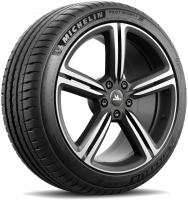
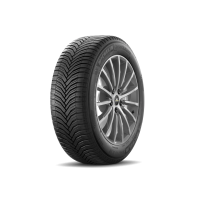
Dry braking was a double win for Michelin, with the Pilot Sport 4 the best summer tyre and the Michelin CrossClimate+ the best all season tyre. While the CrossClimate+ beat the other two all season tyres by a considerable margin, it was unable to match even the cheapest Giti tyre during dry braking.
- Michelin Pilot Sport 4
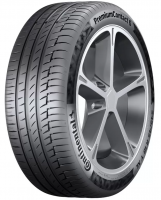
- Continental Premium Contact 6
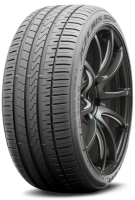
- Falken Azenis FK510
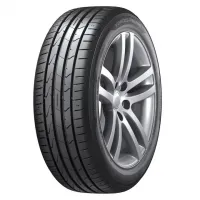
- Hankook Ventus Prime 3 K125
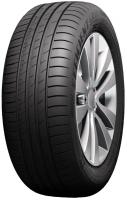
- Goodyear EfficientGrip Performance
- Giti GitiSport S1
- Michelin CrossClimate Plus
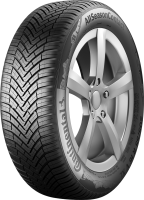
- Continental AllSeasonContact
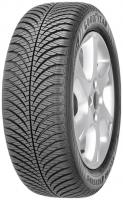
- Goodyear Vector 4 Seasons Gen 2
Michelin once again had a double win during dry handling, but this time with the CrossClimate further away from the summer tyres. The new Continental AllSeasonContact sat between the Michelin CrossClimate and Goodyear Vector 4Seasons Gen-2 in the dry.
- Michelin Pilot Sport 4
- Falken Azenis FK510
- Hankook Ventus Prime 3 K125
- Giti GitiSport S1
- Continental Premium Contact 6
- Goodyear EfficientGrip Performance
- Michelin CrossClimate Plus
- Continental AllSeasonContact
- Goodyear Vector 4 Seasons Gen 2
Wet
Wet braking was won by the Goodyear all season tyre, and lost by the Goodyear summer tyre! The Continental summer tyre beat the Continental all season tyre, as did the Michelin summer. The Goodyear EfficientGrip Performance usually scores strongly in the wet, perhaps this is a rogue result.
- Goodyear Vector 4 Seasons Gen 2
- Continental Premium Contact 6
- Michelin Pilot Sport 4
- Falken Azenis FK510
- Michelin CrossClimate Plus
- Continental AllSeasonContact
- Giti GitiSport S1
- Hankook Ventus Prime 3 K125
- Goodyear EfficientGrip Performance
Wet handling is a harder test for the all season tyres than wet braking, and the best all season tyre could only finish fourth overall. In both wet braking and handling, the Michelin, Continental and Falken summer tyres were close.
- Michelin Pilot Sport 4
- Continental Premium Contact 6
- Falken Azenis FK510
- Goodyear Vector 4 Seasons Gen 2
- Continental AllSeasonContact
- Goodyear EfficientGrip Performance
- Michelin CrossClimate Plus
- Giti GitiSport S1
- Hankook Ventus Prime 3 K125
The Michelin and Falken summer tyres impress again with the best straight aquaplaning results.
- Michelin Pilot Sport 4
- Falken Azenis FK510
- Goodyear EfficientGrip Performance
- Hankook Ventus Prime 3 K125
- Giti GitiSport S1
- Continental Premium Contact 6
- Goodyear Vector 4 Seasons Gen 2
- Continental AllSeasonContact
- Michelin CrossClimate Plus
Other
Three decibels covered all nine tyres during noise testing.
- Goodyear Vector 4 Seasons Gen 2
- Hankook Ventus Prime 3 K125
- Giti GitiSport S1
- Michelin Pilot Sport 4
- Falken Azenis FK510
- Continental AllSeasonContact
- Goodyear EfficientGrip Performance
- Continental Premium Contact 6
- Michelin CrossClimate Plus
Goodyear had a clear lead in fuel use which might explain the wet performance, and Giti and Hankook lead on purchase price. The Falken also proves to be excellent value when balancing the test results against the purchase price.
- Giti GitiSport S1
- Hankook Ventus Prime 3 K125
- Falken Azenis FK510
- Goodyear EfficientGrip Performance
- Michelin Pilot Sport 4
- Continental Premium Contact 6
- Goodyear Vector 4 Seasons Gen 2
- Continental AllSeasonContact
- Michelin CrossClimate Plus
Sadly wear wasn't tested, but this is an area where Michelin usually excel in.
Results
A leading performance in both the dry and wet ensured the Pilot Sport 4 wins the test convincingly, despite having a right rolling resistance.
Total: 586
Dry
131
Wet
149
Comfort
6
Rolling Resistance
11
Noise
9
Overall
280
As the most "summer tyre like" of the all season tyres, the CrossClimate+ wins its category. It is however the most expensive tyre on test.
Total: 440
Dry
109
Wet
96
Comfort
9
Rolling Resistance
14
Noise
7
Overall
205
The Vector 4 Season Gen-2 proves to be the strongest all season tyre in the wet, but can't match the Crossclimate or summer tyres in the dry. An excellent all round performance otherwise.
Total: 442
Dry
88
Wet
117
Comfort
8
Rolling Resistance
14
Noise
10
Overall
205
The Premiumcontact 6 has the shortest stopping distances in the wet, and is very strong in the dry. Lowest levels of comfort on test.
Total: 554
Dry
126
Wet
137
Comfort
5
Rolling Resistance
15
Noise
8
Overall
263
The FK510 proves to be an excellent all round tyre, finishing the test with a well balanced performance. Excellent value.
Total: 538
Dry
123
Wet
133
Comfort
5
Rolling Resistance
12
Noise
9
Overall
256
The AllSeasonContact has no real drawbacks, but isn't as strong as the CrossClimate in the dry or the Goodyear Vector 4Seasons Gen-2 in the wet. As an all season tyre, the AllSeasonContact seems to sit between the Michelin and Goodyear with regards to the dry/wet/snow blend of performance.
Total: 434
Dry
94
Wet
106
Comfort
7
Rolling Resistance
18
Noise
9
Overall
200
Toughness: Top in curved aquaplaning, the EfficientGrip Perf is let down by a wear wet braking performance. Lowest rolling resistance on test.
Total: 498
Dry
128
Wet
101
Comfort
7
Rolling Resistance
25
Noise
8
Overall
229
A surprisingly poor result for the Ventus Prime3. A poor wet performance was combined with an average dry performance.
Total: 470
Dry
129
Wet
93
Comfort
6
Rolling Resistance
11
Noise
9
Overall
222
The GitiSport S1 might have finished in last place, but when you look at the balance of performance to price, this is one of the better cheap tyres available, proving to be quicker than the Goodyear in the dry, better than the Hankook in the wet, one of the quietest tyres on test and the cheapest to buy.
Total: 459
Dry
119
Wet
96
Comfort
7
Rolling Resistance
14
Noise
8
Overall
215


CPC6 "very strong in the dry" with 126 points & Hankook K125 with "average dry performance" with 129 points in the dry sounds a bit bias...
The AZ "dry" scoring also includes comfort, noise and rolling resistance points, which I also separated out but did not subtract from the total dry score. This is why there's a difference between the testers comments and the "dry" scoring.
Hello, the graph of the rolling resistence can’t be correct for the Giti tyres, because it’s got the
Same points the Goodyear Efficient Grip Performance has got and in the Test Summary on top
Of the page it’s classified as second.
Well spotted! The graph is correct, the score isn't. Updated :)
I wish manufacturers would produce a summer tyre with slightly better snow capability. Enough to get you home, but not as good as the all-season tyres, and with no discernible loss of feel and feedback in the summer compared to a premium summer tyre. I think this is the tyre enthusiastic drivers are waiting for. You could fit it and leave it on all year, without worrying about getting stuck in the snow, and without feeling you're losing out on fun in the summer. Driving home from the dentist in the snow yesterday, in my BMW 130i on Conti Premium Contact 6, I almost didn't make it home. Not a nice feeling. I'd like to fit Michelin Crossclimate+, but I hear feel and feedback are some way off the mark compared to a premium summer tyre, so I just can't bring myself to do it. Still waiting for that elusive perfect tyre ...
The CrossClimate is as close as we've gotten to that perfect tyre. Some of the basic requirements of a tyre which works in snow is a higher land/sea ratio (ie, more blocky pattern) and sipes, both of which detract from handling.
Maybe one day the technology will exist, but for now we have to make do with what we have.
Hi. is this Falken Azenis FK510 is a run flat tyre ?
This test will have tested the non-runflat version of the tyre.
It's a shame all the graphs have a false origin - the scale does not start at zero. This makes the differences appear much larger than they really are. In 'dry handling', for example, there's only a two-second spread in lap times of around a minute. that's 5% and most drivers wouldn't notice such a small change. Please use percentages like Auto Express.
If all the graphs started at 0 they would be almost unreadable, the purpose of the graph would vanish. The graphs look great and start at the right scale.
Yes, the difference somewhere is minimal, and it's up to the reader to notice it and decide if it matters or not.
Tyre tests are done driving at the limit. Of course in normal-everyday drive all the tyres would be almost equal. It's in emergencies when the tyre you have matters, than those 5% between the best and worst can mean accident/injury or forgetting about the incident next week if nothing happened.
But it's ridiculous to score tyres on attributes when the differences are so small. It would make more sense to put tyres into similar abilities in each test. Tyre tests should point out where there are significant shortfalls in a particular area. Auto Express did this in its last group test. Any graph with a false origin is either intended to deceive or an insult to its readers.
All season tyres are inevitably a compromise. It's important to find where the manufacturer has sacrificed one ability to enhance another. I'm willing to lose some snow traction to get better wet grip. But a diference of 5% or less is of no consequence. I will never drive on the limit. In poor driving conditions I leave a large gap between me and vehicles in front. And when some moron tailgates me, I leave additional braking space so that I can brake gently if the car infront explodes or somersaults.
As Igor mentioned, it's rare to find graphs starting at 0 when there's such a small spread of results as consuming the data is too difficult on smaller screens.
Please can you explain your point about Auto Express more? Also express simply take the braking distances, make the best 100% then each one after that is a percentage of the 100% result. This means in things like dry braking you have 8 tyres all within 4% of each other, which is just as meaningful as 8 tyres within 2 meters of each other!
4% is a small difference. 2 metrers is half the width of the graph and this looks a large difference. The noise differeces look significant but 3dB is the smallest change detectable by humans!
Here's my version of AutoBild's 225/50R17 test
https://drive.google.com/op...
4% is quite a small difference, but 2 metres is a third the width of the graph. The noise differences look quite big, but 3dB is only just noticeable to the human ear.
My version of AutoBild's 225/50R17 tests is here.....
https://disq.us/url?url=htt...
While I understand your point, your version of the graph is too difficult to see the differences between the results. The way the site generates the graph is actually fairly standard, with many of the magazines publishing their tables with non-zero indexes too.
This made me laugh!
" your version of the graph is too difficult to see the differences between the results."
That's exactly my point when the differences are a bit trivial, let's say 5% or less, even 10%.
But let's agree to differ :-)
I completely agree with kelper.
For my sins, I teach medical students in university on critical appraisal of statistics.
Truncation of the graph axis, as done here, is generally considered to produce misleading interpretations by exaggerating the differences between products. A typical example is an expensive new drug which is only slightly better than the cheap old drug. But the graph can be drawn in a way that makes the expensive drug seem a whole lot better.
Lots of articles on the web explaining misleading graphs, and how to overcome this by showing the entire axis and/or axis breaks.
https://en.wikipedia.org/wi...
https://venngage.com/blog/m...
I do think this is a great tyre review site and I value the advice. But I don't look at graphs.
3db is double the noise so i would think you would definitely hear a difference.
3dB is double the sound energy. It takes ten times the sound energy for a perceived doubling in noise. I think 1dB change is perceptible in lab conditions. But if two cars passed you and the measured sounds were less than 3dB, most people could not, reliably, say which was louder. If you are interested you can test this yourself at http://www.audiocheck.net/b...
For a steady tone I could not hear the 1dB rise or fall. But the washing machine is on behind me and I have some high trequncy hearing loss from years in ship's engine rooms.
look here for evidence http://www.autoexpress.co.u...
There is no info of tyre size tested.
Considering the tyre models, should I suppose its 225/45R17
Sorry, and very good guess! Article updated :)