Ceat SportDrive vs Yokohama Advan Sport V107
The pattern is clear: the Advan Sport V107 is built around braking and high-limit control-especially on dry roads-while the SportDrive's strengths are more “ownership” focused (noise, efficiency, mileage, and ADAC-style cost/value metrics). The key question for buyers is whether they want the most confident stopping and handling performance, or a tyre that may cost less to run and last longer but gives up meaningful safety margin in demanding conditions.

Test Results
Independent comparison tyre tests are the best source of data to get tyre information from, and the good news is there have been five tests which compare both tyres directly!
| Tyre | Test Wins | Performance |
|---|---|---|
| Yokohama Advan Sport V107 | five |
While it might look like the Yokohama Advan Sport V107 is better than the Ceat SportDrive purely based on the higher number of test wins, tyres are very complicated objects which means where one tyre is better than the other can be more important in real world use.
Let's look at how the two tyres compare across multiple tyre test categories.
Key Strengths
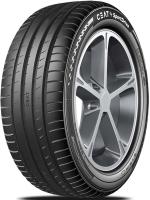
- Lower running-cost profile in test data: strong wear in ADAC (45,100 km projected vs 34,300 km for V107) and lower abrasion (80.5 vs 95 mg/km/t)
- Efficiency-oriented results: better fuel consumption in ADAC (5.5 vs 5.7 l/100 km) and lower rolling resistance in Auto Express (7 vs 8.97 kg/t)
- Refinement advantage: quieter in both Auto Express subjective noise (9 vs 8.8) and ADAC noise (71.5 dB vs 72.9 dB)
- Occasional aquaplaning/straight-line highlights: marginally better straight aquaplaning in ADAC (76.0 vs 75.9 km/h) and a near-tie in the 2026 wet-braking-only braking test (30.5 m vs 30.6 m)
- Consistently superior dry braking: wins 5/5 comparisons, typically ~5-11% shorter stopping distances (e.g., 34.0 m vs 38.3 m; 34.1 m vs 36.2 m)
- Stronger wet safety performance overall: wins 4/5 wet braking comparisons, often by large margins (e.g., 33.2 m vs 36.8 m; 25.4 m vs 28.3 m)
- Better handling pace and high-limit capability: quicker in dry handling (82.8 s vs 83.8 s) and wet handling (91.8 s vs 97.7 s) in Auto Express with more “UHP” grip and precision noted by testers
- Higher overall competitiveness in groups: markedly better overall placings across shared tests (e.g., 4/48 vs 21/48; 14/52 vs 28/52; 6/18 vs 12/18)
Dry Braking
Looking at data from five tyre tests, the Yokohama Advan Sport V107 was better during five dry braking tests. On average the Yokohama Advan Sport V107 stopped the vehicle in 7.2% less distance than the Ceat SportDrive.
Best In Dry Braking: Yokohama Advan Sport V107
See how the Dry Braking winner was calculated >>
Dry Handling [s]
Looking at data from one tyre tests, the Yokohama Advan Sport V107 was better during one dry handling [s] tests. On average the Yokohama Advan Sport V107 was 1.19% faster around a lap than the Ceat SportDrive.
Best In Dry Handling [s]: Yokohama Advan Sport V107
See how the Dry Handling winner was calculated >>
Wet Braking
Looking at data from five tyre tests, the Yokohama Advan Sport V107 was better during four wet braking tests. On average the Yokohama Advan Sport V107 stopped the vehicle in 6.57% less distance than the Ceat SportDrive.
Best In Wet Braking: Yokohama Advan Sport V107
See how the Wet Braking winner was calculated >>
Wet Braking - Concrete
Looking at data from one tyre tests, the Yokohama Advan Sport V107 was better during one wet braking - concrete tests. On average the Yokohama Advan Sport V107 stopped the vehicle in 10.24% less distance than the Ceat SportDrive.
Best In Wet Braking - Concrete: Yokohama Advan Sport V107
See how the Wet Braking - Concrete winner was calculated >>
Wet Handling [s]
Looking at data from one tyre tests, the Yokohama Advan Sport V107 was better during one wet handling [s] tests. On average the Yokohama Advan Sport V107 was 6.04% faster around a wet lap than the Ceat SportDrive.
Best In Wet Handling [s]: Yokohama Advan Sport V107
See how the Wet Handling winner was calculated >>
Wet Circle
Looking at data from one tyre tests, the Yokohama Advan Sport V107 was better during one wet circle tests. On average the Yokohama Advan Sport V107 was 1.39% faster around a wet circle than the Ceat SportDrive.
Best In Wet Circle: Yokohama Advan Sport V107
See how the Wet Circle winner was calculated >>
Straight Aqua
Looking at data from two tyre tests, the Yokohama Advan Sport V107 was better during one straight aqua tests. On average the Yokohama Advan Sport V107 floated at a 1.5% higher speed than the Ceat SportDrive.
Best In Straight Aqua: Yokohama Advan Sport V107
See how the Straight Aqua winner was calculated >>
Curved Aquaplaning
Looking at data from two tyre tests, the Yokohama Advan Sport V107 was better during one curved aquaplaning tests. On average the Yokohama Advan Sport V107 slipped out at a 1.6% higher speed than the Ceat SportDrive.
Best In Curved Aquaplaning: Yokohama Advan Sport V107
See how the Curved Aquaplaning winner was calculated >>
Subj. Noise
Looking at data from one tyre tests, the Ceat SportDrive was better during one subj. noise tests. On average the Ceat SportDrive scored 2.22% more points than the Yokohama Advan Sport V107.
Best In Subj. Noise: Ceat SportDrive
See how the Subj. Noise winner was calculated >>
Noise
Looking at data from one tyre tests, the Ceat SportDrive was better during one noise tests. On average the Ceat SportDrive measured 1.92% quieter than the Yokohama Advan Sport V107.
Best In Noise: Ceat SportDrive
See how the Noise winner was calculated >>
Wear
Looking at data from one tyre tests, the Ceat SportDrive was better during one wear tests. On average the Ceat SportDrive is predicted to cover 23.95% miles before reaching 1.6mm than the Yokohama Advan Sport V107.
Best In Wear: Ceat SportDrive
See how the Wear winner was calculated >>
Value
Looking at data from one tyre tests, the Ceat SportDrive was better during one value tests. On average the Ceat SportDrive proved to have a 39.45% better value based on price/1000km than the Yokohama Advan Sport V107.
Best In Value: Ceat SportDrive
See how the Value winner was calculated >>
Rolling Resistance
Looking at data from one tyre tests, the Ceat SportDrive was better during one rolling resistance tests. On average the Ceat SportDrive had a 21.96% lower rolling resistance than the Yokohama Advan Sport V107.
Best In Rolling Resistance: Ceat SportDrive
See how the Rolling Resistance winner was calculated >>
Fuel Consumption
Looking at data from one tyre tests, the Ceat SportDrive was better during one fuel consumption tests. On average the Ceat SportDrive used 3.51% less fuel than the Yokohama Advan Sport V107.
Best In Fuel Consumption: Ceat SportDrive
See how the Fuel Consumption winner was calculated >>
Abrasion
Looking at data from one tyre tests, the Ceat SportDrive was better during one abrasion tests. On average the Ceat SportDrive emitted 15.26% less particle wear matter than the Yokohama Advan Sport V107.
Best In Abrasion: Ceat SportDrive
See how the Abrasion winner was calculated >>
Real World Driver Reviews
Tyre Reviews also collects real world driver reviews for the Ceat SportDrive and Yokohama Advan Sport V107.
In total the Ceat SportDrive has been reviewed 0 times and drivers have given the tyre 0% overall.
The Yokohama Advan Sport V107 has been reviewed 20 times and drivers have given the tyre 73% overall.
This means in real world driving, people prefer the Yokohama Advan Sport V107.
View all Ceat SportDrive driver reviews >>
Conclusion
The Ceat SportDrive's case is primarily running costs and refinement rather than outright grip. In ADAC it shows notably stronger wear (45,100 km vs 34,300 km) and better measured fuel consumption (5.5 vs 5.7 l/100 km), plus it tends to test quieter (e.g., 71.5 dB vs 72.9 dB). It also posts lower rolling resistance in Auto Express (7 vs 8.97 kg/t). The trade-off is that multiple tests and tester notes flag limited wet grip/traction and below-average wet braking versus the top performers-differences that translate directly into longer stopping distances and reduced confidence. Practical takeaway: if you want UHP performance for enthusiastic driving and maximum safety margin, pick the Yokohama; if your priority is mileage/efficiency and you drive more conservatively, the Ceat can make sense, but it's not the stronger dynamic option in the wet.
Key Differences
- Braking is the headline gap: Yokohama wins all five dry-braking comparisons, cutting stopping distances by roughly 2.0-4.3 m depending on the test (about 5-11%).
- Wet braking generally favours Yokohama by a meaningful margin (often ~6-10%), despite one near-dead heat where Ceat is 0.1 m shorter (30.5 m vs 30.6 m).
- Wet handling/control separation is large where measured: Auto Express shows Yokohama 91.8 s vs Ceat 97.7 s, aligning with qualitative notes about Ceat's limited wet traction and stability.
- Ownership metrics go the other way: Ceat shows longer projected mileage (45,100 km vs 34,300 km) and better efficiency indicators (5.5 vs 5.7 l/100 km; lower rolling resistance in Auto Express).
- Noise/refinement tends to favour Ceat (71.5 dB vs 72.9 dB in ADAC; slightly higher subjective score in Auto Express).
- Overall ranking consistency: Yokohama is repeatedly near the front of groups while Ceat trends mid-to-lower pack, indicating broader capability across the full test scorecards, not just one metric.
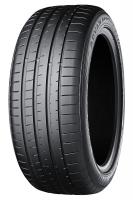
Overall Winner: Yokohama Advan Sport V107
Based on the tyre test data and user reviews we have in our database, the Yokohama Advan Sport V107 has demonstrated better overall performance in this comparison. However, as you can see from the spider diagram above, each tyre has its own strengths which should be considered in your final tyre buying choice.Similar Comparisons
Looking for more tyre comparisons? Here are other direct comparisons involving these tyres:
Ceat SportDrive Top Comparisons



Footnote
This page has been developed using tyre industry testing best practices. This means we are only comparing tests which have had both tyres in the same test.
Why is this important? Tyre testing is heavily affected by things like surface grip levels and surface temperature, which means you can only compare values from the same day. During a tyre test external condition changes are calculated into the overall results, but it is not possible to calculate this between tyre tests performed on different days or at different locations.
As a result you will see other tests on Tyre Reviews which feature both the %s and %s, but as they weren't conducted on the same day, the results are not comparable.
Lots of other websites do this sort of tyre comparison, Tyre Reviews doesn't.
Discussion
- No comments yet — be the first.