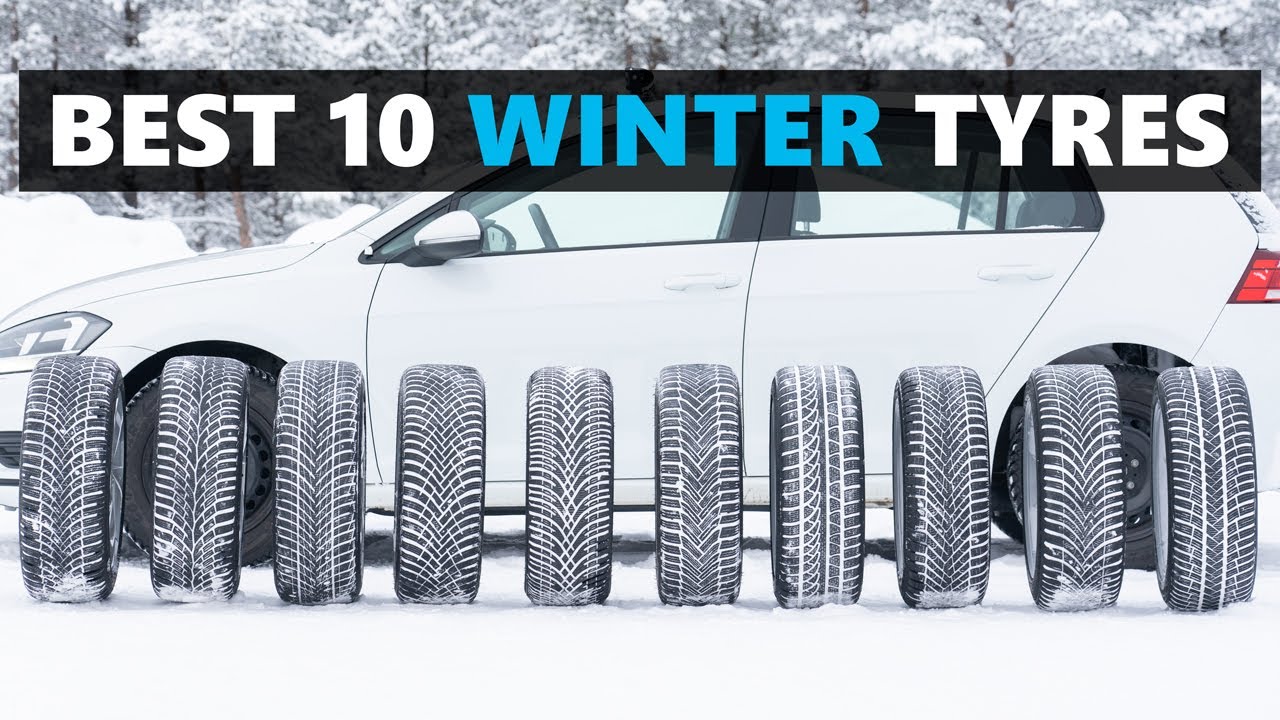
For this year's Tyre Reviews winter tyre test, we've got nine sets of the most popular winter tyres, half of which are brand new tyres for this year!
As always I'll be testing in the snow, wet and dry, and looking at rolling resistance, noise and comfort, to ensure you get the best overview of all the new winter tyres!
Testing Methodology
Test Driver
Jonathan Benson
Tyre Size
225/45 R17
Test Location
Professional Proving Ground
Test Year
2022
Tyres Tested
9
Show full testing methodologyHide methodology
Every tyre is tested using calibrated instrumented measurement and structured subjective assessment. Reference tyres are retested throughout each session to correct for changing conditions, ensuring fair, repeatable comparisons. Multiple reference sets are used where needed so that control tyre wear does not affect accuracy.
We use professional-grade testing equipment including GPS data loggers, accelerometers, and calibrated microphones. All tyres are broken in and conditioned before testing begins. For full details on our equipment, preparation process, and calibration procedures, see our complete testing methodology.
Categories Tested
Dry Braking
For dry braking, I drive the test vehicle at an entry speed of 110 km/h and apply full braking effort to a standstill with ABS active on clean, dry asphalt. I typically use an 100–5 km/h measurement window. My standard programme is five runs per tyre set where possible, although the sequence can extend to as many as fifteen runs if conditions and tyre category justify it. I analyse the full set of runs and discard statistical outliers before averaging. Reference tyres are run repeatedly throughout the session to correct for changing conditions.
Dry Handling
For dry handling, I drive at the limit of adhesion around a dedicated handling circuit with ESC disabled where possible so I can assess the tyre's natural balance, transient response, and limit behaviour without electronic intervention masking the result. I usually complete between two and five timed laps per tyre set, depending on the circuit, tyre type, and consistency of conditions. I exclude laps affected by clear driver error or obvious environmental inconsistency. Control runs are carried out frequently throughout the session, and I often use multiple sets of control tyres so that wear on the references does not become a meaningful variable. For more track-focused products, I also do endurance testing, which is a set number of laps at race pace to determine tire wear patterns and heat resistance over longer driving.
Subj. Dry Handling
Objective data is only part of the picture, so I also carry out a structured subjective handling assessment at the limit of adhesion on a dedicated dry handling circuit. I score steering precision, steering response, turn-in behaviour, mid-corner balance, corner-exit traction, breakaway characteristics, and overall confidence using a standardised 1–10 scale used consistently across my testing. The final assessment combines numeric scoring with written technical commentary. I complete familiarisation laps on the control tyre before evaluating each candidate.
Wet Braking
For wet braking, I drive the test vehicle at an entry speed of 88 km/h and apply full braking effort to a standstill with ABS active on an asphalt surface with a controlled water film. I typically use an 80–5 km/h measurement window to isolate tyre performance from variability in the initial brake application. My standard programme is eight runs per tyre set where possible, although the sequence can extend to as many as fifteen runs if conditions and tyre category justify it. I analyse the full set of runs and discard statistical outliers before averaging. To correct for changing conditions, I run reference tyres repeatedly throughout the session — in wet testing, typically every three candidate test sets.
Wet Handling
For wet handling, I drive at the limit of adhesion around a dedicated handling circuit. I generally use specialist wet circuits with kerb-watering systems designed to maintain a consistent surface condition. ESC is disabled where possible so I can assess the tyre's natural balance, transient response, and limit behaviour without electronic intervention masking the result. I usually complete between two and five timed laps per tyre set, depending on the circuit, tyre type, and consistency of conditions. I exclude laps affected by clear driver error or obvious environmental inconsistency. Control runs are carried out frequently throughout the session, and I often use multiple sets of control tyres so that wear on the references does not become a meaningful variable.
Subj. Wet Handling
Objective data is only part of the picture, so I also carry out a structured subjective handling assessment at the limit of adhesion on a dedicated wet handling circuit. I score steering precision, steering response, turn-in behaviour, mid-corner balance, aquaplaning resistance, breakaway characteristics, and overall confidence using a standardised 1–10 scale used consistently across my testing. The final assessment combines numeric scoring with written technical commentary. I complete familiarisation laps on the control tyre before evaluating each candidate.
Straight Aqua
To measure straight-line aquaplaning resistance, I drive one side of the vehicle through a water trough of controlled depth, typically around 7 mm, while the opposite side remains on dry pavement. I enter at a fixed speed and then accelerate progressively. I define aquaplaning onset as the point at which the wheel travelling through the water exceeds a specified slip threshold relative to the dry-side reference wheel. I usually perform four runs per tyre set and average the valid results.
Curved Aquaplaning
For curved aquaplaning, I use a circular track, typically around 100 metres in diameter, with a flooded arc of controlled water depth, usually about 7 mm. The vehicle is instrumented with GPS telemetry and a tri-axial accelerometer. I drive through the flooded section at progressively increasing speed, typically in 5 km/h increments, and record the minimum sustained lateral acceleration at each step. The test continues until lateral acceleration collapses, indicating complete aquaplaning. The result is expressed as remaining lateral acceleration in m/s² as speed rises.
Snow Braking
For snow braking, I drive the test vehicle at an entry speed of 50 km/h and apply full braking effort to a standstill with ABS active on a groomed, compacted snow surface, measuring 45-5 km/h. I generally use a wide VDA (vehicle dynamic area) and progressively move across the surface between runs so that no tyre ever brakes on the same piece of snow twice. My standard programme is twelve runs per tyre set, although the sequence can extend further if the data justify it. I analyse the full set of runs and discard statistical outliers before averaging. The surface is regularly groomed throughout the session. To correct for changing snow surface conditions, I run reference tyres repeatedly — typically every two candidate test sets.
Snow Traction
For snow traction, I accelerate the vehicle from rest on a groomed snow surface with traction control active and measure speed and time using GPS telemetry. I typically use a 5–35 km/h measurement window to reduce the influence of launch transients and powertrain irregularities. I use a wide VDA (vehicle dynamic area) and progressively move across the surface between runs so that no tyre ever accelerates on the same piece of snow twice. The surface is regularly groomed throughout the session. I complete multiple runs per tyre set and average the valid results. Reference tyres are run typically every two candidate test sets to correct for changing snow surface conditions.
Snow Handling
For snow handling, I drive at the limit of adhesion around a dedicated snow handling circuit with ESC disabled where possible. The circuit is groomed and prepared after every run while tyres are being changed, so each set runs on a consistently prepared surface. I usually complete between two and five timed laps per tyre set, excluding laps affected by clear driver error or obvious environmental inconsistency. Because snow surfaces degrade more rapidly than asphalt, control runs are carried out more frequently — typically every two candidate test sets.
Subj. Snow Handling
Objective data is only part of the picture, so I also carry out a structured subjective handling assessment at the limit of adhesion on a dedicated snow handling circuit. The circuit is groomed and prepared after every run while tyres are being changed, so each set runs on a consistently prepared surface. I score steering precision, turn-in behaviour, mid-corner balance, corner-exit traction, breakaway characteristics, and overall confidence on snow using a standardised 1–10 scale used consistently across my testing. The final assessment combines numeric scoring with written technical commentary. I complete familiarisation laps on the control tyre before evaluating each candidate.
Subj. Comfort
To assess comfort, I drive on a wide range of road surfaces (often dedicated comfort tracks at test facilities) at speeds from 50 to 120 km/h, including smooth motorway, coarse surfaces, expansion joints, broken pavement, and sharp-edged obstacles. I evaluate primary ride quality, secondary ride quality, impact harshness, seat-transmitted vibration, and the tyre's ability to absorb sharp inputs. Ratings are assigned on a 1–10 scale relative to the reference tyre.
Noise
For cabin noise assessment, I drive at controlled speeds, typically 50, 80, 100, and 120 km/h, on NVH test surfaces with defined texture characteristics. Calibrated microphones are positioned at ear height within the cabin. Measurements are taken using A-weighting, with one-third octave analysis where required to identify tonal features such as cavity resonance. Windows remain closed, ventilation is off, and ambient conditions are controlled so the data reflects the tyre rather than external interference.
Rolling Resistance
Rolling resistance is measured under controlled laboratory conditions in accordance with ISO 28580 and UNECE Regulation 117 Annex 6. The tyre is mounted on a test wheel and loaded against a large-diameter steel drum. After thermal stabilisation at the prescribed test speed, rolling resistance force is measured at the spindle and corrected according to the relevant procedure. The result is expressed as rolling resistance coefficient, typically in kg/tonne.
How each category is weighted in the overall score:
Dry20%
Dry Braking55%
Dry Handling40%
Subj. Dry Handling5%
Wet35%
Wet Braking50%
Wet Handling25%
Subj. Wet Handling5%
Straight Aqua10%
Curved Aquaplaning10%
Snow30%
Snow Braking40%
Snow Traction10%
Snow Handling30%
Subj. Snow Handling10%
Comfort5%
Subj. Comfort50%
Noise50%
Value10%
Rolling Resistance100%
Snow
The slowest tyre on test was the Vredestein Wintrac Pro, 5.2% off the best. This tyre was a joy to drive as everything it did was smooth and progressive, but it just lacked a little grip.
The next bundle of tyres were less than 4% behind the best, and you're going to be surprised, it's the Semperit, Continental and Bridgestone. If you know your winter tyres, you'll know this is unusual as the Continental and the Bridgestone are excellent in the snow, and they all were here too, there are just some very new tyres in this group which have performed very well! The Bridgestone felt the most rounded, but they were all incredibly close.
The Michelin Alpin 6 was next, less than 3% off the best, again lovely to drive, just picked up a little more understeer than most hurting the lap time, perhaps it'll do better in traction and braking.
The new Pirelli Cinturato Winter 2 was fourth, 2.3% off the best, and the new Hankook Winter ICept RS3 was third, just 1.2% behind the fastest! The Pirelli was subjectively lovely, you could drive it easily and quickly and I super enjoyed it, and the Hankook just had a huge amount of grip!
Kleber, which is a Michelin second tier brand came second. This will be no surprise if you've been following winter tyre testing last year, the Krisalp HP3 is constantly one of the best, if not the best in the snow in all tests, so when I found out it was the Kleber here (I was testing blind) I wasn't overly surprised.
What I was surprised about was the best tyre in snow handling being the Petlas, which is by far the cheapest tyre here. This tyre was simply exceptional in these very cold conditions, it was fastest in snow handling and had very good marks subjectively too, the only negative perhaps being slightly peaky grip.
You might be confused, as generally the message from testing is that budget tyres are bad. In this example, it's not the biggest surprise that the Petlas has done well in the snow, as cheap tyres can be very good at one thing, at the expense of everything else.
What will be a surprise is if this tyre also does well in the wet.
Snow Braking
Spread: 2.40 M (8.8%)|Avg: 28.48 M
Snow braking in meters (45 - 5 km/h) (Lower is better)
Snow Braking: Safety Impact: Best vs Worst Tyre
Snow Traction
Spread: 0.70 s (14.9%)|Avg: 5.06 s
Snow acceleration time (5 - 40 km/h) (Lower is better)
Petlas Snow Master W651
4.70 s
Kleber Krisalp HP3
4.70 s
Hankook Winter I cept RS3
4.90 s
Michelin Alpin 6
5.10 s
Bridgestone Blizzak LM005
5.10 s
Continental WinterContact TS 870
5.10 s
Pirelli Cinturato Winter 2
5.10 s
Vredestein Wintrac Pro
5.40 s
Semperit Speed Grip 5
5.40 s
Snow Handling
Spread: 6.30 s (5.6%)|Avg: 115.26 s
Snow handling time in seconds (Lower is better)
Petlas Snow Master W651
112.20 s
Kleber Krisalp HP3
113.30 s
Hankook Winter I cept RS3
113.60 s
Pirelli Cinturato Winter 2
114.90 s
Michelin Alpin 6
115.60 s
Bridgestone Blizzak LM005
116.20 s
Continental WinterContact TS 870
116.50 s
Semperit Speed Grip 5
116.50 s
Vredestein Wintrac Pro
118.50 s
Wet
Unfortunately the Petlas was not a surprise in wet handling. The tyre just slides around totally unpredictably, the steering really tells you nothing that's going on underneath you, and the grip is so limited it was the only tyre I did two laps instead of four, though they were exactly the same, then gave up as I didn't want to risk coming off and damaging the test vehicle. It might only be 15 seconds in lap time but I can't explain how difficult it was to drive.
Kleber and Semperit were next, way ahead of the budget, but still around 5 seconds off the best. The both had a little oversteer in the balance but were otherwise fine, just lacking a bit of wet grip.
The Michelin Alpin 6 finished sixth. This tyre had the safest balance of the group, with almost no unpredictability or oversteer, but lots of mid corner understeer really hurts a lap time.
Pirelli and Vredestein almost tie for fourth in time, and were two of the most fun tyres to drive, both feeling playful and giving good steering feedback and response, these two were fun to drive.
The smallest margin ahead was the Hankook which was certainly grippy, but lost a little time on corner exit as you had to be a little more careful with the throttle.
That only leaves Continental and Bridgestone, and if you're familiar with winter tyre testing, I bet you can guess who was fastest. The Continental put up a good fight, and rewarded a little more of a smoother driving style, but it couldn't knock bridgestone from it's almost guaranteed number one spot in wet handling. Once again the Blizzak LM005 was the best in wet handling, feeling extremely strong on the brakes, turn in and mid corner, with a safe understeer balance like the Michelin, just more grip.
Wet Braking
Spread: 12.20 M (44.7%)|Avg: 31.27 M
Wet braking in meters (80 - 5 km/h) (Lower is better)
Wet Braking: Safety Impact: Best vs Worst Tyre
Wet Handling
Spread: 14.80 s (15.3%)|Avg: 100.99 s
Wet handling time in seconds (Lower is better)
Bridgestone Blizzak LM005
97.00 s
Continental WinterContact TS 870
97.70 s
Hankook Winter I cept RS3
98.80 s
Vredestein Wintrac Pro
99.00 s
Pirelli Cinturato Winter 2
99.00 s
Michelin Alpin 6
100.60 s
Semperit Speed Grip 5
102.20 s
Kleber Krisalp HP3
102.80 s
Petlas Snow Master W651
111.80 s
Straight Aqua
Spread: 12.30 Km/H (14.7%)|Avg: 79.54 Km/H
Float Speed in Km/H (Higher is better)
Kleber Krisalp HP3
83.50 Km/H
Continental WinterContact TS 870
82.40 Km/H
Hankook Winter I cept RS3
81.80 Km/H
Semperit Speed Grip 5
81.30 Km/H
Bridgestone Blizzak LM005
80.00 Km/H
Michelin Alpin 6
79.90 Km/H
Pirelli Cinturato Winter 2
78.90 Km/H
Vredestein Wintrac Pro
76.90 Km/H
Petlas Snow Master W651
71.20 Km/H
Curved Aquaplaning
Spread: 3.30 m/sec2 (40.7%)|Avg: 7.03 m/sec2
Remaining lateral acceleration (Higher is better)
Continental WinterContact TS 870
8.10 m/sec2
Semperit Speed Grip 5
8.00 m/sec2
Michelin Alpin 6
7.60 m/sec2
Bridgestone Blizzak LM005
7.30 m/sec2
Kleber Krisalp HP3
7.10 m/sec2
Hankook Winter I cept RS3
7.10 m/sec2
Pirelli Cinturato Winter 2
6.80 m/sec2
Vredestein Wintrac Pro
6.50 m/sec2
Petlas Snow Master W651
4.80 m/sec2
Dry
This is what I learnt during dry handling. They're all non performance winter tyres. The data is below, and if you want a 17" non performance winter tyre to handle well in the dry, I'd go with the Pirelli.
Ignoring the budget and the Kleber, they were all actually very impressive considering dry handling testing is WAY out of their designed operating parameters.
Dry Braking
Spread: 2.80 M (7.7%)|Avg: 38.09 M
Dry braking in meters (100 - 5 km/h) (Lower is better)
Dry Braking: Safety Impact: Best vs Worst Tyre
Dry Handling
Spread: 2.10 s (2.6%)|Avg: 80.42 s
Dry handling time in seconds (Lower is better)
Bridgestone Blizzak LM005
79.80 s
Vredestein Wintrac Pro
79.90 s
Semperit Speed Grip 5
79.90 s
Continental WinterContact TS 870
80.20 s
Hankook Winter I cept RS3
80.30 s
Pirelli Cinturato Winter 2
80.40 s
Kleber Krisalp HP3
80.70 s
Michelin Alpin 6
80.70 s
Petlas Snow Master W651
81.90 s
Environment
The internal noise and subjective comfort of the tyres was all extremely close, but the Pirelli and Bridgestone had a small edge. The Petlas was the most noisy tyre internally, but the difference from best to worse was less than 2 dB.
Noise
Spread: 1.30 dB (1.9%)|Avg: 69.30 dB
Internal noise in dB (Lower is better)
Pirelli Cinturato Winter 2
68.50 dB
Bridgestone Blizzak LM005
68.90 dB
Kleber Krisalp HP3
69.10 dB
Vredestein Wintrac Pro
69.20 dB
Semperit Speed Grip 5
69.30 dB
Continental WinterContact TS 870
69.50 dB
Hankook Winter I cept RS3
69.60 dB
Petlas Snow Master W651
69.80 dB
Michelin Alpin 6
69.80 dB
Subj. Comfort
Spread: 15.00 Points (15%)|Avg: 92.78 Points
Subjective Comfort Score (Higher is better)
Michelin Alpin 6
100.00 Points
Bridgestone Blizzak LM005
100.00 Points
Pirelli Cinturato Winter 2
100.00 Points
Kleber Krisalp HP3
90.00 Points
Vredestein Wintrac Pro
90.00 Points
Continental WinterContact TS 870
90.00 Points
Semperit Speed Grip 5
90.00 Points
Hankook Winter I cept RS3
90.00 Points
Petlas Snow Master W651
85.00 Points
The Petlas did have a huge lead in fuel use with an unusually low rolling resistance. The Bridgestone was the best of the rest.
Rolling Resistance
Spread: 2.50 kg / t (37.3%)|Avg: 8.46 kg / t
Rolling resistance in kg t (Lower is better)
Petlas Snow Master W651
6.70 kg / t
Bridgestone Blizzak LM005
8.00 kg / t
Semperit Speed Grip 5
8.20 kg / t
Continental WinterContact TS 870
8.40 kg / t
Kleber Krisalp HP3
8.80 kg / t
Hankook Winter I cept RS3
8.80 kg / t
Pirelli Cinturato Winter 2
8.90 kg / t
Michelin Alpin 6
9.10 kg / t
Vredestein Wintrac Pro
9.20 kg / t
19,000 km
£1.45/L
8.0 L/100km
--
Annual Difference
--
Lifetime Savings
--
Extra Fuel/Energy
--
Extra CO2
Estimates based on typical driving conditions. Rolling resistance accounts for approximately 20% of IC vehicle fuel consumption and 25% of EV energy consumption. Actual savings vary based on driving style, vehicle weight, road conditions, and tyre age. For comparative purposes only. Lifetime savings based on a 40,000km / 25,000 mile tread life.
Fastest dry and wet handling, shortest wet braking, good aquaplaning resistance, excellent snow braking, low noise, lowest rolling resistance.
Long dry braking distances, average snow handling.
As in previous tests the Bridgestone Blizzak LM005 wasn't the best in dry braking, and wasn't quite as balanced as some of the other tyres in snow handling, but they were the only weaknesses of the LM005. The LM005 excelled in the wet grip tests with the best grip in wet handling and the shortest wet braking distances, it also won the snow braking and performed well in snow traction, had some of the lowest noise on test and the lowest rolling resistance of the top tyres. A thoroughly deserved test win for the Japanese giant, congratulations to Bridgestone
Excellent in the wet, very good snow braking and traction, good dry handling, low rolling resistance.
Average in car noise, average snow handling.
The Continental WinterContact TS870 might be one of the older new tyres in this test, but you can never count Continental out of a winter tyre test, and the TS870 had an exceptional run of results. It was the best tyre in the wet overall, being one of the few tyres which excelled in both the wet grip tests and the deeper water tests of aquaplaning. In the snow it was better longitudinally than laterally, which helps it in the overall results as braking is the highest weighted scoring, and it also was good during dry handling even if it struggled a little in dry braking, PLUS had a relatively low rolling resistance. Very impressive tyre, another one worthy of being highly recommended
A very balanced tyre, excellent grip in all wet tests, good in the snow, good in the dry.
Slightly elevated internal noise level, average rolling resistance.
The new Hankook Winter I*Cept RS3 continues Hankooks impressive results, and other than an outlier in snow braking, it is a winter tyre with no major weakness. IT was impressive in the dry, very impressive in the wet and thoroughly enjoyable around the snow handling track with predictable handling and high levels of grip. A good aquaplaning resistance and high snow traction cements the tyre in third place and is a tyre I highly recommend
Enjoyable dynamic tyre to drive in all conditions, short dry braking, good snow handling, lowest internal noise.
Low aquaplaning resistance, weaker snow braking, high rolling resistance.
The new Pirelli Cinturato Winter 2 was the most fun tyre to drive in all conditions. It was the winter tyre of the group that seemed to focus more on lateral grip than longitudinal grip, and while it wasn't the best in snow braking or the aquaplaning tests, it was great in snow handling, wet handling and dry handling and a very likable tyre. A deserved fourth overall and a tyre I recommend
Excellent in the dry with fast handing and short braking distances, very good aquaplaning resistance, very low rolling resistance.
Low grip in wet handling and braking, limited grip in the snow.
The Semperit Speed Grip 5 in fifth was essentially exactly as good as the Vredestein in the dry, not as good in the wet grip tests but much better in the aquaplaning tests, a little better in the snow but it did have one of the best rolling resistances on test. I'd like to see some more wet performance from this tyre to push it further towards the best of the group.
Excellent in the dry with fast handing and short braking distances, good trip in the wet, low noise.
Weakest snow handling result of the group, low aquaplaning resistance, low snow traction, very high rolling resistance.
Sixth place overall went to the impressive Vredestein Wintrac Pro. This tyre was excellent in the dry, held its own in the wet with good subjective handling and was a quiet tyre. Unfortunately it wasn't the strongest in the snow with the slowest snow handling time and the worst traction, it struggled in the deeper water of the aquaplaning tests and had the highest rolling resistance of all the tyres on test. Potentially an option for climates like the UK who really want to fit a winter tyre instead of an all season tyre, but not a strong option anymore for a climate with a lot of snow.
Shortest dry braking, good aquaplaning resistance, safe snow handling balance.
Poor snow braking, reduced grip in the wet grip tests, high rolling resistance.
The Michelin Alpin 6 finished seventh overall. As usual, it was a very good tyre in the dry with the shortest dry braking, however its wet and snow performance didn't live up to the usual Michelin brand expectations and it had one of the highest rolling resistances on test. A test to forget for the French manufacturer, especially after the Michelin CrossClimate 2 won the Tyre Reviews all season test in the same size and same conditions.
Excellent in the snow, high aquaplaning resistance, low noise.
Long wet and dry braking distances.
The Kleber Krisalp HP3 was another tyre that excelled in the snow, and it had great straight aquaplaning resistance, and while it was nowhere near as bad as the Petlas in the wet, it still couldn't match the best on test, especially in the important wet braking test meaning eighth overall is the best it could manage.
Excellent in the snow, fastest snow handling lap, best snow traction and good snow braking. Very low rolling resistance.
Extremely long wet and dry braking distances, very difficult to control in wet handling, very low aquaplaning resistance.
The Petlas Snowmaster W651 really is the snow master of this group, finishing as one of best in the three snow tests. However like other budget tyres it can't continue that performance onto other surfaces and is particularly bad in wet handling, with low grip and a very difficult balance.
Does anyone know why tires in size 215/50/r17 are so much more expensive than 225/45/r17? The difference is often almost a quarter of the price. It used to be a rarely used size, but nowadays you see 215/50/r17 on more and more vehicles, including many EVs, so it is no longer a rare size.
For a mild winter that is often seen in southern England, do you recommend using a winter biased all season tyre during the winter to get better wet/dry grip or is it still best to use a winter tyre?
The same thought is running through my head. I live in Poland and most of the winter-tyre season it's about 5-10 degrees C with occasional slushy snow. Currently i'm on Goodyear assymetric 6, but don't know what is the best option for me, especially in terms of wear during long, "hot" highway voyages
Hi Johnatan, great video, as usual. I have a question.... Which is the difference between the Hankook Winter Icept Evo3 (W330) and the Hankook Winter Icept RS3 (W462) ... because in this vídeo you try the W462, but on the later winter tyre test video you tried the W330 (https://www.tyrereviews.com...
Dear Johnatan, With many of the tests you publish I wonder how much the tyre pressure influences the results. I assume that for the tests you use tyre presessures prescribed for the vehicle by the manufacturer, however sometimes the manufacturer recommends more than one option (light load / full load / speeds above 160 km/h etc.) and in such cases which pressure would you use for the tests?
Please, would it be possible in the future to have a test where you would show how much tyre pressure influences the results? On my car I have noticed that even 0,2 bar (3 psi) deviation makes a difference as for handling and +0,4 bar starts to have negative impact on ride comfort.
Just to make sure my pressures are not too low even when the temperature drops I prefer to have +0,1 bar above the manufacturer recommendation, but I would love to learn what I loose and what I gain when I deviate from the prescribed pressures (-0,2 bar, +0,2 bar, front axle/rear axle, both axles). Would be the change in udersteer/oversteer significant for you dry/wet lap times and dry/wet braking distances?
Increased pressures are good for fuel economy, however at some pressure we start to lose safety and comfort. A tyre pressure focused video would be highly appreciated. ----- As an engineer I really apreciate how in-depth information you try to provide. Tyrereviews are a real gem. In the past years I have purchased quite a lot of tyres for my family based on your tests and reviews. With the Michelin PS4 you even convinced me to give Michelin a second chance. After my repeated experience with Michelin Primacy (version 2003 - horrible on wet, average on dry, 2008 - bad on wet, average on dry) I have said "never ever Michelin". However, you were right and I was very happy with the Michelin PS4. Thank You and Happy New Year 2023!
Happy new year! We usually use the standard load pressures, not the higher. We generate more heat than usual so I like to start as low as the car recommends.
I've actually tried to do a tyre pressure test a number of times but not had much luck with the final result. It's definitely high on the list. A very interesting subject but I think application can vary the results quite a lot!
Waiting for your comments on a topic. Since the performance of winter tires on dry roads is bad, which tire should be preferred in a place where it is usually cold (below 7 degrees) in winter but generally dry or wet roads. Thanks for answer.
I have the same question. Winter tyres are mostly tested on snow. Where I'm at (Central Europe) I do very little driving on snow -- and it is mostly the last few hundred meters leading to a mountain hut. I'd rather not sacrifice safety on 99% of the roads I drive in winter by using winter tyres.
In other words, what tyre would be best for winter (not summer), cold temperatures (generally between -5 and +10°C) with dry or wet (salted) roads? Is it still a winter tyre, or should I get an all season tyre to drive with between November and April?
Summer tyres work better then winter tyres on the dry and wet at temperatures above 0 and bellow +7 degrees C. It is a rule of thumb that you should switch to winter tyres once the *average day temperature* is bellow +7 degrees C.
I think you might have gotten that a little backwards. Winter tyres generally start working better in t he wet around 7c, more realistically 3-5c. In the dry the summer tyre will be better no matter what the temperature is.
A request for future tyre tests: Can you please make photos of the tyres on the rim because of rim protection bar? I searched for information on it but it´s impossible to find. Many manufacturers are write their tyres have a RPB but on some tyres you don´t see much of it.
The only tyre I know with a very good RBP in 225/45R17 is the LM005, I see it live at my brothers car
II completely agree with this suggestion. It is incredibly difficult to find information about whether tires have rim protection and to what extent. I currently have Bridgestone Blizzak LM005 that are almost due for replacement and have beautiful thick rim protection, which makes these tires look very nice on the rim. Unfortunately, they make a lot of noise and I want to choose a different brand and possibly switch to all-weather tires (CrossClimate 2 for example) for my winter rims because I live in a very mild climate (the Netherlands) with hardly any snow. I don't understand why information about rim protection is so difficult to find. Even writing to tire manufacturers does not provide much clarity. So showing this clearly when testing tires would be a big plus!
Hello, I was waiting for a comparison of winter and all season tyres, but it's getting time to make the decision for me and I can't wait much longer. What would you recommend for a fwd passanger car for winter season (I have 2 sets of wheels) for this use: Mostly weekend trips to mountains in Central Europe (Czechia) - 95% dry/wet and final few kilometers can be snowy and sometimes difficult to climb. Snow climbing capability can mean the difference between getting there or stopping on a side of the road and putting snow chains on. Could Michelin Cross Climate 2 do it, or should I rather go with Brigestone Blizzak or Continental Winter Contact or anything else? It won't be driven in summer. The car is Renault Laguna 3 grandtour diesel, tyre size 205/50-R17. Thank you.
If you are ready (anyway very, very rarely, if at all) to use the front 2 snow chains then also all seasons tyres fit very well. In those 95% dry/wet the new top all seasons Michelin Cross Climate 2 (or Hankook, Conti, GY, Dunlop or Bridge equivalent) will be better to much better, and in the remaining very rarely 5% they will be only around 15% worse than the real winter tyres. But the Czech streets, even in the small mountains are pretty well maintained, so I would go and choose the fresh smelling Michelin Cross Climate 2! You can then safely cover also the autumn and the spring and therefore your summer tyres will last more years. You will be positively surprised!, especially due to the global warming and more and more soft weather conditions...
I am dropping my Michelin Crossclimate 2 after one year and 15K of use. Wear is insane, it is down to 4mm, both front tyres show minor structural shoulder/upper sidewall unevenness (interrior structural damage?). Yes I have had the car to alignment twice. Never had a problem with my Crossclimate+ but I am moving away from Michelin and probably from all-seasons in general. Summer heat in Central Europe and highway speeds is killing it. The thermic shock is too much for the compound. For city trips as a second car or in tempered summer climate should probably be fine.
Wow I just found a bunch of useful info on the comment section.
I'm really torn between the a005 evo and the lm005. It's so close! I'll change back to the eagle f1 in the summer anyway so warm weather performance is of no concern. However as I will only drive on snow 1 or 2 days a year it seems like the a005 would provide a bit more fun during winter.
With my previous winter tyre I had the confidence that the tyre would always grip when it was dark and couldn't really see the road. Would hit puddles, mud, etc and the car would still grip.
Would the a005 evo provide that or should I look at the lm005?
Just noticed that Carwow did a winter traction test on that indoor ski slope people use ... it was so poor.
We learnt that summer are worse than winter and AWD better than 2WD ... golly.
They should have gone downhill at least and shown that reduced braking distances in snow are more important than just going as fast as possible from stopped !
Also, they should at least done an all season on AWD v winters on 2wd ! Mind you it is more Top Gear light entertainment rather than more studious stuff on here.
You need to ping them and tell them how to do it right !
Thanks for the great insight you give through your tests and evaluation of other's tests. I've had a good read and I think I've narrowed it down to two tyres that would suit my needs best over winter months.
I might be over-analysing it but I can't work out whether I'd be best fitting GY Vector 4seasons gen 3 or Vredestein Wintrac Pro.
It's for the winter wheels in 225-45-17 94v XL square setup for my BMW 330d. I live in Yorkshire. I need to be able to get up and down a steep hill with traffic lights in the snow/ice/slush and then up the motorway for work. I go to Wales and East Anglia over Christmas. I want to be able to use the car's performance in milder winter conditions so I'd like to retain as much of the wet and dry handling characteristics to normal as possible. For summer I have 225-35 and 255-30 staggered 19inch.
GYs about £100 cheaper for a set, perhaps better suited given most of the time above 0 temps but seem designed for lower powered and lighter cars as a touring tyre and brake poorly in the dry. Vreds designed as UHP and stand out in tests as what I'm after. But with them being winter tyres would they feel less stiff/direct than the GYs most of the time and even perform worse braking in milder temps? Can you offer any advice please?
Both tyres will get you up the hill. As I've not directly compared them it would be tough to give you good advice but given the Goodyears are cheaper and will wear better, that's where my money would go.
Thanks. I did compare their respective outcomes in your 2022 tests (Vred generally better) but wasn't sure how reliable that would be. The Goodyear won the Autobild 2021 all season test on a 3-series so I don't think I'll go far wrong with it. I will update in the spring!
Hi Jonathan, thanks for your work. You cost me a lot of money in tyres over the years! Will there be a review of ultra high Performance winter tyres? I’ve got a 3.2 Mk1 AUDI TT and spend a lot of time on the continent as well as the UK. I would rather sacrifice outright performance in the warmer months for winter safety. Spirited but not aggressive high speed driving is my style, mostly motorway miles. Crucially, I’m more interested in the grippiest tyre on COLD and damp roads, not necessarily “wet” or “dry”. The tarmac and ambient temperatures from Nov-Mar are more of interest to me when it’s consistently cold. I’m interested in the effect of the tyre compound and with only a minor interest in snow. What is your opinion please on my 4 choices: Eagle Asym 6 Cross Climate 2 TS870 Wintrac Pro Or would you push for something more exotic like a P Zero Winter or do you have a personal choice not listed?
Cold and greasy roads, fast but not aggressive driving, Audi TT, quiet interior noise. Preferably a car specific tyre rather than a generic tyre nominally fitted to unnecessarily heavy vehicles like an SUV.
Would you rate that better than the CC2? My wife has the Cross Climate on her A1 and I don’t think it is has the performance necessary for my driving. Do you think the Bridgestone is ultimately gripper on cold damp surfaces, greasy roads not wet roads, than the Asym 6 then? Thanks for your opinion .
Perfect, I promise this is the last question: Do you think the Weather Control will ultimately out handle an Ultra High Perf winter tyre specifically designed for sports cars? P Zero Winter, Wintrac Pro, 870 P etc. I've just found the Cross Climate 2 runs out of grip quickly in anything other than adverse weather and my focus is on cold, damp fast road driving, not a very wet road.
Hi jonathan, thanks for this extremely well prepared test.
My questions is, what was the weather temperature while you're dry testing the tyres? My planned usage including too much extreme cold weather dry tarmac driving and cold dry performance is very important for me. Usually I don't take the car out when it snows (not because i don't like driving on snow, because people who can't drive on snow or going out with summer tyres and causing traffic). Basically does the performance on hot surfaces differ greatly from the performance on cold surfaces?
Finally, do you have any data on winter tires wearing excessively above 7 degrees (on tarmac)?
Were the tests performed in similar conditions? I was expecting that the all-weathers would have an advantage on dry and wet but based on your results, for wet and dry braking, the winter tyres had the advantage (althought the handling numbers were slightly better for the all-weathers) and for snow braking, your chart above says 45-5 km/h for the winter while your all-weather snow-braking was 40-5 km/h and the winters beat the all-weathers (which I expected) but if it's from a faster speed, that's a much more significant difference.
Hi, I wonder how we should regard EU tyre labels. I'm searching silent tyre.
Kleber Krisalp HP3: EU label 69 dB, in you test 69,1 dB --> seams clear Continental WinterContact: EU label 70 dB, in you test 69,5 dB --> seams clear but: Bridgestone Blizzak LM005: EU label 71 dB, in you test 68,9 dB --> 2 dB difference Vredestein Wintrac Pro: EU label 72 dB, in you test 69,2 dB --> 3 dB difference
Why we have such differences?
I should rather focus on UE labels or test results?
I suspect that the tests may measure different things (I think that the UE labels show external noise [no use to people inside the car] rather than internal noise) or under different conditions (different car tested w[hich might affect how much sound is damped], maybe the UE ones under 'lab' rather than real-world conditions)?
Hello, In your test Bridgestone's dry braking is the worst and in the Auto Zeitung is the 2nd best . In your test Bridgestone is 1st at braking on snow when tested by Auto Zeitung is not at the top. Any idea why that happened ? Thanks.
Nice work! Unfortunately Continental WinterContact TS 870 aren't provided for 255/35/R19 size and for this size there is only previous model available - TS 860 S.
What would you recommend for that size? I live in Poland and average temperature in winter is around 0C, the main roads are mostly scraped to the asphalt and in addition there is salt, often there is a lot of slush. However, there can be some snowy days and temperature can go really low sometimes and especially on b-roads it can be not so comfortable.
Still many people drive here with all seasons tyres but I'm afraid about those snowy days and icy roads that can sometimes be expected. The car is Audi A5 2017 quattro, 252HP.
It seems that I should choose from Continental TS 860 S (older ones), Blizzak LM005 and Hankook Winter I cept RS3.
Are the results from this test directly comparable to the 2022 all season test? If so, most of the winter tyres seem to be better in the wet and dry than the all season tyres!
Useful for those considering (especially under the current economic conditions) whether its worth changing to, say, winter-bised all season tyres than having to buy/store a set of summers + winters and smaller wheels. As you've said quite a bit in the past 2-3 years, all-season tyres have come on a LOT.
Interesting how price can by different in different country's
For ex I made price chart for Poland, 1. Petlas - 944 pln for a set 2. Hankook - 1034 pln 3. Semprit 1068 pln 4. Kleber 1100 pln 5. Michelin 1376 pln 6. Pirelli 1379 pln 7. Bridgestone 1384 pln 8. Continental 1392 pln X. Vredestein - this particular model in unavailable
The biggest difference is at bridgestone.. it's more expensive here than pirelli or michelin, and almost the same price as continental, which is the most expensive tire.
Some of it can also be down to supply and demand, and where the retailer used it sourcing stock from, but historically Michelin is one of the most expensive so that's a surprising list! Thanks for sharing
Had to change because it´s easier for me to switch to 18" rims, so the iCept Evo³ would be my choice instead of the RS3. I think this is also a very good tyre.
The Pirelli is a bit risky, my dealer can´t guarantee the DOT.
Hi Jonathan! I was eagerly anticipating this test to come out. Thank you! I noticed there is no Goodyear in the written results (only in video).
Despite I watched all your winter and all season reviews, I m still in dilemma: should i go: - winter (Conti 870 P, Blizzak LM005, GY UltraGrip Performance +) or - all season ( Conti AllSeasonContact, GY Vector 4 Seasons Gen-3, Bridgestone Weather Control A005) for Tiguan first gen. Also what size do you recommend: 235/55/17 or 215/60/17 , both are factory for him.
I m not Michelin fan, i feel like they are cheating with the thread depth, plus it looks like there is too big hype and marketing involved in CC2 reviews everywhere. Some users reports increased fuel consumption and rough ride. But if you honestly recommend them, i could try it ( i never ride all season tires)
Weather conditions here are sort of similar to yours, but some years could be really snowy. The roads are mostly scraped to the tarmac plus they put salt, so we end up with a lot of slush (except on some b-roads and parking lots)
Whit that being said, i would say: all seasons are for me. Most of the winter, temps are around -5 to 15C (20C) , but the problem is that we also have few months with low temps like -15C or less, and I m not sure how all seasons would behave on such temps on icy/snow roads. My main concern is safety, then comfort, fuel efficient... and i like to drive dynamically :)
Hope that you can get a good, full picture and that you could help me with decision.
I would probably go with the TS870P, they're very all season like for a winter tyre, and dynamically they should be amongst the best. That said, the allseasoncontact was surprisingly nice feeling in my 17" test this year.
As for size, if both are allowed I would go with whatever is cheaper, but if you enjoy driving, the 235/55 should feel a little more sporty everything else being equal.
I am also not a great Michelin fan, but how do they cheat regarding the thread depth ? it is similar to all the other tyres, or I am missing something.
They don't cheat, generally their compounding wears better than competition so they can start with less tread and in theory get the same or more mileage.
Thank you for the explanation by the way what happened to Dunlop they seem to have disappeared from test comparison with no new models since long time with last year all season tyre being their last product absent from major tests.
Hi, my opinion is based on the fact that Michelin tires have ~1 mm less tread depth than Continental while it weighs 1kg more (exact values vary between models, of course but this is a rule of thumb: less tread depth more weight). Most of the tests are done with brand new tires, and some results greatly depend on the tread dept, so If Conti can accomplish similar results (with deeper treads) as Michelin, in a year or two, when it wears, it will get even better results. I m not covering too many miles a year (8k-10k, and less than half of that on winter tires) so I'm not interested in tire mileage (i will change it after ~5-6 years anyway) but rather how I spend those miles. Again this is just my personal opinion. Cheers!
thank you for the answer this is very interesting insight; I tend to drive more than 30k per year and 15k approximately on winter tyres, currently I have the Bridgestone Blizzak LM 005 but I need to equip the other family car with winter tyres in november/december, for someone like me who wears tyres in 2/3 years what would be better the deep tread ones or shallow tread ones ? best regards
I couldn't find the link for my previous comment but here it is, the last year's winter test: https://www.tyrereviews.com... you can see what I was talking about weight and tread depth. Michelin Pilot Alpin 5: Weight: 10.10kgs; Tread: 7.6mm Goodyear UltraGrip Performance+: Weight: 9.48kgs Tread: 9.1mm
Common sense says the GY would last longer due to the more tread, but the commercials say that Michelin makes wonders and their tires last longer than competitive brands. I never drive Michelin and I cannot comment on that.
I m definitely not the right person for an opinion on long-lasting tires. Check the reviews here and see what other ppl say.
What are your thoughts on Blizzak LM 005? Any experience with slush or icy roads? How do they behave in higher temps (up to 15C) and highway speeds?
I drive an Opel Astra and the tyre size is 205/55/16 91 H . I drive mainly in the Netherlands but I also travel to Switzerland and Northern Italy. In the Netherlands winters are generally mild with often rainy weather but very seldom snow or ice. In the rain the tyre feels exceptionally grippy and safe, and probably thanks to the excellent state of the roads and asphalt it feels very quiet and comfortable. In higher temperatures on dry asphalt in March and April the tyre feels like a summer tyre, but you should consider that speed limits are 100 kms on main roads and roads are generally straight therefore I cannot assess how it drives in dry conditions on a twisty road.. On long travels I was able to achieve 4.2 liters per 100 kms therefore the tyre offers low resistance. driving in Switzerland and Northern italy I faced snow and lower temperatures around -10/-15 the tyre still felt safe but in those conditions I was driving slow in a column of cars and trucks. However braking always felt safe and consistent without and signs of skidding. Regarding driving on icy roads it might have happened one or twice but again I was driving slowly and safely and never broke traction. Having read multiple tests and opinions the Bridgestone Blizzak LM 005 can be described as the most all season winter tyre or a winter tyre with with all season qualities.
Thanks Enrico! For the same reason "the most all season winter tyre or a winter tyre with with all season qualities." i took Conti TS870P :)
Jonathan, what would you say after how many years tyre should be changed disregarding on the tread depth? When does a tyre gets old? I try my best not to drive winter tyres when it is hot (but you cannot help when you have 20C in February and below 0 i January and March o.O)
I got nasty surprise from Hankook Winter i*cept evo² on 5th winter and they were on ~5.5mm-6mm depth and they had ~22.000km on them. My 4x4 tiguan were dancing wile overtaking on snow uphill (almost touch the car I wanted to overtake). Couldn't properly exit roundabout and hit the curb (scratching the rim). That is why Hankook were not on my list. None of this would happen in first 4 winters. They were pretty good and felt secure. Maybe not amazing but i would give them 8 (out of 10) Did I had to high expectation from them to last 5 years? What could i expect from Conti? Is there any brand that stand out in this field?
How come this isn't posted on the main page? The only way to access this was through the link in the youtube video description. I'm curious about the worse than usual performance of the Michelin Alpin 6. If there's a batch of worse performing tyres, it's possible that people have bought some of them. So in that case you're receiving a worse product than the one you've paid for.
I haven't finished editing it properly yet so I didn't want to push it live, I will today :)
If it was a bad tyre, it was a very small run as another test in the same size this year has the alpin 6 doing as expected. I wouldn't be concerned about buying the tyre.





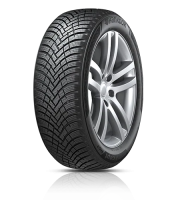

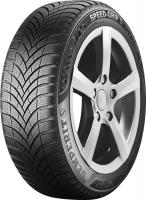
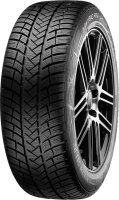
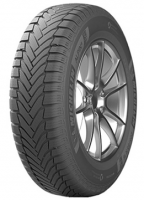
The tests for All Season and Winter Tyres had started
https://reifenpresse.de/202...
https://reifenpresse.de/202...
I hope they fix the small picture
Thanks for the link, already on them though :) https://www.tyrereviews.com...
Does anyone know why tires in size 215/50/r17 are so much more expensive than 225/45/r17? The difference is often almost a quarter of the price. It used to be a rarely used size, but nowadays you see 215/50/r17 on more and more vehicles, including many EVs, so it is no longer a rare size.
225/50 is still a way less popular size than 225/45 so I believe it's still supply and demand.
For a mild winter that is often seen in southern England, do you recommend using a winter biased all season tyre during the winter to get better wet/dry grip or is it still best to use a winter tyre?
The same thought is running through my head. I live in Poland and most of the winter-tyre season it's about 5-10 degrees C with occasional slushy snow. Currently i'm on Goodyear assymetric 6, but don't know what is the best option for me, especially in terms of wear during long, "hot" highway voyages
I'd use a summer bias all season tyre.
Hello,
Do you know which one has the best wear ?
I did not test wear sadly, the Auto Bild test this year did, worth checking out
Hi Johnatan, great video, as usual.
I have a question.... Which is the difference between the Hankook Winter Icept Evo3 (W330) and the Hankook Winter Icept RS3 (W462) ... because in this vídeo you try the W462, but on the later winter tyre test video you tried the W330 (https://www.tyrereviews.com...
Thank you very much!
The Evo 3 is more performance bias and available in larger wheel sizes.
Any plans to test the new Pirelli Weatheractive anytime soon?
I would like to, it probably won't be soon though :(
Dear Johnatan,
With many of the tests you publish I wonder how much the tyre pressure influences the results. I assume that for the tests you use tyre presessures prescribed for the vehicle by the manufacturer, however sometimes the manufacturer recommends more than one option (light load / full load / speeds above 160 km/h etc.) and in such cases which pressure would you use for the tests?
Please, would it be possible in the future to have a test where you would show how much tyre pressure influences the results? On my car I have noticed that even 0,2 bar (3 psi) deviation makes a difference as for handling and +0,4 bar starts to have negative impact on ride comfort.
Just to make sure my pressures are not too low even when the temperature drops I prefer to have +0,1 bar above the manufacturer recommendation, but I would love to learn what I loose and what I gain when I deviate from the prescribed pressures (-0,2 bar, +0,2 bar, front axle/rear axle, both axles). Would be the change in udersteer/oversteer significant for you dry/wet lap times and dry/wet braking distances?
Increased pressures are good for fuel economy, however at some pressure we start to lose safety and comfort. A tyre pressure focused video would be highly appreciated.
-----
As an engineer I really apreciate how in-depth information you try to provide. Tyrereviews are a real gem. In the past years I have purchased quite a lot of tyres for my family based on your tests and reviews. With the Michelin PS4 you even convinced me to give Michelin a second chance. After my repeated experience with Michelin Primacy (version 2003 - horrible on wet, average on dry, 2008 - bad on wet, average on dry) I have said "never ever Michelin". However, you were right and I was very happy with the Michelin PS4.
Thank You and Happy New Year 2023!
Happy new year! We usually use the standard load pressures, not the higher. We generate more heat than usual so I like to start as low as the car recommends.
I've actually tried to do a tyre pressure test a number of times but not had much luck with the final result. It's definitely high on the list. A very interesting subject but I think application can vary the results quite a lot!
Hi, What was the temperature during dry and wet tests?
This is a great test. But... how do you test winter tires and not include Nokian?
Their CE winter tyre was made in Russia so not really available at the moment.
Waiting for your comments on a topic. Since the performance of winter tires on dry roads is bad, which tire should be preferred in a place where it is usually cold (below 7 degrees) in winter but generally dry or wet roads. Thanks for answer.
I have the same question. Winter tyres are mostly tested on snow. Where I'm at (Central Europe) I do very little driving on snow -- and it is mostly the last few hundred meters leading to a mountain hut. I'd rather not sacrifice safety on 99% of the roads I drive in winter by using winter tyres.
In other words, what tyre would be best for winter (not summer), cold temperatures (generally between -5 and +10°C) with dry or wet (salted) roads? Is it still a winter tyre, or should I get an all season tyre to drive with between November and April?
Premium all season tyre is the solution requested, ideally bought just before or during the winter season.
Summer tyres work better then winter tyres on the dry and wet at temperatures above 0 and bellow +7 degrees C. It is a rule of thumb that you should switch to winter tyres once the *average day temperature* is bellow +7 degrees C.
I think you might have gotten that a little backwards. Winter tyres generally start working better in t he wet around 7c, more realistically 3-5c. In the dry the summer tyre will be better no matter what the temperature is.
In the wet, OK. I meant it more in the sense of in a no snow/ice conditions.
A request for future tyre tests: Can you please make photos of the tyres on the rim because of rim protection bar? I searched for information on it but it´s impossible to find. Many manufacturers are write their tyres have a RPB but on some tyres you don´t see much of it.
The only tyre I know with a very good RBP in 225/45R17 is the LM005, I see it live at my brothers car
II completely agree with this suggestion. It is incredibly difficult to find information about whether tires have rim protection and to what extent. I currently have Bridgestone Blizzak LM005 that are almost due for replacement and have beautiful thick rim protection, which makes these tires look very nice on the rim. Unfortunately, they make a lot of noise and I want to choose a different brand and possibly switch to all-weather tires (CrossClimate 2 for example) for my winter rims because I live in a very mild climate (the Netherlands) with hardly any snow. I don't understand why information about rim protection is so difficult to find. Even writing to tire manufacturers does not provide much clarity. So showing this clearly when testing tires would be a big plus!
I try and list rim protection metrics with the results in all of my tests, though i have forgotten it.
Pictures are very hard to get across though the last UHP test I posted a reel on instagram of all the rim protection.
Thanks!
I try to get my infos from the video but I´m not sure if I get it right.
Have the Hankook and Pirelli a big or small Rim Protection Bar?
I rather stupidly didn't rate this for the winters, but looking at the photos the unmounted photos hankook looks larger than the Pirelli.
This will hopefully help you:
https://imgur.com/a/N0H7Qnq
Yep, Thanks.
The Hankook is now my favorite, also because to get a Pirelli DOT2622 or newer is a gamble
Hello, I was waiting for a comparison of winter and all season tyres, but it's getting time to make the decision for me and I can't wait much longer.
What would you recommend for a fwd passanger car for winter season (I have 2 sets of wheels) for this use:
Mostly weekend trips to mountains in Central Europe (Czechia) - 95% dry/wet and final few kilometers can be snowy and sometimes difficult to climb. Snow climbing capability can mean the difference between getting there or stopping on a side of the road and putting snow chains on.
Could Michelin Cross Climate 2 do it, or should I rather go with Brigestone Blizzak or Continental Winter Contact or anything else?
It won't be driven in summer.
The car is Renault Laguna 3 grandtour diesel, tyre size 205/50-R17.
Thank you.
If you are ready (anyway very, very rarely, if at all) to use the front 2 snow chains then also all seasons tyres fit very well. In those 95% dry/wet the new top all seasons Michelin Cross Climate 2 (or Hankook, Conti, GY, Dunlop or Bridge equivalent) will be better to much better, and in the remaining very rarely 5% they will be only around 15% worse than the real winter tyres. But the Czech streets, even in the small mountains are pretty well maintained, so I would go and choose the fresh smelling Michelin Cross Climate 2! You can then safely cover also the autumn and the spring and therefore your summer tyres will last more years. You will be positively surprised!, especially due to the global warming and more and more soft weather conditions...
I've a video coming pretty much concluding the same :)
Cool! When is that video coming up? I cannot wait much longer, have to make a purchase asap. Thanks!
On the channel now, I'm not sure if it's what you were after but it's what I meant :)
I am dropping my Michelin Crossclimate 2 after one year and 15K of use. Wear is insane, it is down to 4mm, both front tyres show minor structural shoulder/upper sidewall unevenness (interrior structural damage?). Yes I have had the car to alignment twice. Never had a problem with my Crossclimate+ but I am moving away from Michelin and probably from all-seasons in general. Summer heat in Central Europe and highway speeds is killing it. The thermic shock is too much for the compound. For city trips as a second car or in tempered summer climate should probably be fine.
The cc2 certainly isn't the best wearing tyre michelin have ever made. I'm sure there will be a big improvement with the CC3.
Based on my experience, the CC2 could do it for sure. The full winter will give you a few percent more but it's not night and day.
Wow I just found a bunch of useful info on the comment section.
I'm really torn between the a005 evo and the lm005. It's so close! I'll change back to the eagle f1 in the summer anyway so warm weather performance is of no concern. However as I will only drive on snow 1 or 2 days a year it seems like the a005 would provide a bit more fun during winter.
With my previous winter tyre I had the confidence that the tyre would always grip when it was dark and couldn't really see the road. Would hit puddles, mud, etc and the car would still grip.
Would the a005 evo provide that or should I look at the lm005?
If you would only drive 1-2 days on snow then surely prefer A005 Evo.
Yeah but in the test the lm005 brake better
There will always be a tyre, which, in extreme situation test, breaks better than yours.
No i mean. The lm005 beat the a005 in dry and wet.
How substantionally, in which temperature? and what about remaining parameters?
Just noticed that Carwow did a winter traction test on that indoor ski slope people use ... it was so poor.
We learnt that summer are worse than winter and AWD better than 2WD ... golly.
They should have gone downhill at least and shown that reduced braking distances in snow are more important than just going as fast as possible from stopped !
Also, they should at least done an all season on AWD v winters on 2wd ! Mind you it is more Top Gear light entertainment rather than more studious stuff on here.
You need to ping them and tell them how to do it right !
Just sayin...
As you said, carwow is pure entertainment :)
And lets face it, now 8th November and my all season Yokohamas are once again trying to remove water ..
Not sure how many bad days with ice we can feel smug on even all season given the trends, at least in England and not Scotland.
Michelin Climate etc has to be the way to go, and they might get even more wet biased...
Thanks for the great insight you give through your tests and evaluation of other's tests. I've had a good read and I think I've narrowed it down to two tyres that would suit my needs best over winter months.
I might be over-analysing it but I can't work out whether I'd be best fitting GY Vector 4seasons gen 3 or Vredestein Wintrac Pro.
It's for the winter wheels in 225-45-17 94v XL square setup for my BMW 330d. I live in Yorkshire. I need to be able to get up and down a steep hill with traffic lights in the snow/ice/slush and then up the motorway for work. I go to Wales and East Anglia over Christmas. I want to be able to use the car's performance in milder winter conditions so I'd like to retain as much of the wet and dry handling characteristics to normal as possible. For summer I have 225-35 and 255-30 staggered 19inch.
GYs about £100 cheaper for a set, perhaps better suited given most of the time above 0 temps but seem designed for lower powered and lighter cars as a touring tyre and brake poorly in the dry. Vreds designed as UHP and stand out in tests as what I'm after. But with them being winter tyres would they feel less stiff/direct than the GYs most of the time and even perform worse braking in milder temps? Can you offer any advice please?
Both tyres will get you up the hill. As I've not directly compared them it would be tough to give you good advice but given the Goodyears are cheaper and will wear better, that's where my money would go.
Thanks. I did compare their respective outcomes in your 2022 tests (Vred generally better) but wasn't sure how reliable that would be. The Goodyear won the Autobild 2021 all season test on a 3-series so I don't think I'll go far wrong with it. I will update in the spring!
Hi Jonathan, thanks for your work. You cost me a lot of money in tyres over the years! Will there be a review of ultra high Performance winter tyres? I’ve got a 3.2 Mk1 AUDI TT and spend a lot of time on the continent as well as the UK.
I would rather sacrifice outright performance in the warmer months for winter safety.
Spirited but not aggressive high speed driving is my style, mostly motorway miles.
Crucially, I’m more interested in the grippiest tyre on COLD and damp roads, not necessarily “wet” or “dry”. The tarmac and ambient temperatures from Nov-Mar are more of interest to me when it’s consistently cold. I’m interested in the effect of the tyre compound and with only a minor interest in snow.
What is your opinion please on my 4 choices:
Eagle Asym 6
Cross Climate 2
TS870
Wintrac Pro
Or would you push for something more exotic like a P Zero Winter or do you have a personal choice not listed?
Cold and greasy roads, fast but not aggressive driving, Audi TT, quiet interior noise. Preferably a car specific tyre rather than a generic tyre nominally fitted to unnecessarily heavy vehicles like an SUV.
Cheers,
Mike
Bridgestone WeatherControl A005 Evo might be one to look at, a summer bias all season tyre with excellent grip in the wet.
Would you rate that better than the CC2? My wife has the Cross Climate on her A1 and I don’t think it is has the performance necessary for my driving. Do you think the Bridgestone is ultimately gripper on cold damp surfaces, greasy roads not wet roads, than the Asym 6 then? Thanks for your opinion .
Yes, when it's cold and wet the all season tyre should have the advantage.
Perfect, I promise this is the last question:
Do you think the Weather Control will ultimately out handle an Ultra High Perf winter tyre specifically designed for sports cars? P Zero Winter, Wintrac Pro, 870 P etc.
I've just found the Cross Climate 2 runs out of grip quickly in anything other than adverse weather and my focus is on cold, damp fast road driving, not a very wet road.
That's a good question, I think it would be very very close and really depend on the situation and tyres.
Hi jonathan, thanks for this extremely well prepared test.
My questions is, what was the weather temperature while you're dry testing the tyres? My planned usage including too much extreme cold weather dry tarmac driving and cold dry performance is very important for me. Usually I don't take the car out when it snows (not because i don't like driving on snow, because people who can't drive on snow or going out with summer tyres and causing traffic). Basically does the performance on hot surfaces differ greatly from the performance on cold surfaces?
Finally, do you have any data on winter tires wearing excessively above 7 degrees (on tarmac)?
Thanks.
Dry was around 20c and sunny. On the road winter tyres shouldn't wear excessively above 7c.
Hi, thanks you for doing your tests Jonathan. Your testing and reporting is great.
I was particularly curious to compare the all-seasons (all-weathers) with the winter tires so appreciate that you tested both (https://www.tyrereviews.com... and https://www.tyrereviews.com....
Were the tests performed in similar conditions? I was expecting that the all-weathers would have an advantage on dry and wet but based on your results, for wet and dry braking, the winter tyres had the advantage (althought the handling numbers were slightly better for the all-weathers) and for snow braking, your chart above says 45-5 km/h for the winter while your all-weather snow-braking was 40-5 km/h and the winters beat the all-weathers (which I expected) but if it's from a faster speed, that's a much more significant difference.
Let us know. Thanks.
There was quite a swing in snow temperature testing, I need to run the evolution of the control and explain that somewhere.
Hi,
I wonder how we should regard EU tyre labels. I'm searching silent tyre.
Kleber Krisalp HP3: EU label 69 dB, in you test 69,1 dB --> seams clear
Continental WinterContact: EU label 70 dB, in you test 69,5 dB --> seams clear
but:
Bridgestone Blizzak LM005: EU label 71 dB, in you test 68,9 dB --> 2 dB difference
Vredestein Wintrac Pro: EU label 72 dB, in you test 69,2 dB --> 3 dB difference
Why we have such differences?
I should rather focus on UE labels or test results?
I suspect that the tests may measure different things (I think that the UE labels show external noise [no use to people inside the car] rather than internal noise) or under different conditions (different car tested w[hich might affect how much sound is damped], maybe the UE ones under 'lab' rather than real-world conditions)?
EU does do external noise, a lot of tests do too though (not this one), it's not run in a lab, it's run on a set surface outside
I tested internal noise on this test, EU label is external. Sound can be directed into the car to get a lower EU label.
Hello,
In your test Bridgestone's dry braking is the worst and in the Auto Zeitung is the 2nd best .
In your test Bridgestone is 1st at braking on snow when tested by Auto Zeitung is not at the top.
Any idea why that happened ? Thanks.
Nice work! Unfortunately Continental WinterContact TS 870 aren't provided for 255/35/R19 size and for this size there is only previous model available - TS 860 S.
What would you recommend for that size? I live in Poland and average temperature in winter is around 0C, the main roads are mostly scraped to the asphalt and in addition there is salt, often there is a lot of slush. However, there can be some snowy days and temperature can go really low sometimes and especially on b-roads it can be not so comfortable.
Still many people drive here with all seasons tyres but I'm afraid about those snowy days and icy roads that can sometimes be expected. The car is Audi A5 2017 quattro, 252HP.
It seems that I should choose from Continental TS 860 S (older ones), Blizzak LM005 and Hankook Winter I cept RS3.
I really like the RS3, so I'd probably go for that even if the LM005 won my test. I just prefered how it drove in the three conditions overall.
Are the results from this test directly comparable to the 2022 all season test?
If so, most of the winter tyres seem to be better in the wet and dry than the all season tyres!
There were different test conditions for each days of testing, I will make a video comparing the two properly
Useful for those considering (especially under the current economic conditions) whether its worth changing to, say, winter-bised all season tyres than having to buy/store a set of summers + winters and smaller wheels. As you've said quite a bit in the past 2-3 years, all-season tyres have come on a LOT.
I have winter Sebring SUV SNOW All time (summer-winter) in my Jeep and no problem, price 83€ one tyre. ?
Interesting how price can by different in different country's
For ex I made price chart for Poland,
1. Petlas - 944 pln for a set
2. Hankook - 1034 pln
3. Semprit 1068 pln
4. Kleber 1100 pln
5. Michelin 1376 pln
6. Pirelli 1379 pln
7. Bridgestone 1384 pln
8. Continental 1392 pln
X. Vredestein - this particular model in unavailable
The biggest difference is at bridgestone.. it's more expensive here than pirelli or michelin, and almost the same price as continental, which is the most expensive tire.
https://uploads.disquscdn.c...
Some of it can also be down to supply and demand, and where the retailer used it sourcing stock from, but historically Michelin is one of the most expensive so that's a surprising list! Thanks for sharing
Great work :)
The Hankook and Pirelli are on my list
Thanks :)
Had to change because it´s easier for me to switch to 18" rims, so the iCept Evo³ would be my choice instead of the RS3. I think this is also a very good tyre.
The Pirelli is a bit risky, my dealer can´t guarantee the DOT.
Hi Jonathan! I was eagerly anticipating this test to come out. Thank you!
I noticed there is no Goodyear in the written results (only in video).
Despite I watched all your winter and all season reviews, I m still in dilemma: should i go:
- winter (Conti 870 P, Blizzak LM005, GY UltraGrip Performance +) or
- all season ( Conti AllSeasonContact, GY Vector 4 Seasons Gen-3, Bridgestone Weather Control A005)
for Tiguan first gen. Also what size do you recommend: 235/55/17 or 215/60/17 , both are factory for him.
I m not Michelin fan, i feel like they are cheating with the thread depth, plus it looks like there is too big hype and marketing involved in CC2 reviews everywhere. Some users reports increased fuel consumption and rough ride. But if you honestly recommend them, i could try it ( i never ride all season tires)
Weather conditions here are sort of similar to yours, but some years could be really snowy. The roads are mostly scraped to the tarmac plus they put salt, so we end up with a lot of slush (except on some b-roads and parking lots)
Whit that being said, i would say: all seasons are for me. Most of the winter, temps are around -5 to 15C (20C) , but the problem is that we also have few months with low temps like -15C or less, and I m not sure how all seasons would behave on such temps on icy/snow roads. My main concern is safety, then comfort, fuel efficient... and i like to drive dynamically :)
Hope that you can get a good, full picture and that you could help me with decision.
Thank you for all. Cheers!
I would probably go with the TS870P, they're very all season like for a winter tyre, and dynamically they should be amongst the best. That said, the allseasoncontact was surprisingly nice feeling in my 17" test this year.
As for size, if both are allowed I would go with whatever is cheaper, but if you enjoy driving, the 235/55 should feel a little more sporty everything else being equal.
Thank you! TS870P were my secret favorite :)
Cheers!
Good :) Let me know how you find them!
They arrived. For now, they smell great! :D
Temps are still going from 5C to 25C so I'll have to be more patient to put them on the car and check...
Fantastic :D
I am also not a great Michelin fan, but how do they cheat regarding the thread depth ? it is similar to all the other tyres, or I am missing something.
They don't cheat, generally their compounding wears better than competition so they can start with less tread and in theory get the same or more mileage.
Thank you for the explanation by the way what happened to Dunlop they seem to have disappeared from test comparison with no new models since long time with last year all season tyre being their last product absent from major tests.
Goodyear are focusing on Goodyear as they don't own the Dunlop brand world wide.
Hi, my opinion is based on the fact that Michelin tires have ~1 mm less tread depth than Continental while it weighs 1kg more (exact values vary between models, of course but this is a rule of thumb: less tread depth more weight). Most of the tests are done with brand new tires, and some results greatly depend on the tread dept, so If Conti can accomplish similar results (with deeper treads) as Michelin, in a year or two, when it wears, it will get even better results.
I m not covering too many miles a year (8k-10k, and less than half of that on winter tires) so I'm not interested in tire mileage (i will change it after ~5-6 years anyway) but rather how I spend those miles.
Again this is just my personal opinion.
Cheers!
thank you for the answer
this is very interesting insight; I tend to drive more than 30k per year and 15k approximately on winter tyres, currently I have the Bridgestone Blizzak LM 005 but I need to equip the other family car with winter tyres in november/december, for someone like me who wears tyres in 2/3 years what would be better the deep tread ones or shallow tread ones ?
best regards
I couldn't find the link for my previous comment but here it is, the last year's winter test: https://www.tyrereviews.com...
you can see what I was talking about weight and tread depth.
Michelin Pilot Alpin 5: Weight: 10.10kgs; Tread: 7.6mm
Goodyear UltraGrip Performance+: Weight: 9.48kgs Tread: 9.1mm
Common sense says the GY would last longer due to the more tread, but the commercials say that Michelin makes wonders and their tires last longer than competitive brands. I never drive Michelin and I cannot comment on that.
I m definitely not the right person for an opinion on long-lasting tires. Check the reviews here and see what other ppl say.
What are your thoughts on Blizzak LM 005? Any experience with slush or icy roads? How do they behave in higher temps (up to 15C) and highway speeds?
Kind regards
I drive an Opel Astra and the tyre size is 205/55/16 91 H . I drive mainly in the Netherlands but I also travel to Switzerland and Northern Italy. In the Netherlands winters are generally mild with often rainy weather but very seldom snow or ice. In the rain the tyre feels exceptionally grippy and safe, and probably thanks to the excellent state of the roads and asphalt it feels very quiet and comfortable. In higher temperatures on dry asphalt in March and April the tyre feels like a summer tyre, but you should consider that speed limits are 100 kms on main roads and roads are generally straight therefore I cannot assess how it drives in dry conditions on a twisty road.. On long travels I was able to achieve 4.2 liters per 100 kms therefore the tyre offers low resistance. driving in Switzerland and Northern italy I faced snow and lower temperatures around -10/-15 the tyre still felt safe but in those conditions I was driving slow in a column of cars and trucks. However braking always felt safe and consistent without and signs of skidding. Regarding driving on icy roads it might have happened one or twice but again I was driving slowly and safely and never broke traction. Having read multiple tests and opinions the Bridgestone Blizzak LM 005 can be described as the most all season winter tyre or a winter tyre with with all season qualities.
Thanks Enrico! For the same reason "the most all season winter tyre or a winter tyre with with all season qualities." i took Conti TS870P :)
Jonathan, what would you say after how many years tyre should be changed disregarding on the tread depth? When does a tyre gets old? I try my best not to drive winter tyres when it is hot (but you cannot help when you have 20C in February and below 0 i January and March o.O)
I got nasty surprise from Hankook Winter i*cept evo² on 5th winter and they were on ~5.5mm-6mm depth and they had ~22.000km on them. My 4x4 tiguan were dancing wile overtaking on snow uphill (almost touch the car I wanted to overtake). Couldn't properly exit roundabout and hit the curb (scratching the rim).
That is why Hankook were not on my list.
None of this would happen in first 4 winters. They were pretty good and felt secure. Maybe not amazing but i would give them 8 (out of 10)
Did I had to high expectation from them to last 5 years? What could i expect from Conti? Is there any brand that stand out in this field?
Thanks
5 years is the industry recommended maximum life and one I agree with, rubber ages with time sadly
Thanks for confirmation. I'm absolutely aware of it, but I thought that 5 year is more like rule of thumb or recommendation, like 7C for winter tyres.
Cheers!
*7 oC average temperature (of the day).
How come this isn't posted on the main page? The only way to access this was through the link in the youtube video description.
I'm curious about the worse than usual performance of the Michelin Alpin 6. If there's a batch of worse performing tyres, it's possible that people have bought some of them. So in that case you're receiving a worse product than the one you've paid for.
I haven't finished editing it properly yet so I didn't want to push it live, I will today :)
If it was a bad tyre, it was a very small run as another test in the same size this year has the alpin 6 doing as expected. I wouldn't be concerned about buying the tyre.