Test Publication:
Sport Auto
225/45 R18
9 tyres
5 categories
Test Size:
225/45 R18
Tyres Tested:
9 tyres
Sport Auto is not affiliated with, and does not endorse, Tyre Reviews. This is independent editorial coverage of their published test.
The 2020 Sport Auto all season tyre test has covered seven of the best all season tyres in 225/45 18, using a new BMW 3 Series.
Most of the tyres on test were also included in the 2020 Tyre Reviews all season tyre test, however as Sport Auto used a different size and vehicle, this test still makes for interesting reading!
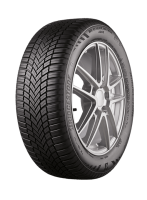
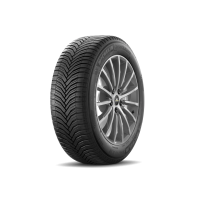
Sport Auto found the Bridgestone WeatherControl A005 to be an excellent tyre in the dry and wet, and even with its mid pack performance in the snow, crowned it best in test, a little ahead of the Michelin CrossClimate+, which performed better in the wet than it did in our test.
One interesting piece of information Sport Auto shared was the summer and winter reference tyres used. Usually these remain anonymous, but in this test it was the Bridgestone Turanza T005 and the Bridgestone Blizzak LM005. This is especially interesting as the LM005 is winning most of the 2020 winter tests, so seeing how one of the best winter tyres compares to some of the best all season tyres is a great insight into the different balance between the all season and winter tyres.
Dry
It will be no surprise to regular readers of the site that the summer tyre had a significant advantage in the dry, stopping the BMW a full 3 meters ahead of the best all season tyre, which for a change wasn't the Michelin CrossClimate+!
- Reference Summer
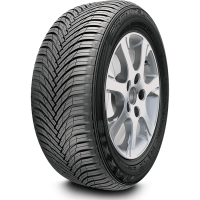
- Maxxis Premitra All Season AP3
- Bridgestone Weather Control A005
- Michelin CrossClimate Plus
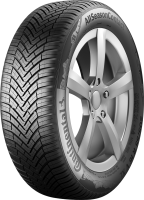
- Continental AllSeasonContact
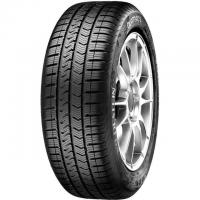
- Vredestein Quatrac Pro
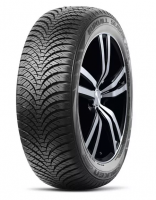
- Falken EUROALL SEASON AS210
- Reference Winter
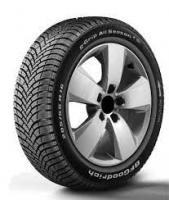
- BFGoodrich g Grip All Season 2
The summer tyre retained its advantage in during dry handling tests, while the Bridgestone WeatherControl A005 jumped ahead of the rest of the all season tyres.
- Reference Summer
- Bridgestone Weather Control A005
- Vredestein Quatrac Pro
- Maxxis Premitra All Season AP3
- Michelin CrossClimate Plus
- Falken EUROALL SEASON AS210
- Continental AllSeasonContact
- BFGoodrich g Grip All Season 2
- Reference Winter
Wet
The Bridgestone all season again proved best in the wet braking test with a significant advantage, with the winter tyre performing well.
- Bridgestone Weather Control A005
- Michelin CrossClimate Plus
- Reference Winter
- Maxxis Premitra All Season AP3
- Reference Summer
- Continental AllSeasonContact
- Vredestein Quatrac Pro
- BFGoodrich g Grip All Season 2
- Falken EUROALL SEASON AS210
Surprisingly the winter tyre was best during the wet handling testing.
- Reference Winter
- Reference Summer
- Vredestein Quatrac Pro
- Michelin CrossClimate Plus
- Bridgestone Weather Control A005
- Continental AllSeasonContact
- Maxxis Premitra All Season AP3
- BFGoodrich g Grip All Season 2
- Falken EUROALL SEASON AS210
The summer tyre out performed all the all season tyres during straight aquaplaning testing.
- Reference Summer
- Maxxis Premitra All Season AP3
- Vredestein Quatrac Pro
- Reference Winter
- Continental AllSeasonContact
- Falken EUROALL SEASON AS210
- BFGoodrich g Grip All Season 2
- Bridgestone Weather Control A005
- Michelin CrossClimate Plus
Snow
During snow braking the BFGoodrich all season tyre surprisingly out performed the full winter tyre, with the Continental AllSeasonContact a close third.
- BFGoodrich g Grip All Season 2
- Reference Winter
- Continental AllSeasonContact
- Falken EUROALL SEASON AS210
- Bridgestone Weather Control A005
- Maxxis Premitra All Season AP3
- Michelin CrossClimate Plus
- Vredestein Quatrac Pro
- Reference Summer
Snow handling kept the Winter, Continental and BFGoodrich as the top three tyres, just this time in a different order.
- Reference Winter
- Continental AllSeasonContact
- BFGoodrich g Grip All Season 2
- Michelin CrossClimate Plus
- Falken EUROALL SEASON AS210
- Maxxis Premitra All Season AP3
- Vredestein Quatrac Pro
- Bridgestone Weather Control A005
- Reference Summer
Environment
As usual, the summer tyre proved to have the lowest rolling resistance.
While all tyres were relatively close on the external pass by noise test, the testers noted humming noises from a couple of the tyres on test (see notes below)
- BFGoodrich g Grip All Season 2
- Bridgestone Weather Control A005
- Michelin CrossClimate Plus
- Vredestein Quatrac Pro
- Maxxis Premitra All Season AP3
- Continental AllSeasonContact
- Reference Winter
- Falken EUROALL SEASON AS210
- Reference Summer
Results
Score weighting - Dry 30%, Wet 40%, Snow 20%, Environment 10%
Very short braking distances and safe handling int he wet, easy controllable handling in the dry.
Limited snow performance for an all season tyre.
Limited on snow but safest tyre for cold and wet roads.
| Test |
# |
Result |
Best |
Diff |
% |
| Dry Braking |
3rd |
40 M |
36.6 M |
+3.4 M |
91.5% |
| Dry Handling |
2nd |
122.3 Km/H |
123.9 Km/H |
-1.6 Km/H |
98.71% |
| Test |
# |
Result |
Best |
Diff |
% |
| Wet Braking |
1st |
30.2 M |
|
|
100% |
| Wet Handling |
4th |
72.2 Km/H |
74.1 Km/H |
-1.9 Km/H |
97.44% |
| Straight Aqua |
8th |
91.3 Km/H |
99.6 Km/H |
-8.3 Km/H |
91.67% |
| Test |
# |
Result |
Best |
Diff |
% |
| Snow Braking |
5th |
31.4 M |
26.1 M |
+5.3 M |
83.12% |
| Snow Handling |
8th |
42.4 Km/H |
46.4 Km/H |
-4 Km/H |
91.38% |
| Test |
# |
Result |
Best |
Diff |
% |
| Noise |
2nd |
71.5 dB |
70.8 dB |
+0.7 dB |
99.02% |
| Test |
# |
Result |
Best |
Diff |
% |
| Rolling Resistance |
4th |
8.3 kg / t |
7.5 kg / t |
+0.8 kg / t |
90.36% |
Good performance in the wet, strong in the dry.
Sensitive to slipping so not recommended for vehicles without ESP. Average aquaplaning protection. Humming noise when cornering.
The Michelin was well balanced under all conditions.
| Test |
# |
Result |
Best |
Diff |
% |
| Dry Braking |
4th |
40.3 M |
36.6 M |
+3.7 M |
90.82% |
| Dry Handling |
5th |
120.3 Km/H |
123.9 Km/H |
-3.6 Km/H |
97.09% |
| Test |
# |
Result |
Best |
Diff |
% |
| Wet Braking |
2nd |
31.1 M |
30.2 M |
+0.9 M |
97.11% |
| Wet Handling |
4th |
72.2 Km/H |
74.1 Km/H |
-1.9 Km/H |
97.44% |
| Straight Aqua |
9th |
90.2 Km/H |
99.6 Km/H |
-9.4 Km/H |
90.56% |
| Test |
# |
Result |
Best |
Diff |
% |
| Snow Braking |
7th |
31.8 M |
26.1 M |
+5.7 M |
82.08% |
| Snow Handling |
4th |
45 Km/H |
46.4 Km/H |
-1.4 Km/H |
96.98% |
| Test |
# |
Result |
Best |
Diff |
% |
| Noise |
3rd |
71.6 dB |
70.8 dB |
+0.8 dB |
98.88% |
| Test |
# |
Result |
Best |
Diff |
% |
| Rolling Resistance |
2nd |
7.8 kg / t |
7.5 kg / t |
+0.3 kg / t |
96.15% |
Good cornering grip int he snow, neutral safe handling with high aquaplaning safety, stable under lane change.
Longer braking distances in the dry and wet with a slight oversteer balance in fast corners.
| Test |
# |
Result |
Best |
Diff |
% |
| Dry Braking |
5th |
41.9 M |
36.6 M |
+5.3 M |
87.35% |
| Dry Handling |
7th |
119.6 Km/H |
123.9 Km/H |
-4.3 Km/H |
96.53% |
| Test |
# |
Result |
Best |
Diff |
% |
| Wet Braking |
6th |
32.5 M |
30.2 M |
+2.3 M |
92.92% |
| Wet Handling |
6th |
71.7 Km/H |
74.1 Km/H |
-2.4 Km/H |
96.76% |
| Straight Aqua |
5th |
93.8 Km/H |
99.6 Km/H |
-5.8 Km/H |
94.18% |
| Test |
# |
Result |
Best |
Diff |
% |
| Snow Braking |
3rd |
28.6 M |
26.1 M |
+2.5 M |
91.26% |
| Snow Handling |
2nd |
45.7 Km/H |
46.4 Km/H |
-0.7 Km/H |
98.49% |
| Test |
# |
Result |
Best |
Diff |
% |
| Noise |
6th |
71.8 dB |
70.8 dB |
+1 dB |
98.61% |
| Test |
# |
Result |
Best |
Diff |
% |
| Rolling Resistance |
6th |
8.7 kg / t |
7.5 kg / t |
+1.2 kg / t |
86.21% |
Well balanced, good wet performance, good aquaplaning resistance.
Unbalanced snow grip, long wet braking distances, humming noise.
| Test |
# |
Result |
Best |
Diff |
% |
| Dry Braking |
2nd |
39.6 M |
36.6 M |
+3 M |
92.42% |
| Dry Handling |
3rd |
120.5 Km/H |
123.9 Km/H |
-3.4 Km/H |
97.26% |
| Test |
# |
Result |
Best |
Diff |
% |
| Wet Braking |
4th |
32.1 M |
30.2 M |
+1.9 M |
94.08% |
| Wet Handling |
6th |
71.7 Km/H |
74.1 Km/H |
-2.4 Km/H |
96.76% |
| Straight Aqua |
2nd |
97.2 Km/H |
99.6 Km/H |
-2.4 Km/H |
97.59% |
| Test |
# |
Result |
Best |
Diff |
% |
| Snow Braking |
6th |
31.7 M |
26.1 M |
+5.6 M |
82.33% |
| Snow Handling |
6th |
43.8 Km/H |
46.4 Km/H |
-2.6 Km/H |
94.4% |
| Test |
# |
Result |
Best |
Diff |
% |
| Noise |
3rd |
71.6 dB |
70.8 dB |
+0.8 dB |
98.88% |
| Test |
# |
Result |
Best |
Diff |
% |
| Rolling Resistance |
8th |
9.3 kg / t |
7.5 kg / t |
+1.8 kg / t |
80.65% |
Good grip in the dry and wet, good levels of comfort.
Strong understeer and low grip on snow.
| Test |
# |
Result |
Best |
Diff |
% |
| Dry Braking |
6th |
42.7 M |
36.6 M |
+6.1 M |
85.71% |
| Dry Handling |
3rd |
120.5 Km/H |
123.9 Km/H |
-3.4 Km/H |
97.26% |
| Test |
# |
Result |
Best |
Diff |
% |
| Wet Braking |
7th |
33 M |
30.2 M |
+2.8 M |
91.52% |
| Wet Handling |
3rd |
72.3 Km/H |
74.1 Km/H |
-1.8 Km/H |
97.57% |
| Straight Aqua |
3rd |
95.8 Km/H |
99.6 Km/H |
-3.8 Km/H |
96.18% |
| Test |
# |
Result |
Best |
Diff |
% |
| Snow Braking |
8th |
32.6 M |
26.1 M |
+6.5 M |
80.06% |
| Snow Handling |
7th |
43 Km/H |
46.4 Km/H |
-3.4 Km/H |
92.67% |
| Test |
# |
Result |
Best |
Diff |
% |
| Noise |
3rd |
71.6 dB |
70.8 dB |
+0.8 dB |
98.88% |
| Test |
# |
Result |
Best |
Diff |
% |
| Rolling Resistance |
8th |
9.3 kg / t |
7.5 kg / t |
+1.8 kg / t |
80.65% |
Very short braking distances and high levels of grip on snow.
Poor dry and wet braking.
| Test |
# |
Result |
Best |
Diff |
% |
| Dry Braking |
8th |
43.8 M |
36.6 M |
+7.2 M |
83.56% |
| Dry Handling |
8th |
119.2 Km/H |
123.9 Km/H |
-4.7 Km/H |
96.21% |
| Test |
# |
Result |
Best |
Diff |
% |
| Wet Braking |
8th |
34.2 M |
30.2 M |
+4 M |
88.3% |
| Wet Handling |
8th |
69.5 Km/H |
74.1 Km/H |
-4.6 Km/H |
93.79% |
| Straight Aqua |
7th |
91.8 Km/H |
99.6 Km/H |
-7.8 Km/H |
92.17% |
| Test |
# |
Result |
Best |
Diff |
% |
| Snow Braking |
1st |
26.1 M |
|
|
100% |
| Snow Handling |
2nd |
45.7 Km/H |
46.4 Km/H |
-0.7 Km/H |
98.49% |
| Test |
# |
Result |
Best |
Diff |
% |
| Noise |
1st |
70.8 dB |
|
|
100% |
| Test |
# |
Result |
Best |
Diff |
% |
| Rolling Resistance |
3rd |
8.2 kg / t |
7.5 kg / t |
+0.7 kg / t |
91.46% |
Acceptable performance on snow and dry roads.
Longer wet braking and poor wet handling with oversteer balance.
| Test |
# |
Result |
Best |
Diff |
% |
| Dry Braking |
7th |
42.9 M |
36.6 M |
+6.3 M |
85.31% |
| Dry Handling |
5th |
120.3 Km/H |
123.9 Km/H |
-3.6 Km/H |
97.09% |
| Test |
# |
Result |
Best |
Diff |
% |
| Wet Braking |
9th |
35.3 M |
30.2 M |
+5.1 M |
85.55% |
| Wet Handling |
9th |
68.7 Km/H |
74.1 Km/H |
-5.4 Km/H |
92.71% |
| Straight Aqua |
6th |
92.3 Km/H |
99.6 Km/H |
-7.3 Km/H |
92.67% |
| Test |
# |
Result |
Best |
Diff |
% |
| Snow Braking |
4th |
29.9 M |
26.1 M |
+3.8 M |
87.29% |
| Snow Handling |
5th |
44.9 Km/H |
46.4 Km/H |
-1.5 Km/H |
96.77% |
| Test |
# |
Result |
Best |
Diff |
% |
| Noise |
8th |
73 dB |
70.8 dB |
+2.2 dB |
96.99% |
| Test |
# |
Result |
Best |
Diff |
% |
| Rolling Resistance |
7th |
8.9 kg / t |
7.5 kg / t |
+1.4 kg / t |
84.27% |
| Test |
# |
Result |
Best |
Diff |
% |
| Dry Braking |
1st |
36.6 M |
|
|
100% |
| Dry Handling |
1st |
123.9 Km/H |
|
|
100% |
| Test |
# |
Result |
Best |
Diff |
% |
| Wet Braking |
5th |
32.2 M |
30.2 M |
+2 M |
93.79% |
| Wet Handling |
2nd |
73.2 Km/H |
74.1 Km/H |
-0.9 Km/H |
98.79% |
| Straight Aqua |
1st |
99.6 Km/H |
|
|
100% |
| Test |
# |
Result |
Best |
Diff |
% |
| Snow Braking |
9th |
50.2 M |
26.1 M |
+24.1 M |
51.99% |
| Snow Handling |
9th |
17 Km/H |
46.4 Km/H |
-29.4 Km/H |
36.64% |
| Test |
# |
Result |
Best |
Diff |
% |
| Noise |
9th |
73.9 dB |
70.8 dB |
+3.1 dB |
95.81% |
| Test |
# |
Result |
Best |
Diff |
% |
| Rolling Resistance |
1st |
7.5 kg / t |
|
|
100% |
| Test |
# |
Result |
Best |
Diff |
% |
| Dry Braking |
8th |
43.8 M |
36.6 M |
+7.2 M |
83.56% |
| Dry Handling |
9th |
118.6 Km/H |
123.9 Km/H |
-5.3 Km/H |
95.72% |
| Test |
# |
Result |
Best |
Diff |
% |
| Wet Braking |
3rd |
31.7 M |
30.2 M |
+1.5 M |
95.27% |
| Wet Handling |
1st |
74.1 Km/H |
|
|
100% |
| Straight Aqua |
4th |
94.7 Km/H |
99.6 Km/H |
-4.9 Km/H |
95.08% |
| Test |
# |
Result |
Best |
Diff |
% |
| Snow Braking |
2nd |
27.3 M |
26.1 M |
+1.2 M |
95.6% |
| Snow Handling |
1st |
46.4 Km/H |
|
|
100% |
| Test |
# |
Result |
Best |
Diff |
% |
| Noise |
7th |
71.9 dB |
70.8 dB |
+1.1 dB |
98.47% |
| Test |
# |
Result |
Best |
Diff |
% |
| Rolling Resistance |
4th |
8.3 kg / t |
7.5 kg / t |
+0.8 kg / t |
90.36% |

Regarding Michelin CrossClimate, I found it interesting that the testers said:
'.....Sensitive to slipping so not recommended for vehicles without ESP.....'
My previous car had CC+ and I drove about 30000 miles on the tyres.
Although very good in a wide range of conditions, I did notice occasional slight slipping of the tyres when pulling away on dry roads (but not wet roads) which got slightly worse as the tyres wore and was possibly more common in the first few minutes of a journey before the tyres had warmed up.
The slight slip wasn't enough to cause the ESP light to flash but I could feel it.
I thought it was just my clumsy size 14 boots affecting the clutch control although Vector Gen 2 on my wife's car never do that despite their generally-accepted lower dry grip.
Interesting, it's not something i've noticed above and beyond other all season tyres when comparing them back to back, but I guess it's a thing!
I need to decide for at a set of 235/45-18 All Seasons for a Tesla 3 Long Range for use in Denmark, should be comparable to the UK climate. For an EV rolling resistance and noise are perhaps overweighted as selection criteria, but on the other hand its a quite powerfull car, so the tyres should be able to handle that safely
Based on the test I consider the Bridgestones. However it seems that there is also a EVO version available. If the "old" A005 wins this test, the "A005 EVO" should be a "no-brainer pick"?
I'm hesitating to this, since The Michelin CC+ seems to be the popular pick among when I consult Tesla forums.
The EVO version of the A005 was meant to improve the snow performance, but in testing to seems to still be very close to the regular A005, which is no bad thing.
Where the CC+ has the edge over the A005 is wear.
It may depend upon how much snow and ice you get and how bad it gets when you do. I run CC+s (but only 195/65 R15) on my 15yo Mazda3 in the UK and they're great, but I purposely bought them because I live in the South East/East of England, where we don't get much snow and ice and its rarely bad when we do.
As such, a summer-biased A/S tyre is the best for me, and a long-lived one even better because I don't do much mileage for the most part. The Bridgestone tyre is similar or perhaps even more summer biased than the Michelin CC+.
From previous tests, the Conti is in between the more traditional more 'winter-biased' A/S tyres. There seems also to be more choice in smaller, higher profile tyre combos like mine (one of the most popular sizes of tyre generally), though if I recall, Michelin also did make A more sporty 'Pilot Sport AS' tyre for larger, lower profile tyre sizes. Not sure how new that tyre design is though and whether it's offered any more.
Compare still the new and latest tests winning Goodyear Vector 4 Seasons Gen3, which should be between the current Michelin and Conti in its character.
If you have at least 3-6 months for your decision, you can also wait a bit and be the early adopter of the brand new Michelin Cross Climate 2, which is already sold in the USA and to Europe it will come in early 2021. Obviously it must be even better than the current CC+.
Is there any explanation for quite huge difference in rolling resistance measured for Bridgestone Blizzak LM005 (i.e. winter reference tyre in this test) - 8.3 kg/t and in 2020 Auto Bild Performance Winter Tyre Test - 7.35 kg/t? The tyre size was the same.
Actually, Auto Bild result seems to be too low as that would put the tyre in "B" class according to EU rating, while its EU label says it is "C", i.e. rolling resistance between 7.8 and 9.0 kg/t.
I would assume that rolling resistance result should be the most accurate and comparable from all tested parameters across diffferent tests, but apparently it isn't...
It's an interesting question. I can only assume variation in the testing but I'll dig a little deeper next week
And what you have dig out?
I didn't get too far :(
Are you/both tests comparing the same tyre sizes/dimensions?