Every tyre is tested using calibrated instrumented measurement and structured subjective assessment. Reference tyres are retested throughout each session to correct for changing conditions, ensuring fair, repeatable comparisons. Multiple reference sets are used where needed so that control tyre wear does not affect accuracy.
We use professional-grade testing equipment including GPS data loggers, accelerometers, and calibrated microphones. All tyres are broken in and conditioned before testing begins. For full details on our equipment, preparation process, and calibration procedures, see our complete testing methodology.
Categories Tested
Dry Braking
For dry braking, I drive the test vehicle at an entry speed of 110 km/h and apply full braking effort to a standstill with ABS active on clean, dry asphalt. I typically use an 100–5 km/h measurement window. My standard programme is five runs per tyre set where possible, although the sequence can extend to as many as fifteen runs if conditions and tyre category justify it. I analyse the full set of runs and discard statistical outliers before averaging. Reference tyres are run repeatedly throughout the session to correct for changing conditions.
Dry Handling
For dry handling, I drive at the limit of adhesion around a dedicated handling circuit with ESC disabled where possible so I can assess the tyre's natural balance, transient response, and limit behaviour without electronic intervention masking the result. I usually complete between two and five timed laps per tyre set, depending on the circuit, tyre type, and consistency of conditions. I exclude laps affected by clear driver error or obvious environmental inconsistency. Control runs are carried out frequently throughout the session, and I often use multiple sets of control tyres so that wear on the references does not become a meaningful variable. For more track-focused products, I also do endurance testing, which is a set number of laps at race pace to determine tire wear patterns and heat resistance over longer driving.
Wet Braking
For wet braking, I drive the test vehicle at an entry speed of 88 km/h and apply full braking effort to a standstill with ABS active on an asphalt surface with a controlled water film. I typically use an 80–5 km/h measurement window to isolate tyre performance from variability in the initial brake application. My standard programme is eight runs per tyre set where possible, although the sequence can extend to as many as fifteen runs if conditions and tyre category justify it. I analyse the full set of runs and discard statistical outliers before averaging. To correct for changing conditions, I run reference tyres repeatedly throughout the session — in wet testing, typically every three candidate test sets.
Wet Handling
For wet handling, I drive at the limit of adhesion around a dedicated handling circuit. I generally use specialist wet circuits with kerb-watering systems designed to maintain a consistent surface condition. ESC is disabled where possible so I can assess the tyre's natural balance, transient response, and limit behaviour without electronic intervention masking the result. I usually complete between two and five timed laps per tyre set, depending on the circuit, tyre type, and consistency of conditions. I exclude laps affected by clear driver error or obvious environmental inconsistency. Control runs are carried out frequently throughout the session, and I often use multiple sets of control tyres so that wear on the references does not become a meaningful variable.
Snow Braking
For snow braking, I drive the test vehicle at an entry speed of 50 km/h and apply full braking effort to a standstill with ABS active on a groomed, compacted snow surface, measuring 45-5 km/h. I generally use a wide VDA (vehicle dynamic area) and progressively move across the surface between runs so that no tyre ever brakes on the same piece of snow twice. My standard programme is twelve runs per tyre set, although the sequence can extend further if the data justify it. I analyse the full set of runs and discard statistical outliers before averaging. The surface is regularly groomed throughout the session. To correct for changing snow surface conditions, I run reference tyres repeatedly — typically every two candidate test sets.
Snow Handling
For snow handling, I drive at the limit of adhesion around a dedicated snow handling circuit with ESC disabled where possible. The circuit is groomed and prepared after every run while tyres are being changed, so each set runs on a consistently prepared surface. I usually complete between two and five timed laps per tyre set, excluding laps affected by clear driver error or obvious environmental inconsistency. Because snow surfaces degrade more rapidly than asphalt, control runs are carried out more frequently — typically every two candidate test sets.
Read our complete testing methodology


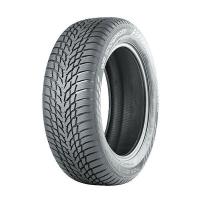
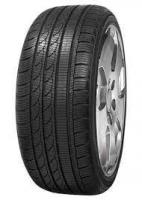
It will be interesting to compare a premium and budget winter tyres after 15 000 to kilometers to see wich tyres keep better preformance during the tyres wear.
Hello Jonathan. I really enjoy your videos. You helped me understand so much about tyre. Right now I want to buy good all season tyres. I am going to buy VW Polo 1.4 TDI 2006, and it has a strange tyre size. 185/60/14 I think. And I am also limited by budget. I live in Serbia in southern parts and we have per average 37 snow days, and thats nothing. Sometimes we get 20 snow days. Most of the time its just dry. So the tyre need to be only good in dry and hot, becouse we can get a pretty hot summer sometimes. Right now I am looking at Fulda MultiControl 52e and Kleber Quadraxer 2 49e.
I want a nice riding, comfortable, low noise with good fuel economy tyre that will survive summer.
Are there any other choices exept these? I will pay more for the right tyre but for a right price.
The CrossClimate is the master of dry performance in the all season category, all the rest can only be described as average at the moment. The Bridgestone A005 looks to be very good in braking but has high wear.
How about Conti Allseasoncontact rr Vredestein Quatrac 5 ? I cant find CrossClimate Plus version in 14' size. They only sell regular version. Is it a still good choice?
The regular CrossClimate is still a great choice, they didn't change much for the + version
How about Vredestein Quatrac 5?
Hey TyreReviews, I would love to see a test on the Michellin CrossClimate+ vs UHP Summer, vs UHP Winter Vs Budget Summer in the wet and dry in say 10 degree ish heat (plus or minis a bit). If it performs well at these temps (considering the mild UK winters we've been having) it could actually just be the best UK tyre for most of the time.
Something like that in the works at the moment
Sounds great! Can't wait to see it.
Expected a bigger difference, interresting test.
Awesome video, as always.
And I have one question.
I live in south east europe and we very rarely have snow here but temps are low and it rains pretty often. Should i buy winter or all season or all weather tyres for conditions like these?
Mild winter, buy all seasons, wow.
Thank you very much.
Very informative video/post, thank you for taking the time to do it. It convinced me to not go cheap on winter tires despite the short season where I live. I do have a follow up question if you have time.
I have a Tesla Model 3 with dual motor/AWD, How much difference in dry, wet, and snow/ice would there be between a "studless ice/snow" tire and a "performance winter/snow" tire? Looking at the difference between the Michelin X-Ice Xi3 and Pirelli Winter Sottozero 3. So how much worse in wet/dry is the X-Ice? And how much worse in the snow/ice is the Sottozero?
Where I live it rains a lot and low temps are in the 34f/2c - 41f/5c range. We only get snow once or twice during the winter, but I do drive through snowy passes a few times a month so I don't want to have sub-optimal snow/ice ability. Thank you!
Another great video! Just to add - the Golf starts around 1,400 kg, the Volvo around 1,800 kg, depending mainly on the engine and gearbox.
Thank you :)