Test Publication:
Auto Zeitung
235/45 R18
10 tyres
4 categories
Test Size:
235/45 R18
Tyres Tested:
10 tyres
Auto Zeitung is not affiliated with, and does not endorse, Tyre Reviews. This is independent editorial coverage of their published test.
For the 2019 summer season Auto Zeitung have tested nine 235/45 R18 summer tyres, and included the summer-bias all season Michelin CrossClimate.
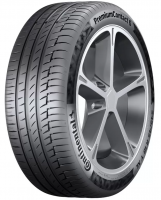
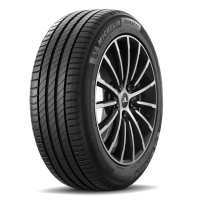
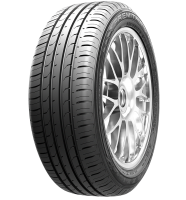
The stand out performances go to the new Continental Premium Contact 6 and Michelin Primacy 4, both showing extremely well balanced test results, and also the new Maxxis Premitra HP5. The quality of Maxxis tyres has quietly improving quickly over the past 12 months, and it's great to see the Premitra HP5 prove it's excellent price / performance ratio.
It's also worth noting, which the Michelin CrossClimate only finished seventh place overall, this is the only tyre on test which has any sort of ability in the snow. The trade for snow performance is often dry grip, but the CrossClimate held its own in a full summer tyre test, which makes it unique amongst all season tyres.
Dry
The dry testing was led by the top three tyres overall, with the Continental, Michelin Primacy 4 and Maxxis trading places in the dry braking and dry handling testing. The Nankang AS1 was last in both tests.
- Continental Premium Contact 6
- Maxxis Premitra HP5
- Michelin Primacy 4
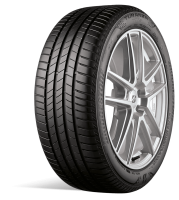
- Bridgestone Turanza T005
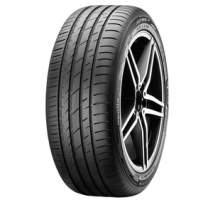
- Apollo Aspire XP
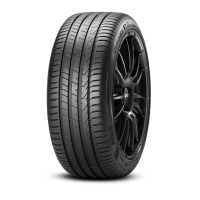
- Pirelli CINTURATO P7
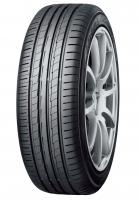
- Yokohama BluEarth AE50
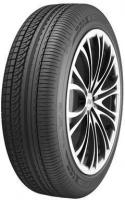
- Nankang AS1
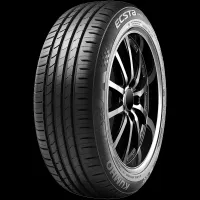
- Kumho Ecsta HS51
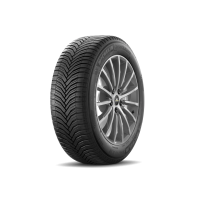
- Michelin CrossClimate Plus
- Continental Premium Contact 6
- Michelin Primacy 4
- Pirelli CINTURATO P7
- Maxxis Premitra HP5
- Apollo Aspire XP
- Yokohama BluEarth AE50
- Michelin CrossClimate Plus
- Kumho Ecsta HS51
- Bridgestone Turanza T005
- Nankang AS1
Wet
The Michelin CrossClimate had a surprise advantage during wet braking, but couldn't match the performance during the wet handling lap. The Continental Premium Contact 6 was the best of the summer tyres, with the Maxxis, Yokohama and Bridgestone all having excellent results. The Nankang AS1 was again last.
- Michelin CrossClimate Plus
- Continental Premium Contact 6
- Pirelli CINTURATO P7
- Yokohama BluEarth AE50
- Maxxis Premitra HP5
- Michelin Primacy 4
- Apollo Aspire XP
- Bridgestone Turanza T005
- Kumho Ecsta HS51
- Nankang AS1
- Continental Premium Contact 6
- Maxxis Premitra HP5
- Bridgestone Turanza T005
- Yokohama BluEarth AE50
- Apollo Aspire XP
- Michelin Primacy 4
- Michelin CrossClimate Plus
- Pirelli CINTURATO P7
- Kumho Ecsta HS51
- Nankang AS1
The Kumho was the best tyre for straight aquaplaning resistance.
- Kumho Ecsta HS51
- Bridgestone Turanza T005
- Pirelli CINTURATO P7
- Apollo Aspire XP
- Continental Premium Contact 6
- Maxxis Premitra HP5
- Michelin Primacy 4
- Yokohama BluEarth AE50
- Michelin CrossClimate Plus
- Nankang AS1
Environment
The Michelin Primacy 4 had an extremely low rolling resistance, while the Continental's only weakness was highlighted.
The Maxxis was the quietest tyre on test, with a 1dB margin over the next best.
- Maxxis Premitra HP5
- Nankang AS1
- Pirelli CINTURATO P7
- Yokohama BluEarth AE50
- Kumho Ecsta HS51
- Apollo Aspire XP
- Continental Premium Contact 6
- Bridgestone Turanza T005
- Michelin Primacy 4
- Michelin CrossClimate Plus
The cheapest set of tyres on test, the Nankang AS1, were almost a third of the price of the most expensive.
- Nankang AS1
- Kumho Ecsta HS51
- Maxxis Premitra HP5
- Apollo Aspire XP
- Pirelli CINTURATO P7
- Yokohama BluEarth AE50
- Bridgestone Turanza T005
- Continental Premium Contact 6
- Michelin Primacy 4
- Michelin CrossClimate Plus
Results
As always, you can see the full results on the Auto Zeitung website.
The best tyre in the wet by a margin, shortest dry braking and excellent dry handling, good level of comfort.
None mentioned.
| Test |
# |
Result |
Best |
Diff |
% |
| Dry Braking |
1st |
36 M |
|
|
100% |
| Dry Handling |
1st |
59.3 s |
|
|
100% |
| Test |
# |
Result |
Best |
Diff |
% |
| Wet Braking |
2nd |
57.7 M |
54.6 M |
+3.1 M |
94.63% |
| Wet Handling |
1st |
90 s |
|
|
100% |
| Straight Aqua |
5th |
74 Km/H |
75.1 Km/H |
-1.1 Km/H |
98.54% |
| Test |
# |
Result |
Best |
Diff |
% |
| Noise |
7th |
71 dB |
68 dB |
+3 dB |
95.77% |
| Test |
# |
Result |
Best |
Diff |
% |
| Price |
8th |
555 |
265 |
+290 |
47.75% |
| Rolling Resistance |
8th |
8.34 kg / t |
7.2 kg / t |
+1.14 kg / t |
86.33% |
Good results in the dry and wet, very low rolling resistance.
None mentioned.
| Test |
# |
Result |
Best |
Diff |
% |
| Dry Braking |
3rd |
36.6 M |
36 M |
+0.6 M |
98.36% |
| Dry Handling |
2nd |
59.7 s |
59.3 s |
+0.4 s |
99.33% |
| Test |
# |
Result |
Best |
Diff |
% |
| Wet Braking |
6th |
60.6 M |
54.6 M |
+6 M |
90.1% |
| Wet Handling |
6th |
94.2 s |
90 s |
+4.2 s |
95.54% |
| Straight Aqua |
7th |
72.3 Km/H |
75.1 Km/H |
-2.8 Km/H |
96.27% |
| Test |
# |
Result |
Best |
Diff |
% |
| Noise |
7th |
71 dB |
68 dB |
+3 dB |
95.77% |
| Test |
# |
Result |
Best |
Diff |
% |
| Price |
9th |
590 |
265 |
+325 |
44.92% |
| Rolling Resistance |
1st |
7.2 kg / t |
|
|
100% |
Up there with premium rivals at a lower price, good in the wet, short dry braking.
Average rolling resistance, average comfort, average dry handling.
| Test |
# |
Result |
Best |
Diff |
% |
| Dry Braking |
2nd |
36.4 M |
36 M |
+0.4 M |
98.9% |
| Dry Handling |
3rd |
60.2 s |
59.3 s |
+0.9 s |
98.5% |
| Test |
# |
Result |
Best |
Diff |
% |
| Wet Braking |
5th |
59.2 M |
54.6 M |
+4.6 M |
92.23% |
| Wet Handling |
2nd |
91.2 s |
90 s |
+1.2 s |
98.68% |
| Straight Aqua |
6th |
73.2 Km/H |
75.1 Km/H |
-1.9 Km/H |
97.47% |
| Test |
# |
Result |
Best |
Diff |
% |
| Noise |
1st |
68 dB |
|
|
100% |
| Test |
# |
Result |
Best |
Diff |
% |
| Price |
3rd |
345 |
265 |
+80 |
76.81% |
| Rolling Resistance |
7th |
8.31 kg / t |
7.2 kg / t |
+1.11 kg / t |
86.64% |
Good results in the dry and wet, short wet braking.
None mentioned.
| Test |
# |
Result |
Best |
Diff |
% |
| Dry Braking |
6th |
37.5 M |
36 M |
+1.5 M |
96% |
| Dry Handling |
3rd |
60.2 s |
59.3 s |
+0.9 s |
98.5% |
| Test |
# |
Result |
Best |
Diff |
% |
| Wet Braking |
3rd |
58.8 M |
54.6 M |
+4.2 M |
92.86% |
| Wet Handling |
8th |
96.6 s |
90 s |
+6.6 s |
93.17% |
| Straight Aqua |
3rd |
74.2 Km/H |
75.1 Km/H |
-0.9 Km/H |
98.8% |
| Test |
# |
Result |
Best |
Diff |
% |
| Noise |
3rd |
70 dB |
68 dB |
+2 dB |
97.14% |
| Test |
# |
Result |
Best |
Diff |
% |
| Price |
5th |
465 |
265 |
+200 |
56.99% |
| Rolling Resistance |
6th |
8.19 kg / t |
7.2 kg / t |
+0.99 kg / t |
87.91% |
Short dry braking and good ride quality, low rolling resistance, very good aquaplaning resistance.
Long wet braking distances.
| Test |
# |
Result |
Best |
Diff |
% |
| Dry Braking |
4th |
36.8 M |
36 M |
+0.8 M |
97.83% |
| Dry Handling |
8th |
60.7 s |
59.3 s |
+1.4 s |
97.69% |
| Test |
# |
Result |
Best |
Diff |
% |
| Wet Braking |
8th |
66.6 M |
54.6 M |
+12 M |
81.98% |
| Wet Handling |
3rd |
92.8 s |
90 s |
+2.8 s |
96.98% |
| Straight Aqua |
2nd |
74.3 Km/H |
75.1 Km/H |
-0.8 Km/H |
98.93% |
| Test |
# |
Result |
Best |
Diff |
% |
| Noise |
7th |
71 dB |
68 dB |
+3 dB |
95.77% |
| Test |
# |
Result |
Best |
Diff |
% |
| Price |
7th |
540 |
265 |
+275 |
49.07% |
| Rolling Resistance |
2nd |
7.46 kg / t |
7.2 kg / t |
+0.26 kg / t |
96.51% |
A well balanced tyre, low rolling resistance.
Reduced aquaplaning resistance.
| Test |
# |
Result |
Best |
Diff |
% |
| Dry Braking |
7th |
37.8 M |
36 M |
+1.8 M |
95.24% |
| Dry Handling |
6th |
60.4 s |
59.3 s |
+1.1 s |
98.18% |
| Test |
# |
Result |
Best |
Diff |
% |
| Wet Braking |
4th |
59 M |
54.6 M |
+4.4 M |
92.54% |
| Wet Handling |
4th |
93.4 s |
90 s |
+3.4 s |
96.36% |
| Straight Aqua |
8th |
70.8 Km/H |
75.1 Km/H |
-4.3 Km/H |
94.27% |
| Test |
# |
Result |
Best |
Diff |
% |
| Noise |
3rd |
70 dB |
68 dB |
+2 dB |
97.14% |
| Test |
# |
Result |
Best |
Diff |
% |
| Price |
6th |
470 |
265 |
+205 |
56.38% |
| Rolling Resistance |
3rd |
7.68 kg / t |
7.2 kg / t |
+0.48 kg / t |
93.75% |
The shortest wet braking distances. The only tyre with snow capability.
Relatively weak wet lateral stability, increased noise levels, long dry braking.
| Test |
# |
Result |
Best |
Diff |
% |
| Dry Braking |
8th |
39.2 M |
36 M |
+3.2 M |
91.84% |
| Dry Handling |
6th |
60.4 s |
59.3 s |
+1.1 s |
98.18% |
| Test |
# |
Result |
Best |
Diff |
% |
| Wet Braking |
1st |
54.6 M |
|
|
100% |
| Wet Handling |
7th |
96 s |
90 s |
+6 s |
93.75% |
| Straight Aqua |
9th |
70.4 Km/H |
75.1 Km/H |
-4.7 Km/H |
93.74% |
| Test |
# |
Result |
Best |
Diff |
% |
| Noise |
10th |
72 dB |
68 dB |
+4 dB |
94.44% |
| Test |
# |
Result |
Best |
Diff |
% |
| Price |
10th |
645 |
265 |
+380 |
41.09% |
| Rolling Resistance |
4th |
7.78 kg / t |
7.2 kg / t |
+0.58 kg / t |
92.54% |
Good aquaplaning resistance.
Long wet braking, soft sidewalls so poor lateral stability.
| Test |
# |
Result |
Best |
Diff |
% |
| Dry Braking |
5th |
37.4 M |
36 M |
+1.4 M |
96.26% |
| Dry Handling |
5th |
60.3 s |
59.3 s |
+1 s |
98.34% |
| Test |
# |
Result |
Best |
Diff |
% |
| Wet Braking |
7th |
65.8 M |
54.6 M |
+11.2 M |
82.98% |
| Wet Handling |
5th |
94 s |
90 s |
+4 s |
95.74% |
| Straight Aqua |
4th |
74.1 Km/H |
75.1 Km/H |
-1 Km/H |
98.67% |
| Test |
# |
Result |
Best |
Diff |
% |
| Noise |
3rd |
70 dB |
68 dB |
+2 dB |
97.14% |
| Test |
# |
Result |
Best |
Diff |
% |
| Price |
4th |
400 |
265 |
+135 |
66.25% |
| Rolling Resistance |
5th |
8.16 kg / t |
7.2 kg / t |
+0.96 kg / t |
88.24% |
Good aquaplaning resistance.
Long braking distances in the dry and wet, high rolling resistance, low comfort.
| Test |
# |
Result |
Best |
Diff |
% |
| Dry Braking |
8th |
39.2 M |
36 M |
+3.2 M |
91.84% |
| Dry Handling |
8th |
60.7 s |
59.3 s |
+1.4 s |
97.69% |
| Test |
# |
Result |
Best |
Diff |
% |
| Wet Braking |
9th |
73.1 M |
54.6 M |
+18.5 M |
74.69% |
| Wet Handling |
9th |
98 s |
90 s |
+8 s |
91.84% |
| Straight Aqua |
1st |
75.1 Km/H |
|
|
100% |
| Test |
# |
Result |
Best |
Diff |
% |
| Noise |
3rd |
70 dB |
68 dB |
+2 dB |
97.14% |
| Test |
# |
Result |
Best |
Diff |
% |
| Price |
2nd |
325 |
265 |
+60 |
81.54% |
| Rolling Resistance |
9th |
8.49 kg / t |
7.2 kg / t |
+1.29 kg / t |
84.81% |
None mentioned.
Unstable at the limit during wet handling and long stopping distances during wet braking, highest rolling resistance.
| Test |
# |
Result |
Best |
Diff |
% |
| Dry Braking |
8th |
39.2 M |
36 M |
+3.2 M |
91.84% |
| Dry Handling |
10th |
60.9 s |
59.3 s |
+1.6 s |
97.37% |
| Test |
# |
Result |
Best |
Diff |
% |
| Wet Braking |
10th |
77.3 M |
54.6 M |
+22.7 M |
70.63% |
| Wet Handling |
10th |
99.9 s |
90 s |
+9.9 s |
90.09% |
| Straight Aqua |
10th |
68.2 Km/H |
75.1 Km/H |
-6.9 Km/H |
90.81% |
| Test |
# |
Result |
Best |
Diff |
% |
| Noise |
2nd |
69 dB |
68 dB |
+1 dB |
98.55% |
| Test |
# |
Result |
Best |
Diff |
% |
| Price |
1st |
265 |
|
|
100% |
| Rolling Resistance |
10th |
8.92 kg / t |
7.2 kg / t |
+1.72 kg / t |
80.72% |

I would like a very quiet tyres and safety as well.
My doubt is michelin primacy 4 or nokian wetproof. Size 225/45/17 for a Bmw 1 series.
I understood that Nokian are better on wet and dry as well, and noise is approximately the same. But when they are much aged, will they maintain the same characteristics? thanks for helping!
As a rule Michelin generally wear better than other brands, but the Nokian is a new tyre from a premium brand so there's no reason this should perform worse than any other brand.
Thanks for your reply... In terms of noisy goodyear asymmetric 5 are better?
Have a look at our video and the various test data on this site :)
Already did ?. But I am confused. ...constructors declare a noise value but in test it is different. For instance goodyear f1 a3 68db and in your test f1 a5(70db) are quieter. Could you please advise me the quieter tyres(premium brands) at high speeds(motorway).
I will appreciate very mutch! Thanks?
You have all the data I have :) My noise test was internal noise, some tests are external.
I would have liked to see Landsail tyres in the list. Appreciate there are many makes now
though.
Sadly we don't see Landsail in many tests anymore.
I think that load and speed index should be known. They make a difference even in the same size and model. Correct me if I'm wrong.
They don't always made a difference, but you're right, it can. I'll work on getting it added to the database where available!
I have those Maxxis Premitra HP5, at first I liked them, but not anymore..
At a certain point, where there's approx 5-5,5mm of thread left, they change a lot, like it's a whole different rubber compound. Suddenly they're terrible sub 5deg Celsius. Also their wet capabilities have become poor. When it's wet and sub 5C they're lethal. They've become extremely noisy over time.
Wear is high in the beginning, but now it's really slow.
Also, how can the Premitra HP5 be 'new' (as mentioned in the text) if I have them already since February 2017.. DOT = 4616..
Or did they have an update?
Specially made an account for this:
https://uploads.disquscdn.c...
This is how they look after ~40,000km, approx 4mm left
New with tyres is relative, though you're right, I thought they were launched in early 2018 but I was wrong.
Obviously I can't comment on grip, but that's very good wear for 40,000 kms!
Interesting information, hopefully it's a one off or weather related but I'll keep an eye out for other reviews like this. ADAC did wear test a Maxxis tyre and found nothing usual, though it was a different pattern.
For 5 years and 45000km I had the Pirelli Pzero Nero(205/45/16) and I was very satisfied with this tire. Now I'm thinking of putting the premitra hp5,but i am not sure if this should be a good choice. It can compare this tire with my old pirelli? Is Maxxis premitra a worth buying in your opinion?
Hi, I can't find it on the Autozeitung website as mentioned, can you give me a hint?
It might not be published yet, sorry! I'll update the article with a link when it is.
Nice clear layout for this one!
The surprise was the Kumho which usually tests pretty well and has strong reviews to back this up. Like the other Andy just said though, like the CC, this is more a 'general' tyre stretched out to a more 'sporty' size against some more 'sportier' tyres.
That said, the second surprise is the Maxxis, also a 'general' tyre, testing a bit better than normal. They arent poor tyres, but its a strong result nevertheless. The big downside of these astronomic wear, but that is the downfall of a lot of decent tyres today!
I've just added even more data points to the overall results, should make things even clearer (though the formatting does need updating!)
A couple of points, one that TR needs to include on the review details, the other, more a commentary over Auto Zeitung's methodology:
1. The size/rating of the tyres tested is not mentioned in the details or title of the review (the size for the ADAC review is). Given the CC+ is more suited to 'standard' (non-performance/low profile) tyre sized to get the best performance (from reading previous reviews [and why I chose them for my car]), what size of tyre tested could easily sway the result as regards how the CC+ fairs.
2. The test (at least as the results are shown here) don't show any marks for wear/value for money, which other tests often do. As many group tests have already shown, the CC+ is excellent on that score and more than offset the higher purchase price, especially when the winter performance is factored in. Similarly no marks were given for 'comfort', another rating that the CC+ often does very well on.
It's a shame (you're not at fault Jon, but the magazines testing them) that there isn't a more unified testing regime as what criteria are used - I have no problems with performance tyres (obviously not the CC+ or other all-season tyres) being weighted more to the handling/braking side of things, but I think all reviews and group tests should include comparative scores across a wide range of aspects of the tyre, as some can look overly good or poor because a rating is included, excluded or weighted too heavily.
Hi Andy!
The size was in the database, I just forgot to mention it in the article. First of the year, I'm rusty :) It's added now!
As I'm sure you know, wear is very difficult to test, as to do it properly you actually have to go out and drive. For 10 sets of tyres, which need at least 10,000 miles on, that's a lot of driving. I'm always thankful when ADAC and Auto Bild do include wear testing.
I'm in the process of adding the score weighting details to the database too so hopefully that will become more clear in the future. It's currently difficult to decide whether to use the raw data where available, or to use the scoring numbers magazines also feel the need to apply.
No problem Jon. I had an inkling that the tyre size in the group test was a lower profile one, as from the reviews generally the CC+ seems to do less well in wider, lower profile sizes than those over 50. I'm keen on a group test with it against other all-season and summer tyres for the two most popular sizes: 205/55 R16 and 195/65 R15.
I'm sure it's featured in those in the past? The data must be on the website (I'm on mobile so can't search right now)
In my judgement, it's a good thing that various magazines use different test protocols & weight different parameters of performance differently & differently for different classes of tyre.
An astute user of tests should be ignoring overall scores anyway & mining the data for information on parameters of interest. A variety of test protocol "takes" on those prioritised areas adds breadth.
What should ideally be as apparent as possible is information about the test protocol which led to a given score & TR tries to supply this to some extent in the introductory "blurb" & in table annotations.