
EVO are the only publication to put out their summer tyre test so late in the season, and while the timing is less than ideal, the content is always excellent.
2018 is no different, with the September EVO issue covering six 235/35 R19 UUHP / max performance tyres using a Ford Focus ST (we recently used the same car to test Michelin PS4 vs PS4S vs Cup 2 here)
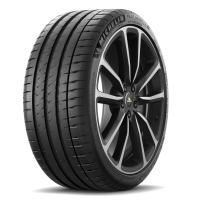
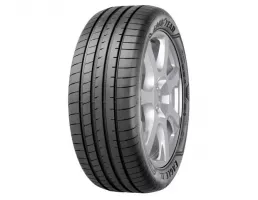
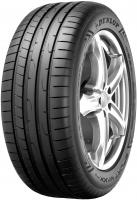
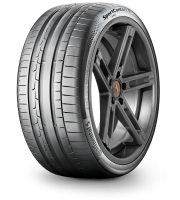
The test winning Michelin was no surprise, the Pilot Sport 4 S always performs excellently when tested, but it was a surprise to see the Continental Sport Contact 6 bested by the aging Goodyear and Dunlop pairing. Perhaps there was some home advantage as the test was conducted at Goodyear's incredible test facility in Miraval, France.
Dry
The dry testing was dominated by Michelin and Continental, with German manufacturer just edging out the French tyre maker in all three key dry tests. The gap was tiny, with just 0.1 seconds and 0.1 metres the difference in lap time and braking distances! Third and fourth place Goodyear and Dunlop were over 1.8 seconds behind the lead two tyres, which is a large gap in the dry.
Wet
Wet testing was close for the top three tyres, with Dunlop, Goodyear and Michelin within 0.6 seconds during the wet handling lap. Michelin won the wet braking test, consistently stopping ahead of its competition. The surprise was Continental, often known as the wet weather masters, it struggled during the wet braking and wet handling testing, but won the wet circle (not listed, see magazine.) This could point to aquaplaning issues around the wet tracks, as it scored as the worst tyre overall in the two aquaplaning tests.
Environment
As usual, the Michelin was the most expensive tyre on test.
Results
For more details on the results, please check out the September issue of EVO magazine.
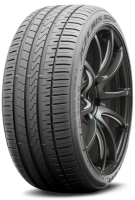
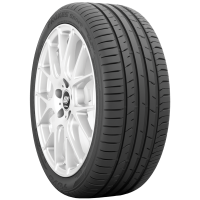
Can’t really believe those wet scores for the Conti. This tyre grip amazingly well in the wet. I have a 530kW/950Nm beast and have never had issues in the wet. Wet or dry the Conti’s are awesome, but they are very soft. That’s why I’m swapping to the Michelins, which are now a lot lot cheaper than they used to be. In Australia I can get them cheaper than the Goodyears, Dunlops or Continentals.
Agreed, this was a very strange result
Thanks for posting this review :)
Very interesting.
Goodyear and Dunlop are the Premium which don´t have tyres like Conti SC6 or Michelin P4S, so we have only a small choice if we want more than UHP. Bridgestone don´t sell the RE003 in Germany, but I guess this tyre will be not a competitor in wet-performance.
Like I thought, biggest difference seems to be dry handling subjective, not objective. But this is also important for me, I don´t care about being 2km/h faster in the corners, but the feeling like steering is the thing which is important.
But in wet the RT2 and Asy 3 beat the UUHP from Conti and Michelin. Most ppl I know would prefer the RT2 and Asy 3, which are good and also cheaper than Conti and Michelin
Has anyone considered doing tests of tyres neer end of life? I know from experience the (French) brand that would win and also those premium brands that age extremely badly to level of budget tyres.
There's an article on site about tread wear, it's actually incredibly lengthy and costly to do but I'd love to do the test at some point!
I buy new tires and if the tires are going bad I buy new ones.
Michelin made some ugly reviews with EOL-tires and IMHO it´s a very bad thing that Michelin want to say ppl should drive with 2mm tread winter-tires. No matter if is wet or snowy, with 2mm you will be a rolling danger on the roads.
I can say my good Pirelli P Zero were awesome in the 4th season, except with aquaplaning. But wet grip was still better than newer Bridgestone RE002 and Goodyear F1 Asymmetric 3
Can´t believe any new budget-tyre can beat the P Zero, never
Have you ever seen *actual* differences between a "standard" tire and an OEM-specific variant of that same model, e.g. Audi A0 spec.
Are they ever listed with different speed rating; wear rating; measured noise/efficiency/wet grip per EU testing; or anything else?
Never seen anyone answer this definitely.
Yes, check out this article:
http://www.tyrereviews.co.u...
thanks very much for that.
another q - is there any reason to pick V-speed variant over W-speed variant of the same model?
for winter tires some are offered in both ratings.
if one never exceeds W speed (even in dry condition in cold months), and they're the same price, would the V version offer any gains at all such as more suppleness? or should one always buy the highest speed rating as there are no downsides
That needs to be decided on a pattern by pattern basis and without lots of research perhaps impossible to answer. Check out the following
http://www.tyrereviews.co.u...
The SC6 result makes the point that it would be nice to know how wet (what water depth) the wet handling test was. [I would like such a test to be in merely damp (as opposed to streaming wet or standing water conditions) given that aquaplaning is separately tested.]
Sadly providing a constant level of damp is nigh on impossible, all wet tracks need a very small amount of flowing water. Goodyear's wet track doesn't have much more flowing water than others, it's no where near the depth of aquaplaning testing, it's very curious the Conti struggled.
yep
Again, given that Evo is as guilty as its sibling AutoExpress of having dysfunctional "search" arrangements, a direct link would be a service to your readers.
I don't think EVO publish their tests online until quite a while after the magazine goes off sale. As soon as I find one I'll update the article :)
now available:
https://www.evo.co.uk/featu...