The German publication Auto Bild have published their third tyre test of 2017, this time testing nine UHP tyres in 245/40 R18 using an Audi TT. Without a budget tyre included in the test, this is one of the closest tyre tests we've seen in years, and highlight just how close the latest generation of tyres have become in terms of raw performance.
Wet
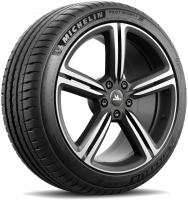
In the wet, the Michelin Pilot Sport 4 came out best overall. It won the aquaplaning tests and was joint fastest during the wet handling lap. The Firestone tyre lost both categories.
- Michelin Pilot Sport 4
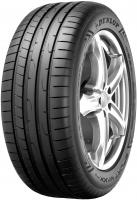
- Dunlop SportMaxx RT 2
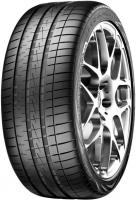
- Vredestein Ultrac Vorti
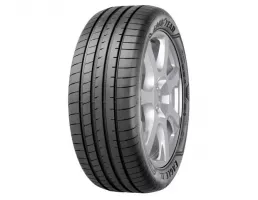
- Goodyear Eagle F1 Asymmetric 3
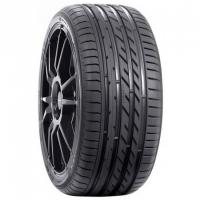
- Nokian zLine
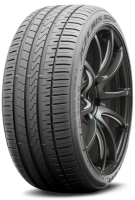
- Falken Azenis FK510
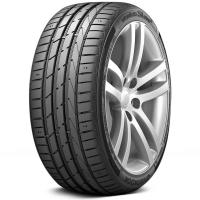
- Hankook Ventus S1 evo2
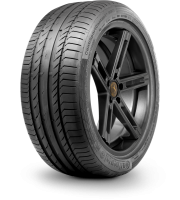
- Continental Sport Contact 5
- Firestone Firehawk SZ90
Under wet braking, the Michelin only managed sixth position, but when you consider the gap between the test winning Dunlop and sixth placed Michelin was just 0.4 meters, you realise the order of the top tyres could fall within the variance of the testing. The now-dated Continental Sport Contact 5 struggled, but not as much as the Firestone tyre, a full ten meters behind the winning Dunlop.
- Dunlop SportMaxx RT 2
- Vredestein Ultrac Vorti
- Falken Azenis FK510
- Goodyear Eagle F1 Asymmetric 3
- Nokian zLine
- Michelin Pilot Sport 4
- Hankook Ventus S1 evo2
- Continental Sport Contact 5
- Firestone Firehawk SZ90
Dry
As in the wet, the Michelin was the fastest tyre in the dry, with Vredestein a close second.
- Michelin Pilot Sport 4
- Vredestein Ultrac Vorti
- Hankook Ventus S1 evo2
- Falken Azenis FK510
- Goodyear Eagle F1 Asymmetric 3
- Dunlop SportMaxx RT 2
- Nokian zLine
- Continental Sport Contact 5
- Firestone Firehawk SZ90
The dry braking test verified Vredesteins dry ability, with Vredestein convincingly winning the test. Firestone once again finished last, rounding out last place in every test of grip performed.
- Vredestein Ultrac Vorti
- Goodyear Eagle F1 Asymmetric 3
- Dunlop SportMaxx RT 2
- Hankook Ventus S1 evo2
- Nokian zLine
- Michelin Pilot Sport 4
- Falken Azenis FK510
- Continental Sport Contact 5
- Firestone Firehawk SZ90
The rolling resistance test was won by Goodyear, with the first five places close enough not to make a huge impact in overall fuel use. The excellent dry grip of the Vredestein does have a trade off, the Ultrac Vorti had the worst efficiency of all tyres on test.
The quietest tyres on test were Hankook and Vredestein. Firestone once again ranks last, but is the cheapest tyre on test.
- Hankook Ventus S1 evo2
- Vredestein Ultrac Vorti
- Michelin Pilot Sport 4
- Dunlop SportMaxx RT 2
- Continental Sport Contact 5
- Goodyear Eagle F1 Asymmetric 3
- Falken Azenis FK510
- Nokian zLine
- Firestone Firehawk SZ90
Results
Below are the overall results. Auto Bild place a higher score weighting on the wet results, which is why the total scores aren't in sequence with the order of results.
Very good handling on dry and wet surfaces, precise steering response, good feedback and short braking distances in all conditions. High level of comfort
None mentioned
Exemplary / Test Winner
Total: 35
Dry
8
Wet
7
Comfort
7
Rolling Resistance
7
Noise
6
Good handling and a short stopping distance on wet and dry surfaces, high lateral stability on wet roads, low rolling resistance
None mentioned
Exemplary
Total: 35
Dry
7
Wet
7
Comfort
6
Rolling Resistance
9
Noise
6
Good handling and a short stopping distance on wet and dry roads, low noise
Slightly high rolling resistance
Exemplary
Total: 30
Dry
7
Wet
7
Comfort
5
Rolling Resistance
4
Noise
7
Good handling on dry roads, short stopping distance on wet and dry surfaces, good levels of comfort
A tendency to oversteer on wet roads
Good
Total: 33
Dry
6
Wet
7
Comfort
6
Rolling Resistance
8
Noise
6
High lateral stability and good handling on dry roads, short stopping distance on wet and dry surfaces, high resistance to aquaplaning, low noise
Strong tendency to understeer in the wet
Good
Total: 31
Dry
7
Wet
6
Comfort
5
Rolling Resistance
6
Noise
7
High lateral stability and good handling on dry roads, short stopping distance on wet and dry surfaces, high resistance to aquaplaning
A tendency to oversteer on wet roads
Good
Total: 29
Dry
6
Wet
6
Comfort
5
Rolling Resistance
6
Noise
6
Short stopping distance on wet and dry surfaces, high lateral stability on wet roads
Delayed response to steering and the tendency to oversteer, average comfort level
Good
Total: 29
Dry
6
Wet
6
Comfort
4
Rolling Resistance
8
Noise
5
Good resistance to aquaplaning, low rolling resistance, good levels of comfort
Average braking, slow steering, low stability on wet roads
Average
Total: 30
Dry
5
Wet
5
Comfort
6
Rolling Resistance
8
Noise
6
Acceptable resistance to aquaplaning
Unbalanced handling and long braking distances on wet and dry roads. High noise levels
Not recommended
Total: 18
Dry
4
Wet
1
Comfort
5
Rolling Resistance
5
Noise
3

Just a question. The Dunlop SportMaxx RT gets better results in the wet handling and wet braking than the Goodyear Assymetric 3, yet in the final result for wet it scores the same. Looking at the scores in each of the other catagories it appears to be a better balanced tyre, yet it is ranked lower overall. The reason I ask is that I will be choosing one of these two tyres for my next set.
We haven't listed the aquaplaning scores, where the Dunlop must have lost out to the Goodyear.
What is absolutely astonishing is how the Conti SC5 has gone from being an across-the-board test winner & wet specialist to being beaten by just about everything. Such is progress.
There's progress, and then there's this. The wet performance of the CSC5 is so low I feel like they might have tested an OE version. The CSC5 was always best in wet braking, progress hasn't moved things on this much!
What do you mean by OE version?
Car manufacturers can specify versions of tyres meeting their own preferred balance of performance. What this means is that compared to the normal off the shelf tyre, an oe approved/marked variation may, for example, be reconfigured to give a significant improvement in economy vs the tyre brands original parameters, the trade off of this is usually a loss of wet grip...
Tyre performance is about striking a balance, so whilst a tyre brand may make what they consider to be the optimum balance, in order to supply both car manufacturer and aftermarket sales for that brand (warranty requirements etc) they need to meet type approval, thus, reformulate to meet the manufacturers own particular bias.
Exactly what Andy said. But it's very unlikely.
It could just be a "bad" size for the CSC5!
I have to admit I've always really liked the Vredestein tyres, first the Sessanta and then the Vorti, the grip was very very good in all conditions and they last pretty well.
But it's very interesting to see in your tests, you can FEEL the Vorti especially had a very high rolling resistance, economy was a good 3-5mpg down compared to my previous tyres (Goodyear Eagle F1 asy2) but they handled so well it made up for it.
They feel like a track tyre in the respect of having a very stiff sidewall and great feedback.
However I run Michelin PS4 now (on the same car) and it is a better all round tyre, however if you are planning on track use I would stick with the Vorti as it handles slightly better and feels that little bit stiffer, if you don't want to take the compromise in wet grip by moving to a Pilot Sport Cup 2.
But for a road car the PS4 is such an amazing tyre.
What I don't understand is why the Vredestein Ultrac Vorti is now performing well, when it never did well in previous tests...
It's not unusual for tyres to go through mid-life compound or construction updates, keeping the same name but if you looked at the part code you'd find they had a new part code.
Thank you for the reply. But how do we know if a tyre went through a mid life update? If yes, how do we find the code to buy the new updated version? What I'm worried about is if I buy the tyre online, they will send me the old stock...
It's a bit of a minefield! The only way of being sure is to write to Vredestein and get the updated part number (if there is one.)
Alternatively you can try and get your tyre garage to get the newest DOT codes possible which will ensure the tyre is new stock and should in theory have the updated compound. If there even is one!
I find the conti SC5 245/40 R18 on my MK 3 TT sport set up a nasty resonance on rough surfaces which seem to be on most motorways in my area! This is a surprise since I have always run continentals on previous TT's without this sort of problem. When I test drove this model of TT it was on Hankook's and they were definitely quieter. I notice tests on noise are always external when it would seem more relevant to get internal noise ratings for driver comfort. Does anyone have the same problem and is there anyone who does internal noise ratings?
The comfort score on the user reviews here are a mix of internal noise and comfort. Certain magazines also test both internal and external noise.