
| Test Summary | |
| Wet Braking |
Michelin CrossClimate |
| Dry Braking |
Goodyear Vector 4 Seasons Gen 2 Michelin CrossClimate |
| Wet Handling |
Goodyear Vector 4 Seasons Gen 2 Nokian WeatherProof |
| Wear |
Michelin CrossClimate |
| Rolling Resistance |
Michelin CrossClimate Vredestein Quatrac 5 |
| Noise |
Michelin CrossClimate Goodyear Vector 4 Seasons Gen 2 Uniroyal AllSeasonExpert |
| Snow Handling |
Goodyear Vector 4 Seasons Gen 2 |
The two all season heavyweights of the industry, the Michelin CrossClimate and the Goodyear Vector 4Seasons Gen-2, trade results to tie overall in first place. As each of these all season tyres approaches year round motoring in different ways, we'll concentrate on the top two places for this write up.
Dry
All season tyres are traditionally "winter-bias all season" tyres. This means the tyre is more like a winter tyre than a summer tyre, and as a result there are performance penalties in the dry.
The "summer-bias all season" Michelin CrossClimate is more like a summer tyre than a winter tyre, which means during the dry tests, the Michelin dominated, stopping a huge 2.4 meters before the Goodyear stopped, and actually posting a faster lap time than the reference summer tyre on test!
Wet
The wet testing brings more balance to the "summer-bias all season vs winter-bias all season" argument. Both tyres outperform the reference summer tyre during the wet braking test, with the Goodyear edging out the Michelin in both wet braking and wet handling. The winter-bias Nokian WeatherProof also has a strong wet ability, finishing third in both tests. During the aquaplaning testing, the Michlin was slightly ahead of the Goodyear, but both tyres finished mid-table.
Snow
With the Michelin CrossClimate being the only "summer-bias all season tyre" on test, it would be easy to assume the advantage the Michelin has in the dry would mean a poor snow performance, but surprisingly the Michelin was extremely strong in the snow too - the CrossClimate finished just two places behind the Goodyear in snow braking, and almost matching the Goodyear in snow handling! Again, the Nokian Weatherproof proved to be an excellent "winter-bias all season" tyre, almost matching the reference winter tyre in snow braking and beating the winter tyre during the snow traction tests. Both the Michelin and Goodyear were extremely closely matched during snow traction, with the Goodyear having the slight edge.
Comfort, Fuel, Noise
The Goodyear proved to be the quietest tyre on test, where the Michelin could only manage sixth place, however the Michelin used the least fuel on test. Comfort levels between the two tyres were extremely similar.
Results
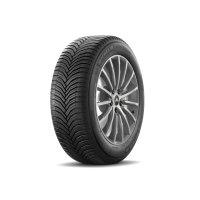
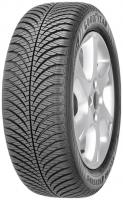
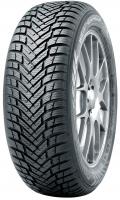
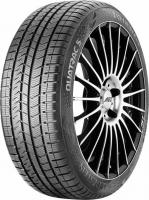
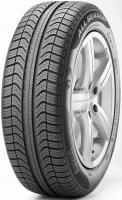
"Michelin CrossClimate" - are these the CrossClimate+ or the older CrossClimate? Should be mentioned
I believe these were the older CrossClimates at the time of this test.
"Results: 1st: Michelin, 1st: goodyear" Really? Two candidates on the 1st place and no second place?
That is how Auto Bild scored the test
Looking for advice... My Primacy 3's on the front need renewing. Rear tyres have 6mm left but not sure I like what's going on back there - one is a Primacy 3 94 w the other a Primacy HP 91 y in MO fitting. This is on a VW golf. All are the correct 225/45R17.
Was thinking of changing all four to get the speed and load ratings matching and lose the MO (Mercedes) tyre. Does that sound sensible or an over reaction?
Also, if changing all four at this time of year would an all season tyre make sense?
I love the Primacy 3 as I value quietness and longevity/ fuel consumption highly. I don't drive fast despite spending most of the time on motorways or dual carriageways.
Any guidance would be much appreciated.
Just to clarify the above the car should have 225/45R17 91v all round.
Having driven both Primacy 3 and Crossclimate back to back over the last 15 months (in 205/55 r16) I can state that the crossclimate are very close indeed to the primacy 3. You can get a little more noise under hard braking from the crossc. as the biggest difference, but otherwise although the prim.3 are extremely quiet, the crossc. are barely any different on the most part.
Personally, I would choose the Crossclimate, even as a driver who likes to drive in a sporty manner when conditions allow.
Also, it would be sensible in an ideal world to balance out the tyres. Your biggest issue on the back is the didference in wet behaviour between the older and newer models as there is a marked difference. The load/speed rating shouldn't really have any notable influence, the MO may or may not depending on what changes Michelin made to the base tyre.
Just so you know, a new article 'Crossclimate vs Primacy 3' has just been put up giving a subjective critique of the two.
Great - just what was needed!
I read it and it does confirm what I was thinking - both really good tyres. I also find the Primacy 3 hardens up when cold - doesn't affect the grip at the speeds I drive but does give noticeable difference in comfort. This would no doubt be the same for all summer tyres. As the CC+ doesn't seem to be affected by temperature it looks a winner on the comfort score.
The long term test did echo other comments I'd seen on the slight noise difference the CC+ has. Maybe not especially louder, just slightly more noticeable in some cases.
My only doubt now is having seen a few comments from users about the CC+ being more prone to drifting on higher speed corners, usually in the damp, with some mentioning it gets worse with age. As I do a fair lot of motorway driving and appreciate building up speed on curved slip roads I just have a niggling doubt left. With that and the fact temps in UK are generally above 7deg more often than below, and the Primacy 3 is £28 cheaper than CC+ (per tyre) in my size, I'm swinging that way at present.
Well Ive punted the Grand Scenic about like a hot hatch on some twisty stuff in both dry and wet, havent experienced anything untoward to date other than a bit more oversteer as mentioned. They will be run to the bone so will report back, the problem being the timescale of course!
Edit; 6/2/18;
The Crossclimate are now fitted to a Citroen C4, over the new year and up to date, I have been experiencing the 'plasticky' feeling and drifting on wet/damp/cold roads. Only on the front, and only in these conditions.
I speculate that, the summer optimised compound on a lightweight car, with the way michelin 'do' compounds, is just not quite flexible enough once the tread wears down.
On the big Grand Scenic last winter they were exemplary. There isnt a great deal of difference in tread depth, perhaps .75mm so tge main difference is the weight and suspension of the two cars.
I would deduce from this that if you have a heavy/heavier car then the Cc. are great tyres which do what they say on the tin.
For light(er)weight cars, maybe a more traditional all season would be better.
They are still pretty secure tyres when all said and done, but they can feel a bit 'greasy' on a lighter car once tread gets <6mm. This would go some way to explain the mixed reports, as I have experienced both sides of the coin using the same 4 tyres.
Interesting German test of Goodyear Vector 4Seasons Gen-2 and Michelin CrossClimate made by Gesellschaft für Technische Überwachung (GTÜ) together with Autoclub Europa (ACE) & Auto-, Motor- und Radfahrerbund Österreichs (ARBÖ) with tyre size 205/55 R16 on VW Passat - new tyres and used tyres after 10.000 km.
Much data measured and introduced in the video, easy to understand: http://reifenpresse.de/2017...
Surprising results on water & snow thanks to opening deeply hidden Y-sipes during the tyres life time...
Thanks, I'll look into this ASAP :)
After reading the test I am left with the feeling that the difference between a summer bias and a winter bias I actually quiet small
There's quite a large difference in the dry, which is where UK motorists spend 65%+ of their time, so is a very important factor.
TyreReviews, what you think about new Continental AllSeasonContact? Will be same level as CrossClimate and Vector4Seasons gen2?
Interesting question. We currently have no information on the AllSeasonContact, but expect it to sit somewhere between the CrossClimate and Vector 4Seasons Gen 2 with regard to performance balance.
Before an independent test will come later on (probably in the autumn) have a look at the spin graph accompanying the launch of the Cont. ASC, comparing the 9 most important tyre parameters to summer and winter oriented all seasons competitors (just only 2 in total!) and you will see that best parameters of Conti should be: Low rolling resistance, lateral aquaplaning and snow handling...
http://www.tyrereviews.co.u... :)
Thanks for a graph. I‘m.wondering which tyres are 'summer and winter oriented premium all season tyres'. CrossCilmat and Weatherproof? Waiting for tests ;)
The CrossClimate is almost certainly the summer optimised all season, as it's the only one on the market :)
I would guess the Goodyear Vector 4Seasons Gen 2 would be the winter optimised as they are the direct rival to Continental.
I can only agree, it is the clear logic for Continental to chose those 2 market leaders, especially with regards to high R&D & test costs.
P.S. I forgot in previous comment to add also the weak points of the new all season Conti in compare to "summer oriented all season premium tyre": About 10% worse dry breaking & mileage.
What further counts for consumers is the price & here the pricing and the concrete size availability will be one of the main reason(s) to buy or not...
Which are the reference tyres, summer and winter?
They dont usually disclose that info unfortunately, is better when/if they do!
As Andy correctly pointed out, it's not published sadly. Usually if you know who's hosting the test, you can roughly work out what tyres they are :)
I can testify that even on a big heavy mpv the crossclimate are solid in the dry and indistinguishable amidst other summer tyres, whilst wet grip is assured.
Well deserved joint first here.
Why not the CrossClimate plus?
Most likely size availability at time of test.
Very little has changed between the CrossClimate and the CrossClimate+ so we can be fairly confident the CrossClimate+ would have performed equally as well.
Just bought some Cross climate PLUS, did have some Energy Saver PLUS on previously. Feel very similar in end August weather. Be interested to know a direct comparison for ACTUAL rolling resistance in kg/t as graph further up page. Energy Saver PLUS are B for rolling & Cross Climates are rated C... Are they fairly close (are cross climates low C nearly B & Energy Savers low B nearly A - or other end of spectrum??) Any chance of comparable info?
Yes, as stated in the M. CrossClimate + press release they are high C in the Rolling resistance, close to M. Energy Saver B class but in practise the most important is still the driver factor...:-)