Hankook Ventus Prime 4 vs Michelin Primacy 5
Across the four shared tests here (ADAC 2026 plus three 2025 group tests), a clear pattern emerges: the Primacy 5 repeatedly posts stronger wet safety metrics and markedly better efficiency/low-wear credentials, while the Ventus Prime 4 occasionally nicks small wins in dry braking/steering feel but struggles to match Michelin's consistency in the wet and its refinement-focused metrics. The result is less about one headline number and more about how often each tyre lands on the “right side” of the touring brief.

Test Results
Independent comparison tyre tests are the best source of data to get tyre information from, and the good news is there have been four tests which compare both tyres directly!
| Tyre | Test Wins | Performance |
|---|---|---|
| Michelin Primacy 5 | four |
While it might look like the Michelin Primacy 5 is better than the Hankook Ventus Prime 4 purely based on the higher number of test wins, tyres are very complicated objects which means where one tyre is better than the other can be more important in real world use.
Let's look at how the two tyres compare across multiple tyre test categories.
Key Strengths
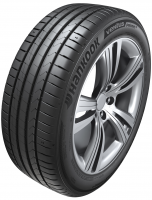
- Competitive dry braking in multiple tests (wins 2/4), with decent subjective dry handling feel in at least one test
- Can show strong curved-aquaplaning performance in specific conditions (ADAC: 3.4 vs 3.3 m/s², marginal win)
- Generally easy, predictable daily-driver character noted by testers (adequate/balanced when not pushed)
- Often posts acceptable efficiency metrics, with fuel consumption matching Michelin in ADAC (both 5.4 l/100 km)
- Consistently shorter wet braking across all shared tests (wins 4/4), including a notable ADAC advantage (32.7 m vs 34.5 m)
- Stronger straight-line aquaplaning resistance in every shared test (wins 4/4), supporting wet-motorway safety
- Best ownership/eco profile in the ADAC data: longer projected wear (56,000 vs 44,700 km) and much lower abrasion (54 vs 75 mg/km/t)
- Refinement and efficiency: quieter in measured noise (70.6 vs 72.9 dB) and lower rolling resistance in shared rolling tests (e.g., 7.0 vs 7.7 kg/t)
Dry Braking
Looking at data from four tyre tests, the Hankook Ventus Prime 4 was better during two dry braking tests. On average the Hankook Ventus Prime 4 stopped the vehicle in 0.54% less distance than the Michelin Primacy 5.
Best In Dry Braking: Hankook Ventus Prime 4
See how the Dry Braking winner was calculated >>
Subj. Dry Handling
Looking at data from two tyre tests, the Hankook Ventus Prime 4 was better during one subj. dry handling tests. On average the Hankook Ventus Prime 4 scored 1.18% more points than the Michelin Primacy 5.
Best In Subj. Dry Handling: Hankook Ventus Prime 4
See how the Subj. Dry Handling winner was calculated >>
Wet Braking
Looking at data from four tyre tests, the Michelin Primacy 5 was better during four wet braking tests. On average the Michelin Primacy 5 stopped the vehicle in 3.14% less distance than the Hankook Ventus Prime 4.
Best In Wet Braking: Michelin Primacy 5
See how the Wet Braking winner was calculated >>
Wet Braking - Concrete
Looking at data from one tyre tests, the Michelin Primacy 5 was better during one wet braking - concrete tests. On average the Michelin Primacy 5 stopped the vehicle in 7.84% less distance than the Hankook Ventus Prime 4.
Best In Wet Braking - Concrete: Michelin Primacy 5
See how the Wet Braking - Concrete winner was calculated >>
Wet Handling [s]
Looking at data from two tyre tests, the Michelin Primacy 5 was better during one wet handling [s] tests. On average the Michelin Primacy 5 was 0.79% faster around a wet lap than the Hankook Ventus Prime 4.
Best In Wet Handling [s]: Michelin Primacy 5
See how the Wet Handling winner was calculated >>
Subj. Wet Handling
Looking at data from two tyre tests, the Michelin Primacy 5 was better during two subj. wet handling tests. On average the Michelin Primacy 5 scored 3.61% more points than the Hankook Ventus Prime 4.
Best In Subj. Wet Handling: Michelin Primacy 5
See how the Subj. Wet Handling winner was calculated >>
Straight Aqua
Looking at data from four tyre tests, the Michelin Primacy 5 was better during four straight aqua tests. On average the Michelin Primacy 5 floated at a 3.55% higher speed than the Hankook Ventus Prime 4.
Best In Straight Aqua: Michelin Primacy 5
See how the Straight Aqua winner was calculated >>
Curved Aquaplaning
Looking at data from two tyre tests, the Michelin Primacy 5 was better during one curved aquaplaning tests. On average the Michelin Primacy 5 slipped out at a 3.27% higher speed than the Hankook Ventus Prime 4.
Best In Curved Aquaplaning: Michelin Primacy 5
See how the Curved Aquaplaning winner was calculated >>
Subj. Comfort
Looking at data from one tyre tests, the Michelin Primacy 5 was better during one subj. comfort tests. On average the Michelin Primacy 5 scored 3.75% more points than the Hankook Ventus Prime 4.
Best In Subj. Comfort: Michelin Primacy 5
See how the Subj. Comfort winner was calculated >>
Subj. Noise
Looking at data from two tyre tests, the Michelin Primacy 5 was better during one subj. noise tests. On average the Michelin Primacy 5 scored 2.33% more points than the Hankook Ventus Prime 4.
Best In Subj. Noise: Michelin Primacy 5
See how the Subj. Noise winner was calculated >>
Noise
Looking at data from one tyre tests, the Michelin Primacy 5 was better during one noise tests. On average the Michelin Primacy 5 measured 3.16% quieter than the Hankook Ventus Prime 4.
Best In Noise: Michelin Primacy 5
See how the Noise winner was calculated >>
Wear
Looking at data from one tyre tests, the Michelin Primacy 5 was better during one wear tests. On average the Michelin Primacy 5 is predicted to cover 20.18% miles before reaching 1.6mm than the Hankook Ventus Prime 4.
Best In Wear: Michelin Primacy 5
See how the Wear winner was calculated >>
Rolling Resistance
Looking at data from two tyre tests, the Michelin Primacy 5 was better during two rolling resistance tests. On average the Michelin Primacy 5 had a 6.11% lower rolling resistance than the Hankook Ventus Prime 4.
Best In Rolling Resistance: Michelin Primacy 5
See how the Rolling Resistance winner was calculated >>
Fuel Consumption
Looking at data from one tyre tests, the Hankook Ventus Prime 4 and Michelin Primacy 5 performed equally well in fuel consumption tests.
Best In Fuel Consumption: Both tyres performed equally well
See how the Fuel Consumption winner was calculated >>
Abrasion
Looking at data from one tyre tests, the Michelin Primacy 5 was better during one abrasion tests. On average the Michelin Primacy 5 emitted 28% less particle wear matter than the Hankook Ventus Prime 4.
Best In Abrasion: Michelin Primacy 5
See how the Abrasion winner was calculated >>
Real World Driver Reviews
Hankook Ventus Prime 4 Driver Reviews
Across 71 reviews, the Hankook Ventus Prime 4 is generally seen as a strong value-focused touring tyre, most often praised for being quiet, smooth and confidence-inspiring with strong dry handling and good wet grip when new. Many drivers also highlight stable braking/handling and an overall “premium feel” for the price compared with more expensive rivals. The most repeated drawback is faster-than-expected wear, with several owners reporting that wet grip (and sometimes noise) deteriorates noticeably as tread depth drops; a smaller but recurring group also finds the ride a bit stiff/harsh on some cars.
Based on 76 reviews with an average rating of 82%
Michelin Primacy 5 Driver Reviews
Across 31 reviews, the Michelin Primacy 5 is most often described as a very quiet, premium-feeling touring tyre with standout ride comfort and strong wet-weather confidence, including impressive aquaplaning resistance. Many drivers also report low rolling resistance/fuel-economy benefits and early signs of good wear. The most consistent downside is a softer, more isolated steering feel with less sharp response for sporty driving; a small minority also report vibrations or unexpectedly weak grip on their specific vehicles/conditions (sometimes early in the tyre's life).
Based on 33 reviews with an average rating of 85%
Conclusion
The Hankook Ventus Prime 4 isn't a “bad” tyre-its dry braking is competitive (winning 2 of 4 comparisons) and several reports describe decent dry grip and agreeable steering feel. However, the consistent theme is that it gives away confidence and margin in the wet (braking, straight aquaplaning, and stability at the limit), and it tends to be noisier/less refined in the tests that measured it (e.g., 72.9 dB vs 70.6 dB in Al Volante). Practical takeaway: for a touring summer tyre, Michelin's Primacy 5 better matches the brief-safe, calm and efficient-while the Hankook is best viewed as an acceptable everyday option if priced significantly lower and if most of your driving is in dry conditions.
Key Differences
- Wet braking is the decisive separator: Michelin wins 4/4 wet-braking comparisons, including ~5% shorter stops in ADAC (32.7 m vs 34.5 m) and ~8% shorter on wet concrete (38.8 m vs 42.1 m).
- Aquaplaning (straight) consistently favours Michelin: 4/4 wins, with gaps up to ~7.8% (80.3 vs 74.5 km/h in Die ReifenTester).
- Wear and emissions/particulate impact strongly favour Michelin in the ADAC projections: 56,000 vs 44,700 km (+25%) and lower abrasion (54 vs 75 mg/km/t).
- Rolling resistance and comfort/refinement generally favour Michelin (e.g., 7.0 vs 7.7 kg/t; subjective comfort 80 vs 77; measured noise 70.6 vs 72.9 dB).
- Dry braking is the one area where Hankook can match or beat Michelin: Hankook wins 2/4 dry-braking comparisons, but margins are small (around 1-2.5%).
- Both tyres are described as not class-leading dynamically, but the Hankook's wet-limit behaviour is more frequently flagged (rear instability/early under- or oversteer), while Michelin is more often described as calm/understeery but predictable.
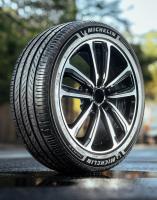
Overall Winner: Michelin Primacy 5
Based on the tyre test data and user reviews we have in our database, the Michelin Primacy 5 has demonstrated better overall performance in this comparison. However, as you can see from the spider diagram above, each tyre has its own strengths which should be considered in your final tyre buying choice.Similar Comparisons
Looking for more tyre comparisons? Here are other direct comparisons involving these tyres:



Footnote
This page has been developed using tyre industry testing best practices. This means we are only comparing tests which have had both tyres in the same test.
Why is this important? Tyre testing is heavily affected by things like surface grip levels and surface temperature, which means you can only compare values from the same day. During a tyre test external condition changes are calculated into the overall results, but it is not possible to calculate this between tyre tests performed on different days or at different locations.
As a result you will see other tests on Tyre Reviews which feature both the %s and %s, but as they weren't conducted on the same day, the results are not comparable.
Lots of other websites do this sort of tyre comparison, Tyre Reviews doesn't.
Discussion
- No comments yet — be the first.