
This has never been more true than with winter tyres. People now appreciate they give vastly superior grip in the snow, but what are they like during our more normal, wet winter, or on a freak warm dry winter's day?
Long time Tyre Reviews friend David Crick fitted winter tyres to two of the vehicles in his household in November 2010 and ran them through to March the following year. Below is his excellent and comprehensive real world experiences with his winter tyres during that time.
Background
 I first became aware of winter tyres in 2006, and every year since
then once the temperature started to dip towards 7 degrees C I
entertained the thought of getting some. But mostly I subscribed to
the view that they were unnecessary for the British climate and
weather conditions.
I first became aware of winter tyres in 2006, and every year since
then once the temperature started to dip towards 7 degrees C I
entertained the thought of getting some. But mostly I subscribed to
the view that they were unnecessary for the British climate and
weather conditions.
Then came the winter of 2009/2010, and the heavy - and EXTENDED - period of snow. We live on an untreated side-road on a hill, which rapidly becomes an ice-rink due to the cars that do gingerly go down it - and even more so by those unsuccessfully trying to go UP it, who mostly get nowhere and only succeed in polishing the surface even further.
That winter I reduced my car usage to an absolute minimum. I am a careful and experienced driver, who knows that you should use higher gears and engage the clutch gradually, gently feeding in the power. But even when doing so, there are still occasions when physics simply takes over and there simply isn't enough friction between the smooth summer tyre and the slick road surface, and your tyre simply spins. When that happens up a hill you can quickly lose momentum.
After the experiences of 2009/2010 I finally decided I would buy winter tyres for the following winter. The hardest part was choosing the make and model to go for. As well as considering some winter-rated all-season tyres, I also considered some more dry-biased full winters. But in the end I plumped for a Central European snow-biased winter tyre - the Goodyear Ultragrip 7+. (This tyre has since been superseded by the Ultragrip 8.)
A second car in the house was also equipped with winters. Although initially considering the Dunlop Winter Sport 3D, the Continental TS 830P was eventually chosen.
Both the Ultragrip 7+ and the 830P were selected due to their exceptional snow performance. Coincidentally, the summer tyres they were replacing had similar tread patterns in the case of the directional and wide grooved Goodyear Eagle F1 GS-D2 and the asymmetric Bridgestone Turanza ER300 respectively.
The third car in the family remained on summer tyres, which provided a useful reference point during its limited running.
Naysayers
Winter tyres seem to create a very split opinion here in the UK. The two general arguments against seem to be:- Our weather isn't bad enough
- You should be able to drive to the conditions
Regarding the first point, the last two winters have shown that our weather can indeed become bad (and PROLONGED) enough to fully justify them. Further, the naysayers generally mis-categorise winter tyres as purely designed for snowy conditions, whereas in fact they are beneficial between roughly October/November and March/April, which our own experience last winter confirms, and I will report on below.
Point two is correct, BUT ONLY AS FAR AS THE LIMIT OF PHYSICS! Winter tyres can provide nearly three times the traction of summer tyres on snow, will be able to retain control (handle) twice as well, and - most importantly - will be able to stop SIX CAR LENGTHS SHORTER on snow even at low speeds. (Source: Auto Express cold weather tyre test, published 23 October 2010.)
Formula 1 drivers are generally considered the most skilled. Yet there are times when they out-brake themselves and they misjudge or exceed the distance they have and the limit of their tyres. And they also suffer from aquaplaning - when even the extreme wet tyres that they use cannot cope with the volume of water and the drivers become passengers.
If conditions can trip up Formula 1 drivers, then to say that you have coped OK without winter tyres up until now - particularly when you have the option of something that can grip three times the amount, be controlled twice as well, and stop in under half the amount of space - is disingenuous. It also fails to take into the account that YOUR car, the conditions YOU encounter, and your OWN driving experience are vastly different to that of everyone else's.
Motoring organisations, tyre manufacturers and the Highways Agency all agree on the benefits of fitting winter tyres. The Government even clarified their own stance on their usage, stating: "for those who can afford winter tyres ... they provide significant additional grip for motoring in such cold conditions." (Source: Hansard)
A final remark is that those who are against use of winter tyres have without exception NOT tried them themselves, whereas those that advocate them generally have. More than that, those who have used them - despite the initial cost, as well as the inconvenience of having to buy, store and swap a second set of tyres - have said they will never return to not running them.
While we doubt we will convert any hardcore "antis" with this article, we hope that by sharing our own experience of running winter tyres for the first time we will be able to persuade the more open-minded of you as to their benefits.
Buying and fitting
 Availability of winter tyres in the UK has historically been poor, to
say the least, with even garages parroting the same long-held
misconceptions about them. But after the winter of 2009/2010 more
people become clued-in on them, and even major retailers, web sites
and garages started to offer them. Demand very quickly outstripped
supply in 2010/2011, so our advice is to buy early.
Availability of winter tyres in the UK has historically been poor, to
say the least, with even garages parroting the same long-held
misconceptions about them. But after the winter of 2009/2010 more
people become clued-in on them, and even major retailers, web sites
and garages started to offer them. Demand very quickly outstripped
supply in 2010/2011, so our advice is to buy early.
European-based web tyre suppliers generally have the widest range of stock. However, once imported we found that some mainstream garages would refuse to fit them if you hadn't purchased the tyre from the garage themselves. Small independent specialist tyre places are your best bet for fitting, and indeed some web sites offer a "fitted" price and a choice of local (or even mobile) fitters near to you.
If you do buy tyres from a mainstream retailer or garage then you will be limited to the stock they have available. Even more so than with summer tyres, there can be a BIG difference in performance and operating windows between budget and premium winter tyres. Considering ONLY snow, ANY winter tyre will outperform a summer tyre. However, this may very well come at the cost of wet or dry performance. With winter tyres - as with summer tyres - our advice remains that you really do get what you pay for.
We ordered both of our sets of winter tyres from Europe over the Internet. Both sets arrived in three working days (i.e. discounting weekends), and we were able to fully track their delivery progress online. We had them fitted at a local independent tyre company.
When to fit, and when to remove
We confirmed that below 7 degrees C is when winter tyres start to become usable, and 3 degrees was when they had a noticeable benefit over the summer-shod car. You'll want to take your own local conditions into account as well as the times of day that you generally travel, since you will encounter colder conditions when the sun is set, and particularly early in the morning.Not so widely published is the temperature recommended for switching back to summer tyres. We found that at 11 degrees and above the winter tyres performed noticeably poorer. (More details are given in the experiences section below.)
For OUR AREA, under OUR RUNNING CONDITIONS, we found that in hindsight the OPTIMUM window for running winter tyres for the winter of 2010/2011 was mid-November to mid-March.
However, rules of thumb such as October-April, October to Easter, or when the clocks go back and forward are all good general - if quite wide - guidelines as to when to switch your tyres over.
We've noticed the occasional car from time to time still fitted with winter tyres throughout the entire year. This is actually the recommended way of doing it if you can only afford one set of tyres, since the safety and performance benefit of running winter tyres in winter outweighs the performance disadvantages of running winters in summer. (Or to put it another way: you compromise yourself more by running summer tyres in winter.) However, this is a rather expensive way of doing things - one car we spotted had used up nearly its entire tread depth in just one year of (continuous) running!
Overall it is actually economically more beneficial to run two sets of tyres (full winters and summers), since you're spreading the wear across two sets and are also running each in their optimum operating conditions. The initial outlay of purchasing winter tyres should also be weighed against the fact that they'll last you for several winters - as well as reducing wear and tear on your summer tyres.
Initial experience
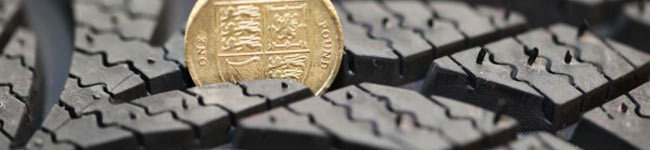 Driving away from the garage with the Ultragrip 7+ fitted all round,
the first - and expected - thing to notice was that dry braking took
longer. This is due to a number of factors compared to summer tyres:
taller, multiple, separated treadblocks, wider tread spacing, the tyre
compound, and presence of the wiggly "sipes" cut into the tread. All
these reduce either tread stiffness or tyre road contact patch area.
Due to this I found that the Ultragrips required a little bit of extra
brake pedal pressure for the last (approx.) 0.4 metres or so to stop
in the dry.
Driving away from the garage with the Ultragrip 7+ fitted all round,
the first - and expected - thing to notice was that dry braking took
longer. This is due to a number of factors compared to summer tyres:
taller, multiple, separated treadblocks, wider tread spacing, the tyre
compound, and presence of the wiggly "sipes" cut into the tread. All
these reduce either tread stiffness or tyre road contact patch area.
Due to this I found that the Ultragrips required a little bit of extra
brake pedal pressure for the last (approx.) 0.4 metres or so to stop
in the dry.
The Ultragrips also felt VERY "floaty" for the first 50 miles - disconnected from the road, and unsettled over bumps, small potholes and road camber changes.
Once that bedding in period had passed, I was left with just the slight delay in braking and a slight delay in steering input - you needed to steer and then pause; almost like "setting the car up before the corner." To begin with I had continued to add steering input, which meant that once the car DID begin to turn there was too much lock applied, and you were then steering too much. However, once accustomed to "pre-steering," it became second nature, and indeed once IN the corner the winters even seemed to offer a bit more bite, probably due to the sipes.
In comparison, the other car fitted with the 830Ps required NO "bedding in" period - they were good from the go, and steering and braking felt little changed from the summer tyres they replaced.
Both sets of winter tyres were SIGNIFICANTLY quieter than our summer tyres, and also rode MUCH more smoothly. MPG was monitored with the Ultragrips, and they gave equal or better fuel economy than the summer tyres - and maintained that throughout the coldest periods. The lower rolling resistance of the Ultragrips did mean that lifting off to slow down a little wasn't as effective as with the higher friction summer tyres. Braking when going into a slower speed limit area also required harder braking to slow the car down.
Cold running
Once temperatures dipped to 3 degrees C - when most cars display their "ice warning" message - there was a noticeable improvement compared to summer tyres. The owner of the 830Ps commented that when leaving the drive on a frosty morning there was no slipperiness felt - and this was compared to just the previous day before when the winter tyres hadn't yet been fitted. The owner of the third car in the family - still on summers - independently remarked that the road had felt slippery to them.Cold, greasy roundabouts partially left in shadow were also tackled at normal speed, whereas on our summer tyres in those conditions we would have entered with more care. Indeed, we repeatedly found ourselves caught out behind slower, summer-shod cars, who were having to tackle the roundabouts at a reduced speed compared to us.
Damp and greasy running on wintry motorways would similarly produce no drama.
And, as the temperature continued to drop, the Ultragrips continued to maintain their performance.
Wet running
With their wider channels (in the case of the 830P) and V-shaped grooves (with the Ultragrip 7+), both winter tyres coped with water without any issue. Indeed, the Ultragrips made the usual imperious progress through water that I am accustomed to with the similarly-grooved Goodyear Eagle F1s. If anything, the Ultragrips actually felt BETTER in the wet than the F1s - again possible due to the sipes, which were providing extra bite.Dry running
While the Ultragrip appeared optimised more for snow (and rain), and so had a slight disadvantage in dry braking and steering, the Continental 830P proved a revelation in the dry. The 830Ps provided the sportiest feeling to that car in the dry that I'd ever felt, even compared to its standard touring summer tyres (Bridgestone ER300s). The 830Ps well and truly deserved their "P" suffix, without any apparent compromise in their wet or snow ability.Ice experience
Early on I would park under the shade of trees in what I thought was a large puddle of water. As I stepped out of the car I nearly fell over - I had actually parked on sheet ice! This comical experience would be repeated later on when parking on compacted (and therefore icy) snow - I would slow and stop without any skidding, but then nearly fall over when on foot, unaware of the iciness of the surface I'd just parked on.Snow running
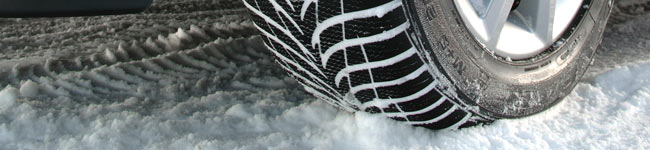 Initial snow experience consisted of driving through a mound of snow
and slush, which the Ultragrips "swished" through in typical Goodyear
fashion. Driving in flurries gave a similar feel to driving in rain
on summer tyres. When parking and pulling away on snow there was no
skidding or slipping. Driving in 30 MPH areas could be done with
confidence at near normal speed in the snow.
Initial snow experience consisted of driving through a mound of snow
and slush, which the Ultragrips "swished" through in typical Goodyear
fashion. Driving in flurries gave a similar feel to driving in rain
on summer tyres. When parking and pulling away on snow there was no
skidding or slipping. Driving in 30 MPH areas could be done with
confidence at near normal speed in the snow.
A final run was done on the summer-shod car. Compared to the winter-shod cars, the summer car's steering felt incredibly light and with no feeling of grip, and the ABS was quick to trigger on braking.
Two types of conditions DID appear to "catch out" both sets of winter tyres - driving on uncompacted powdery fine snow, and driving on "melted ice cream" snow. In both cases the winter tyres gained traction on the top layer of snow, but since that wasn't connected to the layer beneath it, there was some slight slippage - but NOT enough to cause skidding or loss of momentum.
In deep snow the Ultragrips were a revelation - no slipping, no ABS, and just a hint of understeer when cornering at speed.
Indeed, we would actually find ourselves "seeking out" snow - using dual carriageway and roundabout lanes that were not cleared, and spaces in car parks still under snow - rather than fighting with everyone else for cleared routes and car parking spaces.
Warmer running
As the end of March approached I was encountering days when I'd be running at -3 in the early hours to as high as +18 degrees C later in the day.At 11-12 degrees performance on the winters was noticeably poorer. At 14-15 braking was very bad (long) on both winter tyres, and by 17-18 steering was appalling - EXTREMELY delayed.
Many people aren't in tune with or as sensitive to the behaviour of their cars/tyres, but from my own feel and experience I would very definitely NOT want to be running winter tyres all year round.
Switching back to summers
I actually found myself quite reluctant to remove my winter tyres! They had become like a friend - if somewhat of a quirky friend with some odd characteristics. However, they were quiet, smooth, light and provided much-improved rolling resistance / fuel economy.Our first experiences of switching back to our summer tyres was that both summer tyres were INCREDIBLY noisy and gave a much harsher ride. The steering on the Eagle F1s also felt very heavy. On the positive side, braking distances in the dry were shorter, and you could lift off the throttle and get an immediate retardation.
But in switching between summers and winters (and back again) I also learnt a lot. In particular I discovered where my "heavy right foot," brought to light when braking with my winters in the snow, had come from. It was due to several years of running the Eagle F1s. I had become used to making quick and abrupt inputs in steering and braking and having them immediately - but smoothly - translated to the car.
Was it all worth it?
In one word - yes! At 3 degrees C and below the winter tyres gave a definite improvement in cold, frosty, damp and greasy conditions. And in general wet and dry (cold) running, the sipes produced extra bite, giving me the same sort of level of performance that my high performance summers did, but in cold and sub-zero temperatures. And that was all BEFORE any snow and ice - proving that winter tyres really should be considered as "cold weather" tyres, and not just for the snow.In snow and ice the difference to summers was incredible - if to be expected. While other cars were sliding about or simply left unused, we were able to retain full mobility.
And in switching back to summer tyres we revelled in their own strengths when in their own optimum operating conditions.
I will very definitely be adding my name to the list of those that have tried winter tyres and would not go back to not running them.
David.
Further Winter Tyre Reading
- 2011 Winter tyre buying guide- All winter tyre tests
My running report from winter 2013/14 (two parts so far):
http://www.tyrereviews.co.u...
http://www.tyrereviews.co.u...
Bought a set of winter wheels from Tyremen last October (great service from them). Chose Conti WinterContact 850s. In the dry, before winter kicked in, they were only slightly slower and handling a tiny bit less sharp, but they're actually more comfy and no noisier than the stock Michelins on my Focus so could easily be left on all year. The difference was amazing in snow though. I was actually carrying snow chains in the boot throughout winter, but didn't need them once (chains are more for ice anyhow). My parents live at the top of the Peak District, and I'd been snowed in there a few winters ago. That won't be a concern any more. When not in use, the wheels sit on a shelf in the garage. Takes me about 30 minutes to swap all 4 wheels round. Obviously each set of wheels will only get worn down 50% compared to full use, so really, I've only paid for the set of rims, which was about £350. Not much when you think about the added safety of these great winter tyres. And I'm not talking about snow, as it's safer to stay at home if it's really bad - I mean the typical British winter where temperature is about 5°C and wet....that's when these tyres are really noticeable compared to standard tyres. It's all peace of mind at the end of the day - in 20 years driving I've never had to do an emergency stop, as I always drive defensively, but it's nice to know my car will stop quicker in winter with these Contis.....
Hi BG,
Thanks for your own feedback. My third year (2012/13) on winters was nothing to write home about, but for my fourth year (2013/14) I've been on fresh rubber, courtesy of Dunlop and tyrereviews.co.uk:
http://www.tyrereviews.co.u...
I've just taken them off today (14th March 2014) so will be collecting my thoughts together and finishing the review soon.
I didn't encounter any snow this year in the end; the worst I had was frost at zero degrees, although that was enough for the Winter Response 2 to show a glimpse of its capabilities in ice-like conditions.
However, like you on your Contis, it was the Dunlops' extra margin they provided in wet weather that was most reassuring. The fact that [Central European] winter tyres are mis-categorised by most people as "snow" (only) tyres was something I wanted to dispel in this original article, and something that has again struck me in my more recent running on the new tyres.
Winter tyres really ARE suited to the British weather, plus - as you also say - they save wear and tear on your summer tyres. And once again I'm also happy to be back on my summer rubber again now that the conditions are right for them.
David.
Part 2 is now up:
http://www.tyrereviews.co.u...
in November this year 2012 I fitted Dunlop winter sport 4 to my Suzuki x90 my x90 is rear wheel drive very short wheel base light and powerful and although it had almost new summer tyres it would just spin out the back end as soon as it saw rain and scare the crap out of me.so I researched for tyres with a good wet weather performance and chose winter sport 4 although I cant comment on their summer performance yet or snow. at the moment the car seems glued to the road in the dry and the very wet conditions but "I" also noticed that a little harder pressure was required to stop when breaking from higher speeds but I can now go out and drive using all my power and get home safe can't wait for some snow.
roy brookes midlands
Great write up, lets hope the 'antis' take heed, because as more people take to winter tyres there will be those who won't have the braking or control that we do, and we'll find they are the cause of the bumps and scrapes. I'm on my 3rd set of winters now; 1st set was bought in 2010 for my 320D Tourer.. In 2009 the car just wouldn't move, ended up on the drive from Dec to Mar. In 2010 I drove everywhere, almost everyday on the winters... me at the wheel chucking as I passed 4x4s stuck going up hills covered in compacted ice. I now have a 4WD Qashqai and Abarth 500, both should with winters. Pirelli Scorpion Snow & Ice and Pirelli Snow Control Serie 3* respectively. Like you, I'll never run summers in winter again.(* only decent winters in 195-45-16).
I am about to purchase the Pirelli serie 3 - why only decent in 195 45 16 , intreiged
Perhaps lack of choice? It's not a very popular size.
Ran my 996 Turbo on 830p's during the winter of 10/11. Probably had the fastest snow plough in Lincolnshire at the time....what a laugh.
Hi.
Thanks for your article - it explains my findings more clearly than I ever could....
I have used Michelin Alpin's for 6 years now and foud them as wonderful as you describe in the cold / wet / ice / snow and would recommend then to anybody. I have however on one occasion kept them on all summer (my summer tyres were worn out and I was selling the car...) and can vouch that they did not have the warm weather issues you experienced. Maybe the Alpins are more middle of the road "winter tyre"? - or maybe I was just not driving hard (they were on a Mondeo diesel...).
This year we have branched out into Continentals (on my sons Nissan 350z) and a pair of Vredestein SnowContacts on the rear (only) of a Mazda RX7, plus new Alpins on our MGF, all bought online from Europe. All follow the same success story. The Continentals transformed the 350z in all driving conditions last November. The Vredesteins are good in extreme conditions (and wet leaves / mud on our lanes!) but show their very low price (£48 each) in the warm and dry. The Alpins seem perfectly usable in all conditions.
We were going to take them off a couple of weeks ago but everyone found excuses to leave them on! - but then we all drive early in the mornng when it is damp and cold (even this year...), not at mid day.
Hi John,
Thanks for providing your own feedback on use and experiences of winter tyres.
And I do indeed seem to recall that the Michelin Alpins are more dry-optimised, as compared to the Goodyear Ultragrip 7+s (in particular) and the Continental 830Ps (which while more performance-oriented in the dry, are still snow-biased), both of which I selected due to their exceptional snow performance.
Would definitely NOT recommend your strategy of only running two winter tyres on the Mazda - please find a tyre test video in one of the comments below, backed up by a person's real world report, about the dangers of running winter tyres only on one axle.
I do, however, concur with you leaving your winter tyres on for longer if you're doing early/late runs, as compared to middle of the day trips.
David.
So, it's 9th March 2012, the tyre swapping ritual has been completed, and our winters are off and our summer tyres back on once again.
Back at the end of February when temperatures warmed up to 14+ degrees C I was ready to get the winter tyres off. Thankfully my schedule didn't allow that, and I've run them for another couple of weeks. This was fortunate, since we had another brief cold spell in the meantime.
So, mostly by judgement, but with a bit of luck, we ran our winter tyres this last winter from 5th December 2011 - 9th March 2012, which was pretty much the ideal window for us.
David.
The winter tyres i had fitted to my taxi in the winter of 2010-2011 were a god send and as the conditions were cold, snowy and icey they were brilliant and kept me on the road (often literally) when all other drivers at the cab company had gone home. However, i fitted them again in November 2011 and as the winter never really took hold i found that i might just as well have had bananna skins fitted to the rims for the majority of the time they were on. I live in the North East of England and found that unless the temperature was below 0 degC they were hopeless and at many times (usually on bends or pulling out of damp junctions) would have considered them to be dangerous.
I have just switched back to the summer tyres (which in hindsight could have been left on through this winter) and the car feels much safer, even in the low temperatures (3 degC) of this weekend. Next winter I will probably wait until the weather REALLY starts to kick in before changing to the Winter tyres and just drive according to the road conditions. The only people to benefit this year from the sale of winter tyres are the manufacturers and suppliers of them who have been playing on peoples paranoia of getting caught out in another white out winter. I would say that unless you really need your car 365 days a year, save yourself the 400 ish quid next year and accept the fact you may need to take a few days off work if the weather turns REALLY bad.
Out of interest, what winters did you have fitted?
I would also be interested in finding out the make and model of your
winter tyres, as well as what sort of pressures you were running them
at. Tyre size, and the size/weight of your car, would also be
interesting data points.
My experiences detailed in the main article and subsequent comments for
this winter have held true for both my small hatchback on the
mainstream Goodyear Ultragrip 7+s, and a larger, sporty family car with
the high performance Continental 830Ps. That is, 3 degrees and below a
definite improvement over summers, below 7 the winters start to come
into their own, up to 11 degrees they are still acceptable, but above 11
degrees C braking and steering response becomes (increasingly) delayed.
We ran our winters until early spring last year as I hadn't been sure
when was best to take them off. Back then at 18 degrees I'd definitely not
want to be on them [again], but they never "unsafe" - they were still
*predictable*, but just much slower to react. Around 14-15 degrees -
which we also hit this year a week or so ago - they were merely just a
*bit* slower to react.
The *only* time I've felt that the winter tyres felt a little
"dangerous" were when I experimented with slightly higher tyre
pressures, putting them up to the "full load carrying" (people plus baggage)
pressure as per my car door-jam. My Ultragrip 7+s truly felt "on
tip-toes" then, and I very quickly reverted them to normal pressures.
The 830Ps meanwhile feel far better in the dry than the UG7+s, and even better (in
winter temperatures) than the summer touring tyres (in summer
temperatures) that car normally runs (Bridgestone Turanza ER300s).
But as I mentioned in my article, while any winter tyre will outperform a
summer tyre on snow and ice, each tyre has its own design
optimisations, and so may not perform as well in say rain, or the
dry.
So while I can only share my own experiences of two models of winter
tyres on two different cars, they *have* agreed the general motoring
industry reports and recommendations - as well as finding out when was
best to take them off again.
You've clearly had some very different experiences on your own car and winter
tyres, so I would be interested in finding out more details about your
situation, so that perhaps we can recommend against a specific tyre
model and/or a particular car+tyre combination.
David.
Well, daytime running today (28th Feb 2012) was the first time this winter that my winter tyres have felt out of their comfort zone. At 12-13 degrees C they were understeering considerably and braking distances were uncomfortably long. They did feel better this evening at 9 or 10 degrees.
This further confirms my experiences from two years of running winter and summer tyres - that 11 degrees is my "comfortable cut-off" / switch over point when I'd either want to be going ONTO winter tyres if temperatures were cooling down below it, or moving BACK to summer tyres when temperatures were regularly exceeding 11 degrees C.
In hindsight that means my ideal winter-running window for this past winter season (for MY area and MY running conditions) would have been from 4th December 2011 - 27th February 2012. That's a shorter window then the previous winter, when we had a colder and more prolonged winter; we've actually had quite a short and mild winter this year.
That said, up to 11 degrees my winters have coped wonderfully, and particularly during the couple of cold/frosty/greasy patches in December and January - AND the snowfall we had on the 5th February, which I had to go out in. Had I not had the winter tyres, I wouldn't have done that journey.
As it is I'll probably be staying with my winter tyres for another week or so. I need to get some new summer tyres, so what with having other things on it's going to take me a little while to get them and have the to time to have them fitted.
The quietness and lower rolling resistance of my winter tyres have further had an effect on my thoughts about my replacement summer tyres. Rather than get something similar to my previous Goodyear Eagle F1s, I'm probably going to go for a touring type tyre this time.
David.
Very nice thorough review that hopefully will encourage some of the nay-sayers to consider converting (so they don't slide into us at the next icy junction ;) ).
In response to some of the comments:
ABS: Last winter I found my ABS very annoying, coming in far too quickly on the snow and ice, but also my tyres (Nokian WR G2s) were around the 4mm of remaining tread mark so were past their best in terms of hardcore winter performance. In any case, I found disabling the ABS gave me better control of my stopping in such conditions.
This winter I have a brand new set of Nokian WR A3s, which I've just driven on to the alps, and the ABS problem was virtually non-existent.
Tyre rotation:
This will depend a lot on both driving style, and the driven wheels of the car. I used to have a front wheel drive saab with approx 250lb/ft of torque driving the front wheels (that's quite a lot for a FWD car), and it would eat through front tyres for breakfast, while the rears would last ages. I now drive a AWD subaru with similar torque figures and though wear difference front to back is less extreme, the fronts still wear quicker. I have decided my plan of action is to rotate the tyres every month, or thousand miles (or so), in the following pattern: Front tyres each to opposite rear corner. Rear tyres each to front same side. This will even out the wear while eventually moving each tyre to each of the 4 wheel positions in turn. I don't have a long term test to see how effective this is, but logically it should be the best strategy to even out wear. As my car is AWD with limited slip diffs at centre and rear, it's important to keep all tyres as close as possible in size to avoid damage, hence the above strategy.
More generally, my experiences of winter tyres pretty much echo those of the author of this article. At first I didn't believe the myth, but once you try winter tyres, even in cold but merely damp winter roads, you just won't go back.
Hi David! Many thanks for your comprehensive and informative article! I am a bit confused as to how you assessed braking distance? As an ex circuit racer, in which ABS was always disabled, I have noticed the ABS on my current car does not let me brake to the point at which my brain says 'ease off or lock up', so I suspect that if you were relying on ABS to stop lock up, that could have given a 'false idea' of braking distance. EBA, which is activeted by quick pedal movement, also, is unlikely to be worked, so brakes will feel less immediate.
I have no wish to make you wrong, just perhaps to share knowledge and experiences.
A little niggle also with my winters is the way they spread the 'country mud' all over the sides of the car, way more than the summers.
Also, compared to my low rolling resistance summers, I have found the winters 3mpg worse, on given standardised journeys, with the same cruise setting, up and down to Scotland, same load, same fuel, same or similar ambient temperatures.
I have noticed too the differing levels of noise, on the same roads, between newish, and oldish rubber, and tread depths. Newer being quieter!
Sod's law too that after a little cold and snow, in which the winters were much more secure, it is now showing 11oC, on Winter solstice!
All the Best for a Happy Safe and fully Mobile Christmas... John
Hi John,
I "assessed" the braking distance purely from my experience as I first drove out on the winter tyres and in repeated scenarios ever since: just by braking to slow down (at low speed, in traffic) and finding out I was closer to the car in front's bumper than I'd normally be coming to a stop, and so needed to add a little bit more brake pressure to pull up. And my estimate of that extra braking distance is about 0.4 metres.
Similarly I'm aware how hard/much I'd normally brake to go down by 20 or 10 mph into a lower speed limit [on summers], and yet [on my winter tyres] I find as I approach the new speed limit I'm still going faster than I'd expect to be, so I have to brake again or harder.
And finally, to lose just a little speed I'll lift off the accelerator and know how much to do so [on my summers], but on my winter tyres I don't get the deceleration I expect - I'm still going (or rolling) at a speed faster than I'd expect to be.
Now I admit these are all subjective, but I'm sure a timed/measured experiment would confirm my feelings - I just "know" how much I'd normally brake or lift off on my summer tyres, yet when on my winter tyres it takes greater braking.
(As an aside, the third vehicle in the family, as I mentioned below, was difficult to source winter tyres for this year, so we put some fresh summer rubber on it. The change on those was the reverse - we went from low rolling resistance Dunlop 2030s that felt squirmy under braking, to Bridgestone ER300s, which you could lift off and get an immediate retardation, and which felt very planted under braking. It's a definite improvement in handling, although the owner of the car remarked that they felt the ride was now a bit harsher. On reflection, that's probably right.)
These are just my experiences of every day road driving on the different tyres.
As Jon said in his introduction to this article, and as we titled it - "real world experiences" - this was written as a kind of "what it's like to live with winter tyres," rather than hard figures and lap times - of which there are plenty of in the various motoring press annual reviews of winter tyres each year.
Re MPG, my MPG on my F1s in the late autumn and winter used to go down, but now I get the same MPG on my Ultragrips in the winter that I get on my F1s in the summer. That was the overall and lasting result; initial monitoring last year had the winter tyres at 7% better than the summers at the start in the same temperatures.
And you're right about the current temperature! I was driving tonight at 12 (maybe even 13) degrees on dual carriageways and it wasn't pleasant on my winter tyres. The Ultragrips at that temperature followed the road contours too much, and were very squidgy at one point when I needed to brake sharply. Hence my recommendation to change back over to summers in the spring when the temperature is consistently around or above 11 degrees (and likewise that's the threshold I used to put the winters on - when it's generally going to be 7 or below, and not regularly peaking above 11). (My return journey tonight at around 10 degrees was noticeably more pleasant!)
That said, you'll always get occasional autumn/winter/spring days on your winters when it's warm enough that you're outside of their optimum operating window, just as you'll get occasional days in mid-to-late autumn when it's colder than the summer's optimum window, but not consistently enough (or not throughout the whole day) to constantly run winters.
But I feel I judged putting my winters back on perfectly this year, and
hopefully - with the knowledge I now have - I'll get them off a little
sooner in the spring next time around.
Thanks David for your very prompt reply! I thought I had better acknowledge it before we go offline, and off on our travels this Christmas.
I have been thinking about your experiences of 'lift off response'. What to expect is dependant almost purely on the vehicle's engine management system, if any, and its responses to the various inputs. The main one being ambient air temperature/mass, boost, cat temp etc..
I don't recall what vehicles we are referring to, whether petrol or diesel etc. Since most modern vehicles have no actual link between accelerator pedal, and 'throttle', so much so that lots do not even have a throttle' as such any more. The result of 'lift off' is going to be determined by ECU mapping, much more than tyre rolling resistance.
With reference to the tyres used and their feel, my winters needed quite a bed in period, to get rid of mould release agent and the sharp edges to the blocks. Also I have decided to run them at about 4psi harder than my Pirelli summers, this has made the tramlining and steering response much better, with no loss of comfort, and a slight reduction in tyre noise, for a given road. I am hoping that may help reduce the fuel consumption penalty I got. Maybe slowing down a bit over the bad weather would help that too!
With my wife's Corsa on Eco Contact 3s, on the front, the traction/ driveability in the fresh snow was remarkably good, I put that down to narrower contact patch giving 'very slightly' higher tyre to surface pressure.
When racing, we had a masterclass from the Dunlop motorsport tyre chap, some of what he taught us, relating to Motorsport tyres then, probably is still pretty true for our road tyres now. We were evaluating all the possible options for our following years control tyre for the championship. Some of the tyres were so grippy we could do the whole lap flat, 'well some of us could!' others lost us too much pace when sideslipping, some were just silly money for the privateers. In the end we chose some road tyres, as it happened from Dunlop.
What we chose were free running enough, and progressive enough to control on the limit. Laptimes went up for half a season, till we adapted our cars to make best use of their charachteristics.
Anyway, enough waffle, Some may be of use....;-)
Happy Christmas, keep straight....
John
I did try higher pressures on the Ultragrip 7+s, and I didn't like it.
I'm used to how higher pressures feel on my Eagle F1s from when I pump them up for full loads or long motorway runs: the tyres feel slightly "on tip toes"; steering response is much quicker, but the tyres definitely don't feel as planted. Certainly the smaller contact patch means less friction and so better MPG.
The exact same feel was present when I pumped the Ultragrips up. However, as the Ultragrips at normal pressures don't feel very that planted in the dry to begin with, the "tip toes" feeling made them feel EVEN LESS connected to the road. Also, the faster steering response was there too, but this meant that due to the slight delay in putting in a steering response and the tyres responding, you had an even GREATER amount of steering lock applied before they reacted - and so were steering WAY too much once they did.
In short, the Ultragrip 7+s actually felt "dangerous" to me at a higher pressure, and on the second day of running them like that I quickly reverted them to their normal pressures.
In comparison, Nokian specifically state that for THEIR winter tyres you should run them 0.2 bar higher than yours summers, unless your car manual gives a specific pressure for winter tyres. However, from my experiences with the Ultragrip 7+s, I will continue to run them at their normal pressures.
Interestingly, the replacement Ultragrip 8s have been getting good test reviews for their dry performance, so this is something Goodyear have obviously improved with the newer model.
Some comparison photos of the ER300 and TS830P as we had the winters re-fitted:
http://farm8.staticflickr.c...
http://farm8.staticflickr.c...
Excuse my ignorance, but what are sipes?
What happens when driving long distances (on non-icy roads)? Tyres normally warm up, to the extent that one mustn't measure the tyre pressure after anything longer than a couple of miles. Don't the tyres warm up enough that summer ones would have better performance?Thanks for all the information in your article. It's really helpful.
Hi Danny,
Sipes are the wiggly grooves cut into the tyre treads. You can see them in the photos of the tyres illustrating the article.
In cold, damp, wet and greasy conditions winter tyres generally (dry braking aside) perform better than summer tyres. This is true in both slow-speed local running and also long distance on motorways. Certainly I've been comforted by the extra grip apparent in those conditions.
I've also felt my tyres with my hands at the end of long runs, and the winter tyres (in winter) definitely feel cooler than summer tyres (in summer). Whether that is due to the road temperature or tyre compound I wouldn't be able to say.
Winter tyres also tend to have lower rolling resistance than summer
tyres, which I imagine would also help to further keep them cool.
One thing to note is that winter tyres generally have a lower "speed rating" than summer tyres. For instance, my Ultragrips are only "T" rated (118 mph sustained) compared to my "V" rated Eagle F1s (149 mph sustained). European law states that if you run a tyre with a speed rating LOWER than your vehicles' (top [legal]) speed then you must display a sticker in your windscreen IN THE DRIVER'S VIEW reminding them of the lower maximum speed.
However, most Central European winter tyres that I've encountered seem to be "T" rated at the lowest, which would be fine in the UK given our 70 mph maximum speed limit.
Interestingly, British Gas are now fitting winter tyres to their vehicles to ensure they can (continue to) reach their customers in the winter. I saw one parked around the corner from me today, and it was indeed wearing winter rubber. (I believe as of last winter some Scottish emergency vehicles - Ambulances I seem to recall - are now either running winter tyres or carrying snow chains.)
Certainly my experiences confirm that winter tyres behave better in ALL conditions (dry braking aside) below 7 degrees C, and are acceptable up to about 11 degrees C. And that's the bulk of late autumn to early spring driving here in the UK.
Many thanks David for the helpful responses; have taken the plunge and am getting 4 Conti TS830P's fitted shortly. Not cheap at all - but with careful storage and care, should last some time. Decision made after a slippery weekend drive on untreated roads and a noticeable lack of grip on some greasy roads this morning with the recent heavy rain. 3mm tread on Ultra performance Pirelli summer tyres has lost my confidence for the coming 4-5 months!
One thing that I realise I haven't mentioned is that I have made sure to put the tyres (both the summers and winters) back on in the location they came from. Although you can buy tyre marker pens, I simply mark mine with chalk - which a tyre manufacturer I contacted confirmed was safe to do. I mark the sidewalls before they're taken off - "near front", "near rear", "off front", "off rear" - and then once back home I write the same markings around the tyre treads, since once stacked the chalk tends to rub off the sidewalls.
One thing I considered this time around was rotating the winter tyres (front to back) when re-mounting them. This can lead to longer tread and tyre life, and thus reduce expenses. It can also mean that you can spread the wear so that you can replace all four tyres at once. (I've seen this expressed as a "4x4x4" rule - run four identical tyres, with more than 4mm of tread left, for no more than four years.)
However, on checking the tread depths of our winter tyres I found that the fronts and backs of both had worn pretty much at the same rate, so there was no need.
Another concern is that it's generally recommended to fit new/deeper tread tyres to the REAR of the car. This is so that if you aquaplane then the rear of the car has less chance of stepping out; oversteer is much harder to deal with than understeer, so having more tread/grip at the back is preferred for safety reasons.
However, rotation of tyres (front to back, as well as crossing left to right) is another one of those polarised debates where some people swear by it and others are totally against it!
You rotate the tyres because you want as much grip in the rear as you can get.
I know oversteering is fun, cool and all that, but speaking as someone who have experienced pulling a 180 degrees doing 90 kph on a regular road (with trucks coming the other way)... You want to make sure you have as much grip in the back as possible. In my case the rear wheel arch had been packed tight with snow, slush and ice, thus occasionally breaking the rear wheels. As I passed 6 or so other cars and wanted to return to my side of the road, my rear wheels lost friction and I started oversteering. I compensated as little as I could but ended up doing a 180 the other way... (only possible way out of that one would have been by applying more throttle and have the front wheels pull my way out of it, but since I had enough room to play I decided to reduce risk by slowing down instead -- my car would never oversteer unless something was amiss)
A proper car will put 60% of the weigh on the front, will of course be front wheel drive, and will oversteer if you overdo it in a corner. A Saab 9000 is the perfect vehicle on snow and ice. It will guide you through every corner with the least amount of fuzz. Just make sure the wheel arches are clear of ice prior to take-off. (a recent visit to the car wash was why mine had started piling up ice)
The car's manual should normally advise you to put the best gripping tyres on the rear wheels. (well, if you don't drive a Saab, you're basically the test pilot when the snow hits and the manual will just state "you're on your own")
OTOH: There was a test last winter in a Norwegian publication that gave the opposite advice. Basically you will reduce your stopping distance if you put the best tyres up front. But slowing down is usually the least of your concerns when driving on a winter road. (that is usually a function of keeping the right distance to the car in front of you) In really hairy situations, the kind that are not easy to train for, you want the extra grip in the rear.
Thank you for your comments and explanations.
It is also very helpful to have your real world testimony related to them.
Superb review and incredibly helpful as I seek to swap our 4 Continental summer tyres (backs 3mm and front 4mm) for our Audi A4 Avant 2.7 TDI. Continental TS830P's for me. Really good to see swapping back/forth not troublesome - presume you kept the same wheels on the car?
Thanks.
Yes, I kept same wheels, as separate wheels would be not only have been an expense in and of themselves, but also with my insurance premium - some insurance companies (including mine) consider swapping WHEELS a "modification," and thus an increase in premium! So the common practise of putting steel wheels on for the winter (which can take more abuse from knocks, and also road salt) wasn't an option for me.
Actually it's not too much hassle - 45 minutes to an hour at a local tyre place while they swap the tyres over. Storing/stacking (and lifting!) four wheels OFF the rim at home is also much easier! (Tyres should be stored off the ground and restacked periodically so that the tyre(s) at the bottom do not have the whole load for long.)
whoops, typo - "Storing/stacking (and lifting!) four -tyres- OFF the rim" - obviously!
Brilliant report. Question I have is that on a front wheel drive car will it be OK to have only winder tyres on the front driving wheels?
Generally it's not something we'd advise. There would be such an extreme imbalance of grip in bad conditions it would very easy to lose control of the car.
This video by the Canadian APA should help you see what can happen. I've been through a fence backwards by driving on a frosty road and losing the back-end on a fairly slight downhill bend. With winter tyres on the front & summer tyres on the back of a golf.
http://www.youtube.com/watc...
So it's 5th December 2011 and, after a warm and late-lasting autumn, our winter tyres are now on again for this year.
I had been waiting for the temperature and forecast to be consistently low and not going above 11 degrees C. Today was the first day I was sure of that (well, yesterday was, but that was a Sunday).
Over the last few days both of us had been feeling the roads at 6 degrees and below were slippery and/or our tyres were not getting the grip we wanted. With our winters back on our cars are now performing with the grip and performance that we'd expect from our usual summer tyres in summer - but at cold-to-freezing temperatures.
One good thing to report is that our winter tyres were straight up to performance from the go; I'd been fearing that the Ultragrips might have required another running in period, but they didn't.
So the quietness and smoothness of our winter tyres is thankfully back again. The Conti 830Ps are also providing much sharper braking than the Bridgestone ER300 summers, and the Ultragrip 7+s are giving wonderfully light steering, if not quite as "planted" on the road as the Eagle F1s.
So, we're both happy to be back on our winter rubber. I'm sure I'll once again be reluctant again to switch them over in the spring - but afterwards will be happy to have summer tyres back on performing in THEIR temperature range.
I can't stress this enough that it's a delight (and a comfort, in terms of safety) to be running tyres that are optimised to the two sets of conditions, and why I believe that running TWO sets of tyres throughout the year is the optimum solution.
And I remind people that we're experiencing the benefits of winter tyres NOW, before any snow - it's currently greasy to cold to freezing where we are, and winters are already showing their worth. Further north they've just started to get snow, so WHERE-EVER you are in the UK right now, winter tyres will be coming into their own.
David.
Video by Auto Express comparing summers vs. winters:
http://www.autoexpress.co.u...
Note, although the bulk of the video concentrates on snow performance, there's a short segment at the end comparing wet braking at 5.9 degrees C. The winter tyre stopped over one car length shorter in a much more controlled manner.
And how about THIS for an endorsement of running winter tyres:
"Morning all. Winter has arrived!!! 0.0 degrees on the display in my car at 7:30. Definately getting the winter tyres fitted this week."
- Tweet by Gary Paffett, DTM driver and McLaren Formula 1 test/reserve driver.
Hi Gareth,
Thanks for adding your own experiences of winter tyres. Tyre review web sites are full of people recounting their own amazing experiences when running winter tyres (often for the first time) in the snow and ice.
Your winters - the TS830 - have a very high reputation for snow and ice ability; a Swedish test (I think it was) included them against Nordic tyres, and found they ranked higher than some of the STUDDED tyres! The TS830s were not available in my size this time last year, otherwise I might have considered them instead of the Ultragrip 7+s that I bought.
One thing I wanted to stress in my article was my PRE-snow experiences; Central European winter tyres cope much better in cold, frosty and greasy conditions, proving they are indeed "cold weather" tyres, rather than the "snow" tyres that many often mis-categorise them as.
Due to our warm and prolonged autumn this year, I have held off putting our winter tyres back on so far. This week - the last week of November as I write - would have been cold enough in the mornings to justify them, but it's still quite warm (relatively!, and discounting the wind-chill) during the day. It therefore looks like I'll be putting our winters back on in the first week of December this winter (2011/12).
Incidentally, we looked into getting winter tyres for the 3rd car in the household this year, but we had problems getting hold of a set of four, as it's quite an obscure tyre size. We could have again tried ordering from Europe, but prices were very high, and the owner of that vehicle generally has work cancelled in bad conditions, so we couldn't justify the cost of the outlay versus their mobility needs. That said, the owner is still open to getting winter tyres for next winter (2012/13).
David.
Hi...
Your article is a good reflection of how I was amazed at the extra grip offered by my continental WinterContact TS830 last winter. Please note I have the regular Continental Winter Contacts ts830 not the "P" suffix performance version you used on your second vehicle. The "regular" also have the v shape groove pattern that the Goodyears have, but does not feature on the continental Performance tyres, so it is possible that the wet performance of the regular TS830 is even better than the "performance" version (see the continental winter tyres webpage to see what I am trying to explain about the differnt treads on the 2 versions! it's easier! - http://www.conti-online.com... )
anyway... a small anecdote of my experience in my rear-wheel drive BMW 3 series estate (traditionally a terrible car in winter conditions!)... but with winter tyres fitted it was amazing!
One day there was lots of snow on the roads which had been beautifully compacted and polished by other cars on a small hill near my house. The conditions was causing a whole chain of cars (including several 4x4s!) to have their wheels spinning and as a result were spending more time gently drifting from side to side as they tried to make their way up the hill but failing... in fact I saw several cars succombing to the laws of gravity that had their driving wheels going forwards as they were sliding backwards toward the car behind!! I sat at the end of the queue at the bottom of the hill and patiently waited my turn to go up the hill... i waited and waited and no-one was making any progress, so eventually I pulled out of line and drove normally up past all the cars that were completely unable to make any progress without the slightest hesitation or loss of grip as if tehre was no snow or ice at all... I passed the first vehicle and pulled in in front of them... I got out and offered to tow them up the hill and had no problem in getting enough grip from my tyres alone for both our cars to get up the hill... much to the amazement of passers by and some drivers who had now given up trying to get up the hill and got out their cars... to work out what to do next
Anyway where the real differnence is made though is on snow/ice cornering, braking and stopping...like you the number of times i stepped out my car onto the surface to slip over was ridiculous!...
lets face it pulling away and finding your tyres grip whilst accelarating is handy, but being able to SAFELY brake and corner is lifesaving... these winter tyres just give you so much grip and extra safety and reasurance to drive in conditions that normally i would be staying at home in...
for safety alone I think they are worth every penny...
Interesting article. I have a Land Rover and a Merc A-class.
The Land Rover has always had two (sometimes 3) sets of tyres for it's operation. I have no problems with the idea of appropriate tyres for the conditions and don't understand why other people hate it so much. When it comes to the Merc, it isn't my daily transport but my Mrs. She isn't all that interested but didn't argue when I declared the summer tyres were rubbish on the cold greasy surfaces she drives on. She didn't want the hassle and more tyres in the garden so we have gone for All-weather/season tyres as a half/half with the intention of swapping the summers back on next year. We live in Cornwall and although snow isn't too prevalent slippery and steep frosty hills are. We'll see how it goes :-)
Why fit an all weather tyre for the winter if you are going to switch back to summer tyres in the summer? Surely the point of all weather tyres is that you only need one set. If you are going to switch over for the winter you might as well go for full winter tyres.
yes I agree with Mark. Gavin, you seem to be saying that your wife didn't want the hassle and more tyres in the garden that would come with winter tyres, so you got a set of all season tyres to use in the winter and intend to swap back to summer tyres when the cold weather leaves. Surely you should have either a) bought proper winter tyres and swapped back to summer tyres in the summer, or b) bought all-season tyres and ditched the summers altogether.
What you have done makes no sense, unless you typed it wrong somehow...
Although Gavin's post is a little contradictory, this was something I considered myself (as I mentioned in passing in the article), before deciding to go with full winters.
As my existing summer tyres were nearing the end of their life, and as I still (before trying them) wasn't 100% sure if our climate warranted full winter tyres, one thought was to get some winter-rated all-seasons and run them as a half-way compromise. However, I was also aware that winter-rated all-seasons don't tend to perform that well in hot weather (which past Auto Bild all-season tyre tests have shown), and if that was the case I was prepared if necessary to put fresh summer tyres on come the warmer weather.
As it was I chose full winter tyres. I'm happy I did given the last three years of snow we've had, and I've been impressed with their general low-temperature performance (including noise and ride comfort).
However, I am also aware that above 7 degrees C - and particularly once you get to 14 degrees - the winter tyres' performance is noticeably poorer. Given that the Goodyear Vector 4Seasons (which is what I would have chosen had I gone down the all-season route) is a winter-optimised tyre, I think I would have been disappointed with its performance in warmer temperatures too, so would indeed have ended up running all-seasons in winter and summers in summer.
As Jon's analysis of the Auto Bild 2011 All Season Tyre Test show, running dedicated winter and summer tyres gives you the best overall performance - but all-season tyres are the best compromise, followed by winters all-year round, and then summers all year as the worst option.
Sometimes we can't make the ideal choice - we are limited by budget, space, choice, availability, personal/partner preferences, etc. - and it sounds like some of those factors were involved with Gavin's situation.
But I'd certainly be interested to hear how Gavin and his wife got on, and what they end up doing come the warmer weather.
David.
Engineers comment:
The most important difference between summer and winter tyres is the frictional force generated when the car slides. If the tyres are not skidding (or ABS not acting) then braking distance will be a function of the brakes, not the tyres. Colder brakes may well need more pedal effort to achieve the same stopping distances.
Nigel