
Those who argue winter tyres aren’t suitable for the UK climate use cite countries such as Norway, which experience solid snow and ice for many months at a time. This would be true if not for one small detail - extreme climates use a different type of winter tyre to the UK / central Europe.
Extreme winter tyres
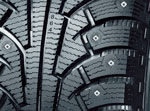
An extreme studded winter tyre
These extreme winter tyres are not suitable for the UK climate, as they could wear very quickly in warmer conditions and offer poor grip compared to European winter tyres in the dry and wet.
UK / European winter tyres
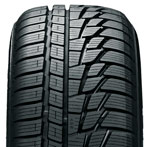
A European Winter Tyre (Nokian WRG2)
The data
To highlight the difference between the two types of tyres Russian magazine AutoReview.ru challenged European winter tyres against extreme studded and studless winter tyres.Unsurprisingly the studded and extreme studless tyres finished first and second in the ice test, stopping from 50km/h in 57.4 and 73.5 metres respectively. The best European winter tyre, the Continental Winter Contact TS830 stopped in 81.8 metres.
Things were closer in the snow, with the extreme studless tyres extra tread depth just beating the studded tyre, stopping from 80km/h in 38.1m compared to 38.5m. Again, the best European winter tyre was the Continental, stopping in a further 2 metres at 41m.
The results are reversed when the European winter tyres get to their home turf - wet tarmac. Once again the Continental led the pack, stopping from 80km/h in 28.5m when both the extreme winter tyres took over 35 metres to stop. In the dry, the Vredestein Snowtrac 3 stopped the shortest in just 29.9 metres with the extreme studless tyre stopping in 32.1m
Further winter tyre reading
- 7 reasons to consider winter tyres- 2010 Winter tyre buying guide
- Continental Winter Contact TS830
Living in a rural area in the massif central in France, it's common practice to keep a separate set of winter tyres on steel wheels which are used Nov to March. Saves wear on the more expensive summer tyres on alloys and give vastly superior grip below 8 degrees C, even on wet roads, conferring much greater safety. Better and ultimately cheaper all round. False economy sticking to just M&S tyres. Driving a 4x4 may give the feeling of security and it does confer better traction in difficult conditions but does not stop any quicker than 2x4 (which has 4 wheel braking!) In fact the extra mass makes loss of control in a skid more difficult to rectify. More metal may protect better in an accident but safety is ultimately reliant on the (albeit small) footprint so don't skimp on tyres - your life may depend on it!!
I lived in Oscoda,Michigan, for a few years and had 2 sets of tyres, studded snows went on in November and came off in March with summer tyres going on for the rest of the year . With the weather seemingly changing here in the U.K. I am considering the same regime here with a good cold weather tyre instead of studs (for the time being anyway!) the safety benefits are obvious and when switching sets you can get your tyres balanced and given a proper once over which isn't a bad idea either