
Does the thought of snowy driving cause panic? Do you feel safe in normal cold and wet winter conditions? Michelin have data to show that most of us are worrying at the wrong time.
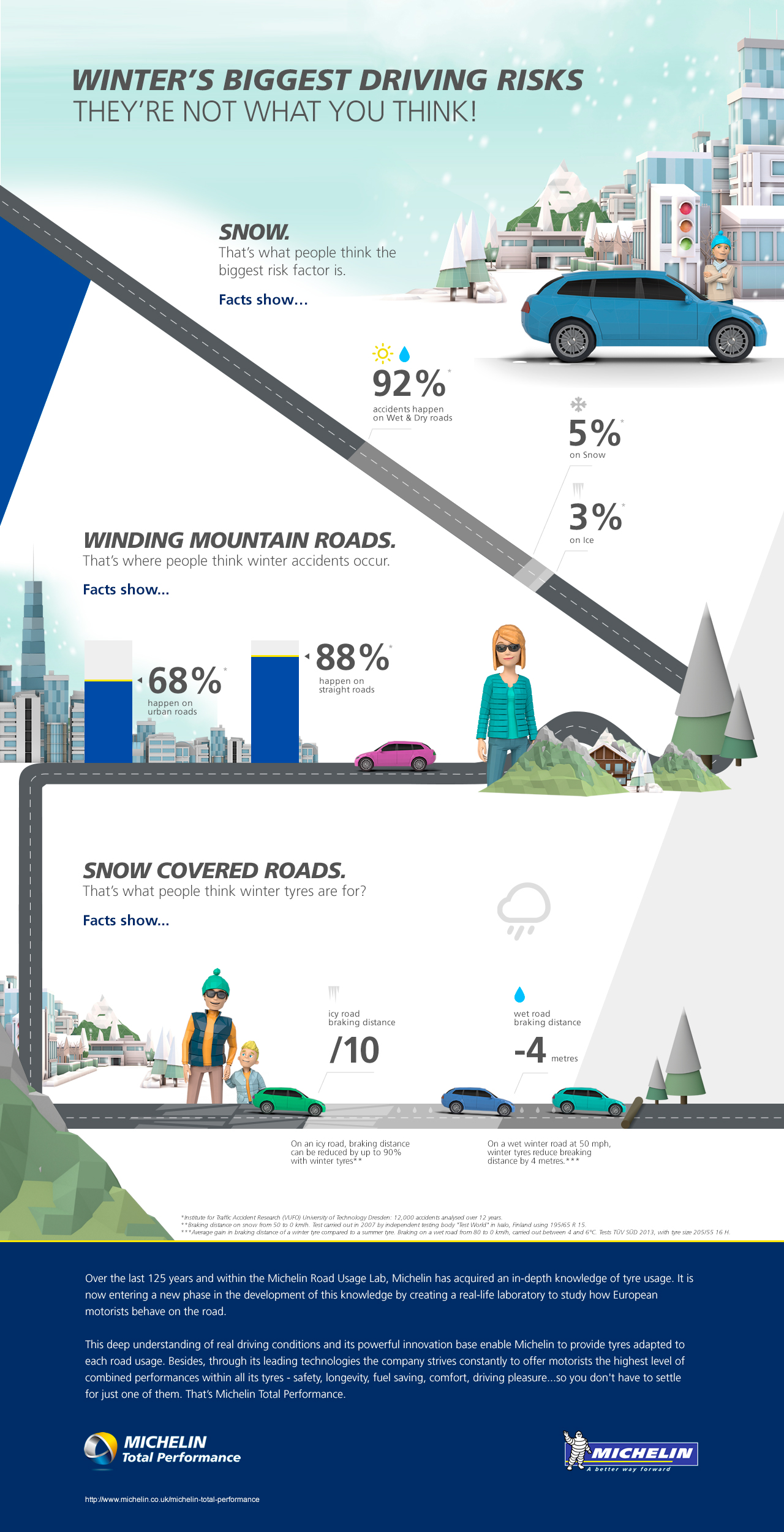
Analysing 12,000 real accidents over 12 years from all around Europe, it turns out only 5% of winter accidents happen on snow, and a further 3% on ice. This leaves a staggering 92% of accidents happening on dry and wet roads.
Further analysis also shows we find safety in the wrong types of roads. While the majority of us believe you're most likely to have an accident on a windy mountain road, facts show 88% of winter accidents happen on straight roads, and 68% of them in urban surroundings.
Here's the full infographic for further reading. Feel free to comment below with your own experiences.

I'm not altogether surprised by these figures. Most drivers travel on straight roads, most of the time and where possible will avoid twisty mountain roads in winter.
Busier main roads are treated for icy conditions and on a per car basis are bound to be safer, so the bulk of accidents happen where the bulk of the traffic is - not exactly rocket science is it?
The low figures for snow and ice are easily explained, most of the time the roads are clear (due to the aforementioned treatment and the fact that the UK winter isn't all that severe) and the majority of drivers are more careful when they perceive a greater risk, resulting in fewer accidents despite the poorer conditions.
If this survey is trying to convince drivers that travelling on snow, ice and winding mountain roads is safer than a straight road, wet or dry, then it certainly hasn't worked on me. I'm a pretty good driver but given the choice, I'll avoid the slippier, twisty roads thank you very much.