
Here at TyreReviews we often get asked what modifications are made to OE marked homologated tyres, such as * for BMW, N for Porsche, MO for Mercedes and AO for Audi.
While the homologation process can take up to three years and involve numerous tests and changes, usually we have to give the very general answer of "stuff" as the data isn't made publically available. Thanks to Pirelli, we can now offer a simplified insight as to what changes major vehicle manufacturers have requested for the new Pirelli P Zero during the OE homologation approval process.
The new P Zero is available in three version, the P Zero (Luxury Saloon) which is only available as an OE marked tyre, the P Zero (Sports Car) which is both OE approved and in the aftermarket channels, and the P Zero Corsa, which is OE approved for super cars. Full information on the new P Zero can be found in our launch report.
P Zero Luxury Saloon
The new P Zero (Luxury Saloon) is aimed at premium family cars, such as the Audi A6, BMW 5 Series and Mercedes E Class. As the chart below shows, the new P Zero (Luxury Saloon) has improved on the outgoing tyre in almost every area, with big gains made in aquaplaning, rolling resistance, comfort, nose and wear, while still improving dry and wet handling.
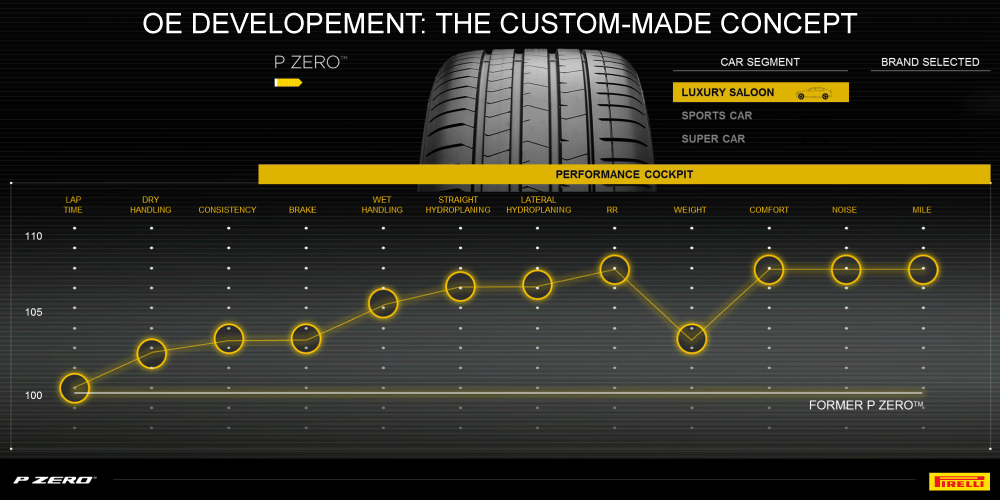
Even with all these improvements, the OE manufacturers demand further changes to the tyre before approving the tyre for OE fitment. Below are some of the major manufacturers' changes to the P Zero Luxury Saloon version of the tyre.
Audi
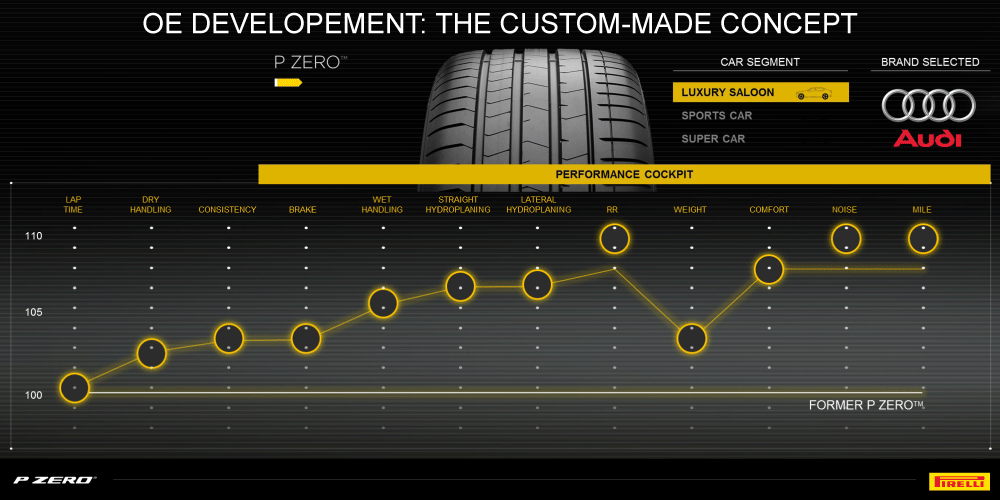
Audi requested improvements in rolling resistance, noise and mileage.
BMW
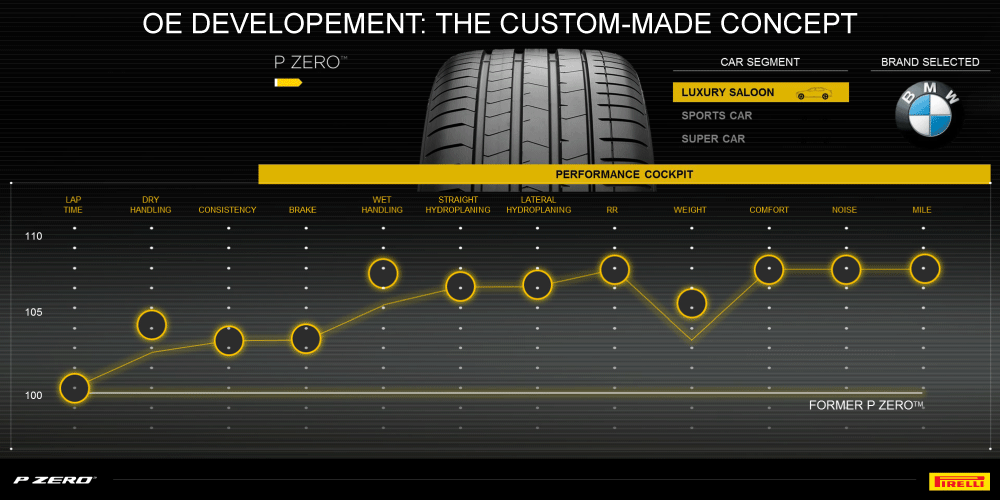
BMW, known to be a more dynamic drive than Audi, asked for improvements in dry handling, wet handling and a further reduction in tyre weight to reduce unsprung mass and improve wheel control.
Mercedes
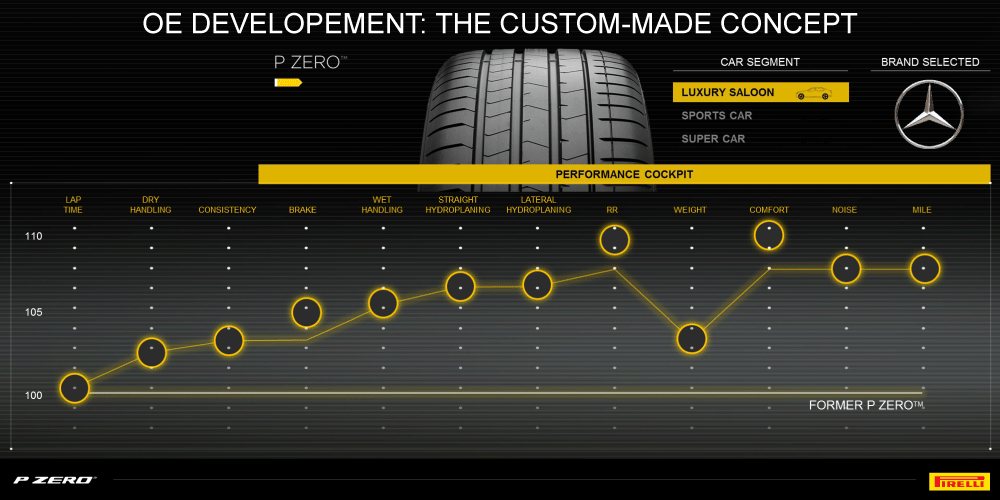
Mercedes have chosen safety, economy and comfort improvements for their version of the P Zero Luxury Saloon tyre.
P Zero Sports Car
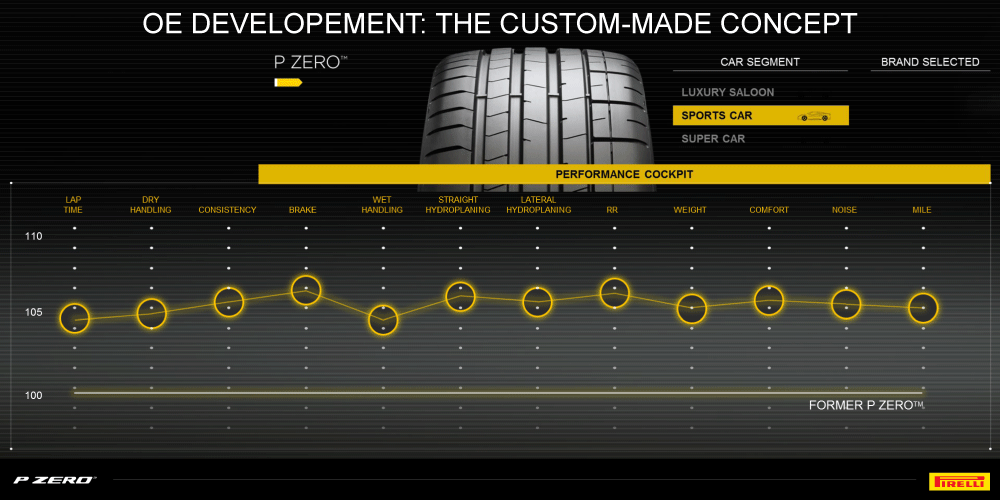
The P Zero (Sports Car) is aimed at performance vehicles such as Mercedes C63 AMG, BMW M3 and Porsche 911. The Sports Car version of the tyre improves on the outgoing P Zero with a slightly different balance, as it offers smaller improvements in comfort, mileage and wear when compared to the P Zero (Luxury Saloon) version of the tyre, but has bigger gains in laptime, dry grip, wet grip and braking.
AMG
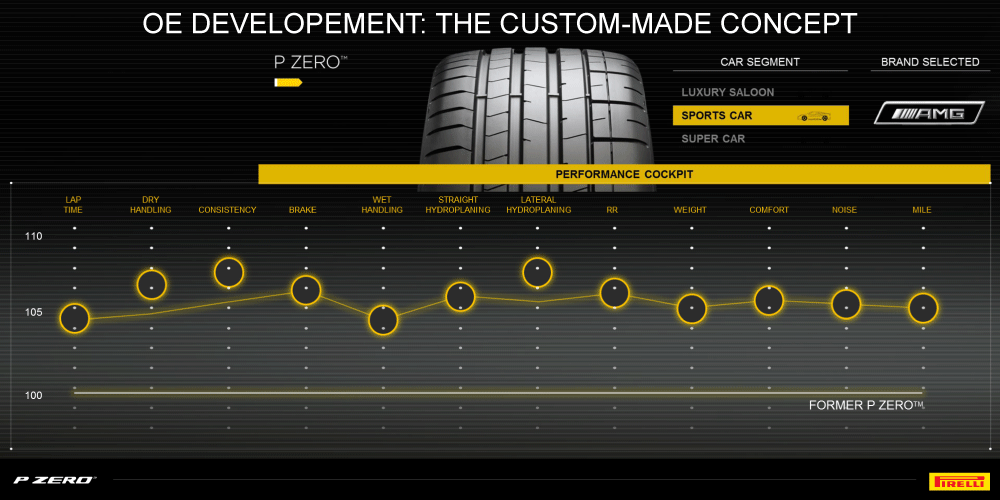
AMG have further tuned this tyre to improve the dry handling, driving consistency and lateral aquaplaning
///M Division
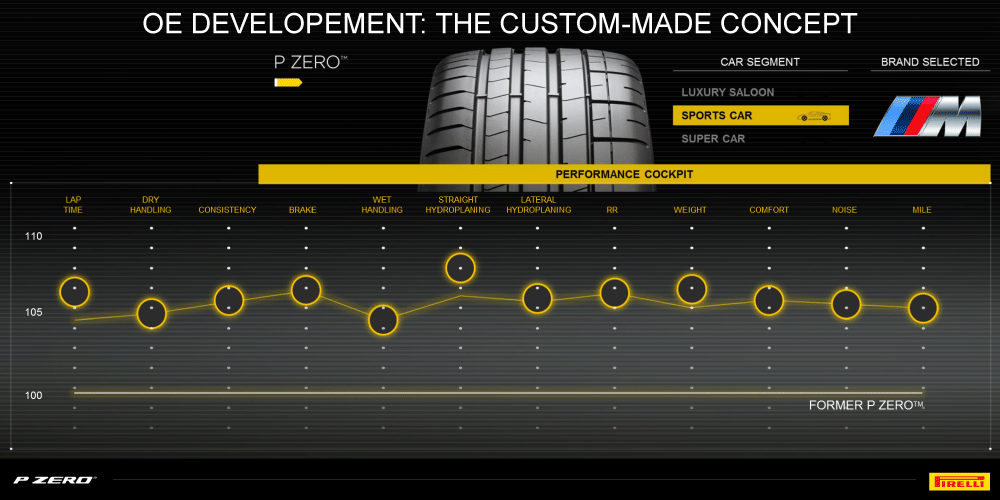
Were as BMWs ///M Performance Division have focused on laptime, weight, and straight aquaplaning performance.
Porsche
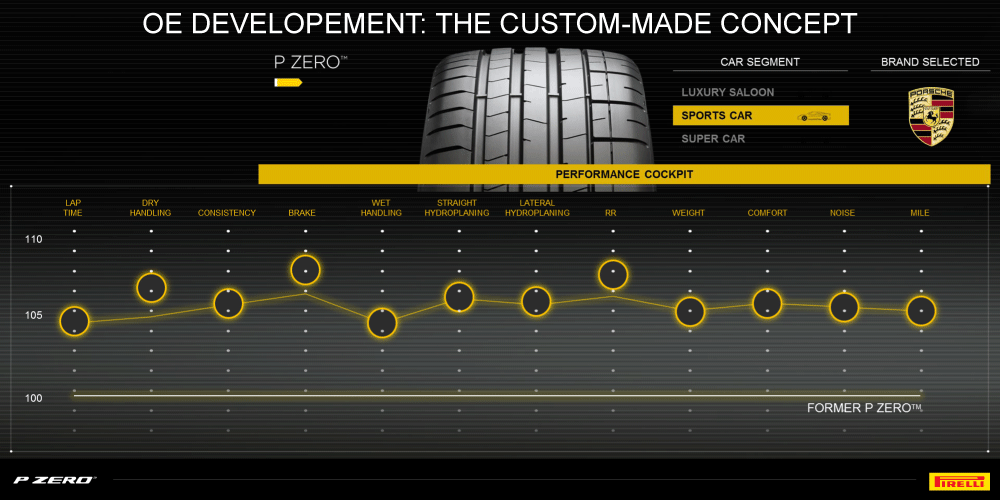
The unique usability and balance of the 911 has demanded improvements in dry handling, braking and rolling resistance.
P Zero Corsa
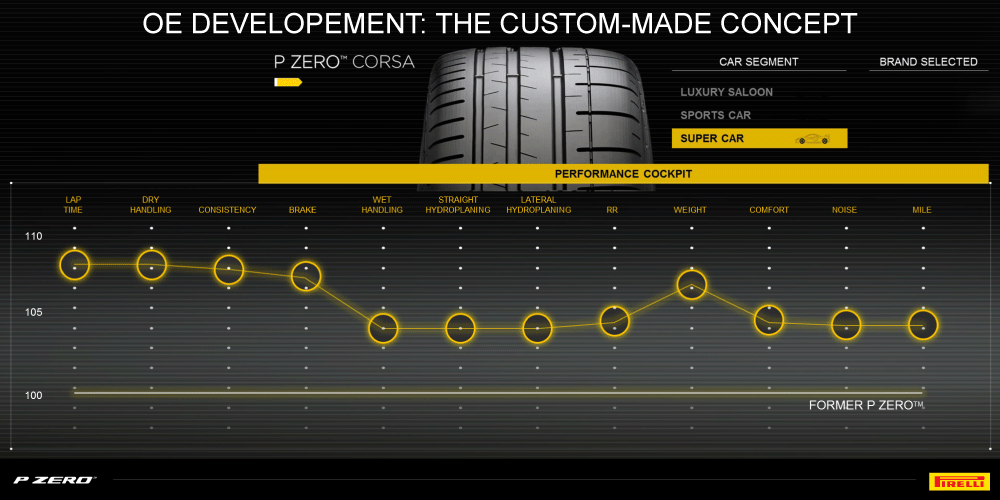
The final new tyre in the range is the P Zero Corsa, which is aimed firmly at super car marques such as Ferrari, Lamborghini and McLaren. When compared to the original P Zero, it pushes the game even further in laptime, dry handling, wet handling and braking, but the OE manufacturers still have modification requests.
Ferrari
Ferrari being Ferrari, have demanded even more improvements in laptime, dry handling and consistency when driving hard.

Lamborghini
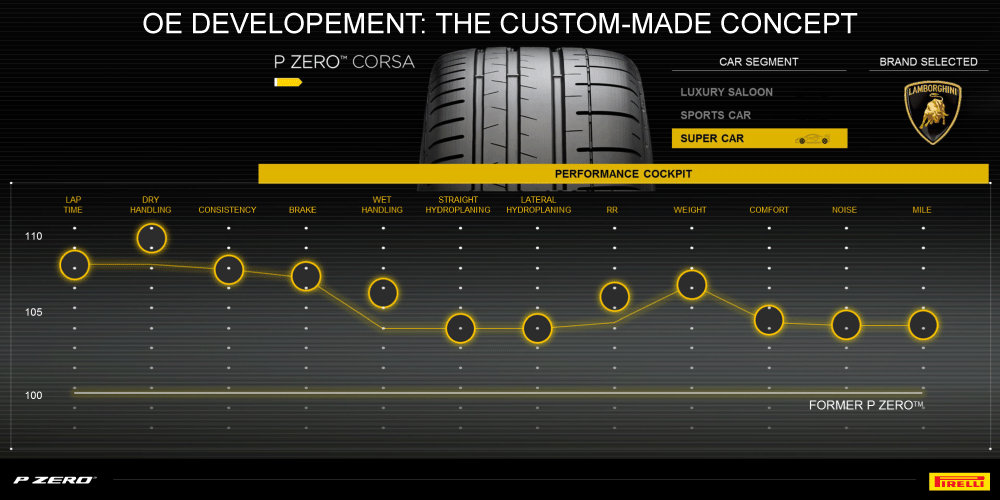
Lamborghini are slightly less concerned with ultimate lap time of the tyre, but have improved the wet handling and rolling resistance.
McLaren
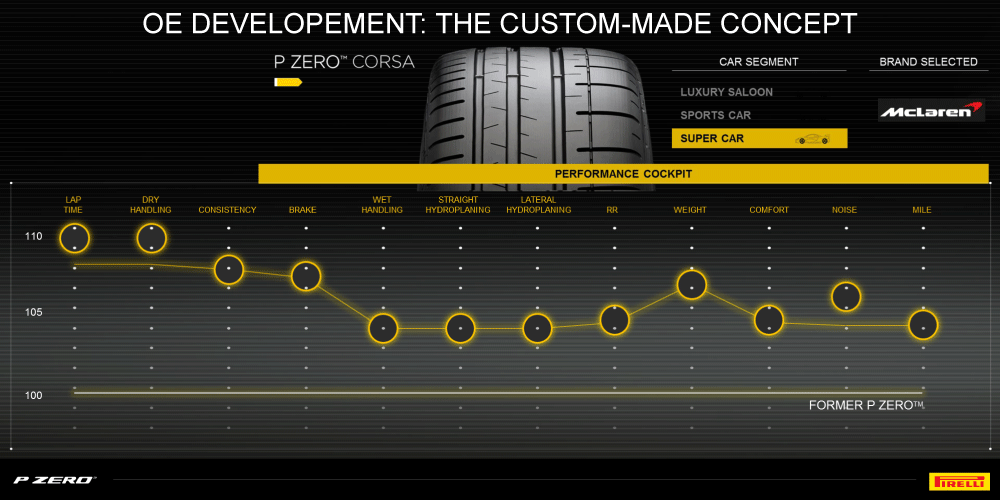
McLaren, like Ferrari asked for dry handling and laptime improvements, but instead of consistency, they improved the noise levels for their version of the P Zero Corsa.
Biggest question - are these differences actually perceivable by an "average" driver?
In some cases, for sure. In others, maybe not!
Pirelli hasn't really told us much at all. I'd be interested to know what changes they make to the carcass construction and compounds. I suspect they're not going to be particularly forthcoming.
Very educational ☺
Thanks!
I support this sort of thing but I bet that Joe Bloggs buying a P Zero from a retailer won't be advised of the profiles & priorities of the variants. What would be nice would be if there were a code on the sidewall that is repeated on retailers' listings & links to a Pirelli site where all is explained. Atthemoment, all that the poor punter can usually ascertain is: "this is the Mercedes variant sir". Yes, but that means .....?
Relatedly, it is irritating (&, in my view, immoral) for manufacturers to opaquely have a number of variants of what seems to be the same tyre. For example, Continental has 3 variants of the EC5 in 175/65-14, T-rated, XL version. Each has its own product code & the DOT codes on the tyre sidewall vary. I wasn't aware until recently that Conti, & others, vary structure & compounding for various markets but keep the same labelling. This wouldn't matter enormously if it were to be transparent just what one was buying & how its performance profile was different from a similarly labelled tyre in some other market.
The point is even more salient when trying to ascertain the relevance (if any) of a test of a tyre from some other market to one's own buying situation. It would be nice if the tests could list the variant code & a link to the manufacturer's unpacking of what that entails. Impossible at the moment, even if magazines could be bothered, owing to manufacturers not making that information available.
I now wonder if this sort of variant variation might be part of the explanation of tyre test ranking variations for similar sizes & vintages of tyre types in the intersection set of several tests. (I'm aware of other explanatory variables like surfaces, test demands on the tyres & so on.)
Certain Russian and German magazines publish DOT and EAN / IPC codes of the tyres used, and we're positive the manufacturers specify certain part numbers when submitting for the tests so there's no reason all magazines can't publish those figures.
Pirelli are spending a lot of money in dealer education of the various OE models, but at the end of the day studies have shown most people either want like for like if the car is new, or as cheap as they can get if the car is over 3-4 years old.
The compromise could easily be cost. OE labelled tyres are frequently more expensive.
The graphs suggest that improvements are made in certain areas with no adverse effects on other areas. Is that right? If so, you'd always be better buying an OE marked tyre over the standard version as you'd get certain benefits which you could choose yourself depending which OE spec you chose?
Great stuff!
Not to sound critical or ungrateful as any info on these things is good, but it would have been nice to have an 'after' graph to show the end result. As we know, you cant just 'up' those elements of performance without affecting the other elements, so it would be nice to see how the modified curve plotted out and where the compromises fell.
As I say, this is in an ideal world, I guess pirelli probably dont want to reveal that info!