
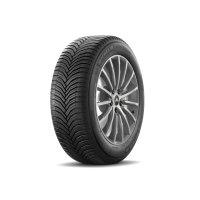
This year the Hungarian publication Auto Navigator have tested fourteen 205/55 R16 summer tyres, but also included an all season tyre (the Michelin CrossClimate), a full winter tyre, and most interestingly worn summer and winter tyres.
It's important to note that the worn winter tyre used was from last years test, whereas the worn summer tyre was 7 years old and had been stored in "sub optimal conditions" which put the tyre at a huge disadvantage. While the tread depth of each of the worn tyres wasn't listed, the magazine article indicated the tyres still had good tread depth, rather than at the legal limit of 1.6mm.
All tests were performed around 15c air temperature. Sadly aquaplaning wasn't tested by the magazine.
Dry
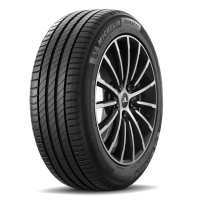
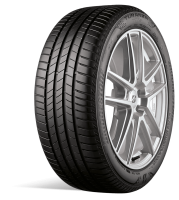
During the dry braking testing, the new Bridgestone Turanza T005 narrowly beat the Michelin pairing of the Primacy 4 and CrossClimate.
The gap between the new winter tyre and worn winter tyre was huge, and also quite difficult to understand as winter tyres often have improvements to dry braking as they wear, due to less block movement. The aged, worn summer tyre showed clear signs of the rubber hardening up over time, and was only able to beat a single budget tyre.
Dry handling had a similar overall result, only with the Michelin CrossClimate dropping out of the top three.
Wet
During the wet braking testing the Michelin Primacy 4 proved to be the class of the test, stopping the car a full 0.6m ahead of the second placed Hankook. Again, the aged summer tyre had no answer to the test, finishing second to last.
The Michelin also performed the best during wet handling, with the Bridgestone in a close second place, both tyres having a good lead over the rivals. The worn tyres again struggled, finishing last by quite a margin.
Environment
The Michelin all season and winter tyres proved to be the quietest on test, with the Primacy 4 once again being the best of the summer tyres.
Results
Overall results below.
I can´t believe these results ...
Even my old P Zero with less tread will beat every winter and all season type in dry and most also in wet handling.
It´s true than not-so-new winter and all season are better in dry than new ones, but they have still no change in dry against a summer tyre.
Or is the test made at extreme low temperature?
I'm unsure of testing temperatures, but I'm certain it wouldn't be been at or even near freezing.
What about the speed the tests were done?
The write up indicated both were done from 60 kph which obviously isn't correct so we've left it out.
Dayton looks awful.
No arguements there
Maybe this test can be an answer to michelin's campaign, that worn tyres are better than new ones.
Michelins campaign is highlighting that not all tyres are created equal. They've independently proven their tyres hold performance better than other brands as they wear, so this article backs up their campaign if anything.
That said, no one should refit a tyre that's 7 years old and has been kept in poor conditions, so I'm not entirely sure the point of this test.
It is very odd...
I only used my own old tyres as they had been stored well enough, passed inspection, and were closely monitored after refitting.
Pulling some out from under a tarp in the garden and banging them straight into braking tests, so to speak, is a bit random!
If testing worn tyres, you want a set that are currently in use and have been since new... They've compromised the test so may as well have not bothered (with the worn summers).
I wonder if they run-in the worn tyres first??...
I have found even a few months in storage has a profound effect that can take a couple of hundred miles to rectify. My old winter set of wintersport 3d and A001 were horrific once refitted after 6 months, the car would be a big handful in all conditions until the tread was scrubbed back in then all was well again, similar but nowhere near as bad with summer tyres stored a while.
On my old car theres a michelin energy e3a which is nigh-on 13 years old now (was unused spare until 7 years ago)(I dont advocate using tyres this old btw!) I kept it in occasional use after it was first used to try and keep it 'fresh' so to speak, despite its age it still performs well, solid as a rock on front in the wet (and better than new firestones) but ONLY once scrubbed back in...
(Yes, I know the dangers of old tyres, but it has no age cracks even hairline, anywhere, has never been punctured, has been used intermittently since 6yo (still coated in release agent at the time) and always thoroughly inspected. But since it has no ageing signs, no compromise of structure such as a puncture, and, unusually for what tyre it is, sticks like sh1t to a blanket, holds pressure astonishingly well (barely ever needs 1psi) etc, I continued to use it with close monitoring. (Though its had some serious punishment in use))
I would hope they'd have scrubbed the tyres in before starting the braking tests (which are always done first!)
Tyres can seep oils out when left in storage, which is why when refitting they can be a little slippy, especially in the wet!
Exactly, plus the outer exposed layer hardens, double trouble!
You've got to be mad to use a 13 year old tyre on the basis of a visual inspection. Michelin recommend 10 years as the max lifespan. What car have you got? I'll steer well clear.
:-)
If you read properly, i havent just glanced over it, and note that I dont advocate using tyres this old.
Im quite clued-up when it comes to tyres, why old tyres fail, why they are generally less than ideal after time etc.... This tyre is an exceptional example, most tyres of similar vintage would not be fit for use.