
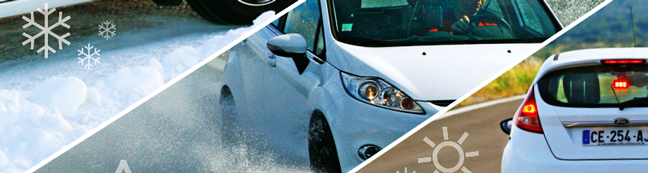
The Summer and Winter Comparison
How did the winning all season tyre (Goodyear Vector 4Seasons) compare against it's summer and winter rivals? In snow braking, the Goodyear stopped the car in 17.9 meters from 40 km/h, where the winter managed 16.5 meters. This seems like quite a gap, until you consider the summer tyre took nearly double the distance, at 33.3 meters. It was a similar story in the other snow tests, with the Goodyear just a shade behind the dedicated winter, and the summer tyre next to useless.In the wet, both the winter and Goodyear all season performed better in the aquaplaning results than the dedicated summer, it wasn't until wet braking the summer started to show its advantage, stopping in 56.1 meters, compared to 58.6 meters for the Goodyear and 60.7 meters for the winter from 100 km/h.
In the dry, the summers advantage was further stretched, stopping in just 39.6 meters from 100 km/h, where the Goodyear took 45.3 meters and the winter 48.6.
Both the Goodyear and the summer tyre had nearly identical rolling resistance scores, and very similar drive by noise scores.
Other All Seasons
While we focused on the test winning Goodyear Vector 4Seasons for the above, there's another all season tyre which might be better suited to the UK climate. The Bridgestone A001 had a comparatively poor snow braking performance, stopping the car in 19.6 meters (still 13.7 meters before the summer tyre!), but actually managed to beat the summer tyre in wet braking, and was a meter closer to the summer in the dry.Does the all season really work best for all seasons?
Every tyre is a compromise of its intended abilities, and an all season tyre has an extra compromise to make over a dedicated summer or winter.If you can only run one tyre year round, an all season tyres offers the best overall braking performance for the year, however the optimum and safest way to cover 12 months motoring is still with a dedicated summer and winter tyre.
Results
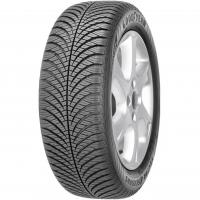
The model all-season tyre. Balanced safe driving characteristics on snowy slopes. Short wet braking distances and high aquaplaning safety-reserves. Pleasantly quiet, exemplary ride comfort and low rolling resistance
Total: 43
Dry
7
Wet
7
Snow
7
Comfort
7
Rolling Resistance
8
Noise
7
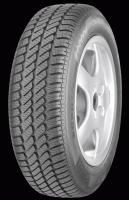
Multitalented tyre. Precise steering and stable running in all weather conditions. Dynamic sporty handling with short braking distances on wet roads and exemplary low fuel consumption
Total: 42
Dry
7
Wet
7
Snow
7
Comfort
6
Rolling Resistance
9
Noise
6
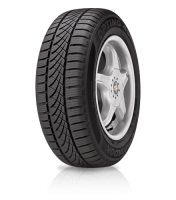
A good all round tyre with precise steering and stable handling properties on dry slopes; short wet and dry braking distances, low rolling resistance
Tendency to understeer
Total: 40
Dry
7
Wet
7
Snow
6
Comfort
6
Rolling Resistance
7
Noise
7
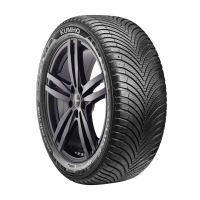
Good all-season tyres, with balanced handling on snowy and dry roads, short snow braking distances and a low pass-by noise
Only satisfactory handling
Total: 40
Dry
7
Wet
6
Snow
7
Comfort
6
Rolling Resistance
6
Noise
8
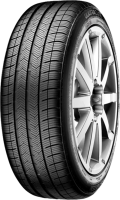
Safe handling qualities with stable turning and good feedback on a wet track, short dry braking distances and lowest rolling resistance in the test
Average on snow, poor aquaplaning result
Total: 46
Dry
7
Wet
6
Snow
6
Comfort
7
Rolling Resistance
10
Noise
10
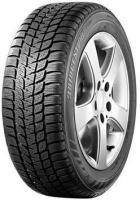
The rain professional with a dynamic sporty handling - excellent driving qualities on both wet and dry conditions, best safety reserves to aquaplaning, shortest braking distances in the wet
Average snow performance
Total: 40
Dry
7
Wet
9
Snow
3
Comfort
9
Rolling Resistance
5
Noise
7
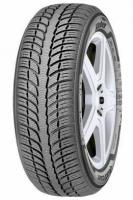
Balanced safe driving characteristics and short braking distances on snowy slopes, pleasant ride comfort
Poor steering behavior and extended braking distances in wet and dry conditions
Total: 39
Dry
4
Wet
5
Snow
8
Comfort
10
Rolling Resistance
7
Noise
5
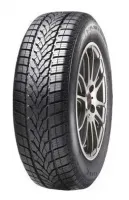
Good traction and short braking distances on snow-covered slopes, safe wet handling qualities, quiet noise level
Average safety reserves to aquaplaning, long wet and dry braking distances, delayed steering response
Total: 33
Dry
4
Wet
6
Snow
7
Comfort
5
Rolling Resistance
4
Noise
7
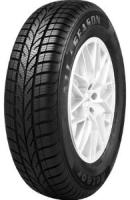
Winter tire with a low rolling resistance and rolling noise
Very bad in the wet
Total: 40
Dry
6
Wet
3
Snow
10
Comfort
4
Rolling Resistance
9
Noise
8
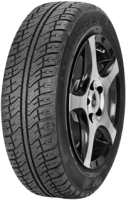
Acceptable in the dry
Poor wet performance and dangerous in the snow. High rolling resistance
Total: 22
Dry
7
Wet
2
Comfort
2
Rolling Resistance
4
Noise
7
What is the fastest I can drive with all weather tyres?
As with all tyres, all season tyres will have a speed rating which indicates the maximum speed you can travel on it.
I have had Bridgestone A001 on my C-Max since December 2012 and they have been great in all weather. Will be sticking with them for the foreseeable future.
With the exceptional heat in the UK in the past few weeks, how effective are all season tyres in this warmer weather. I have a set which I found did a fabulous job last winter and during the very wet country road conditions we experienced during the past 12 mths. They really gripped well in the flooded roads, but lately I'm not too sure how good they have been when they have got so warm sitting in the heat during the day and driving home after work. I'm a careful driver and know not to drive round the coutry lanes/bends too fast but still feel the grip round some bends is not so good?
Sorry if this has been covered, but what temperature were these done at? I only do 6000 miles a year, but 3000 of thoese are in summer driving to Italy from the UK and back. What will all seasons be like at 100mph+ in 35 degree heat?
Unfortunately temperatures weren't included in the write up. Assuming you stay within the speed rating the tyres were designed for heat build up shouldn't be an issue.
I don't know what to believe. In the 2009's issue Autobild had a different order for the tires. In 2012 it switched places. Weird....
http://www.tyrereviews.co.u...
Even though patterns don't changes, premium tyres are constantly evolving, meaning the Goodyear tested in 2009 could be a different compound to now.
Was interested in some All-season tyres, but cannot find any from any manufacturer in the correct size for our car.
255/35/19 on an Audi A6 Le Mans.
I'll have to check to see if these rims would accept anything narrower, but even in 19" I can't seem to find anything.
It's certainly difficult finding all season tyres in the larger sizes. Vredestein might be your best bet, though you might end up wanting to consider using a winter year round.
http://www.tyrereviews.co.u...
Thanks for that. Our last car, a BMW 530d M Sport, was so bad in the snow we had that we bought smaller wheels and Dunlop Winter Sport SP3 - which I thought were great - though my wife was less impressed.
I knew that when the summers went back on, I needed to replace two as one had a puncture and one was below legal limit, so I kept putting it off. In the end, I delayed so long that it wasn't worth fitting summers, as I'd only have them on for a month before refitting the winters. So the winters stayed on for a year and a half.
By the time they came off I'd done about 24,000 miles and the fronts had another season in them, while the rears, annoyingly, were good in the centre, but the inside edge of both was gone. More to do with the way BMWs are set up than the tyres. I certainly felt no adverse effects during the summer.
I think our only way forward, realistically, is winters in a hu-u-u-ge size.
Your "all seasons braking performance" graph is incorrect.
You have meters for the horizontal scale and it would appear that all manufacturers tyres stop in bwteen 16 and 33m in the snow yet take 39 to 46m to stop in the dry.
Looks like you've let someone non-technical draw your graph for you.
Hi,
The braking test was done at a slower speed in the snow, 40kph, but 100kph in the wet and dry.
Does anyone know which tyre manufacturers make an all seaons tyre in 245/45/17 size for sale here in the UK? Thanks!
That might be a difficult size to find. 225/45 R17 is far more common! Goodyear certainly don't make the 4Seasons in that size.
The Quadraxer is made in that size, I know, I have them - great tyres. Don't be too dissuaded by them placing 7th in the above test; there's not much difference between top (43) and 7th (39) - especially looking at the gulf down to 8th. I've also got another car on the Vectors and there isn't much difference.
Why bother having raw scores (including totals) if the highest result (the Vredestein Quatrac Lite) only ends up in 5th place? If, as the "Negative" comments suggest, the aquaplaning result was poor, then surely this would make the overall wet score poor? Unless there are weighted scores for each category, then the raw scores have no meaning.
Hi Andy,
You are correct, the scoring is weighted by Auto Bild, meaning the wet and snow scores have a much higher impact than the comfort, noise and rolling resistance scores.
Unfortunately our system can't take into account that weighting, but we feel it's better to have the scoring than not to, the more information the better!
Regarding Freelander tyre choices....I have some thoughts to give...
The advantage of two sets of wheels, each set for dedicated summer and winter tyres, is that you can choose narrower rims for winter set and allow slightly narrower tyres to be fitted, improving grip on snow. Narrower rims would have to be confirmed by Land Rover as suitable.
For the past 10 years, I have had the two sets of wheels solution, fitting dedicated summer and winter tyres to each. Several of those years were in Munich/Alps with fairly certain heavy snow conditions during the winter. The other years have been in either Scotland/England with winteres certainly not as bad.
In the past year or so, I have switched both our cars (FWD) to use the Bridgestone A001 all year round. Tested on snow on steep gradients, I failed to notice a marked difference between the performance of the A001 all season tyres, and the previously fitted Bridgestone LM-30 winter tyre - on snow. Perhaps, and I have not driven much on sheet ice, the LM-30 winter tyre compound might be better on ice, but I don't know. I suspect that the LM-30 operated well down to -25C, and might be a bit overkill of UK winter climates.
Block pattern on LM-30 and A001 look very similar, and so I think it is just the tyre compound which is different to match intended temperature of operation.
One advantage I can see of putting the A001 all season tyre on your Freelander all year round is that if you should take it off road occasionally (presumably that's why you drive a 4x4) you might find the tread gives better grip on wet grass / mud than a smooth dedicated summer tyre.
One last point, I feel to see why the small difference in dry braking performance between a summer tyre and an all season, like the A001, is a significant safely factor. Surely all cars keeping the appropriate distance between themselves and other hazards, should manage to come to a safe stop in the dry.
Seems to me that performance on snow or in the wet is where you want to look for a big gain. These, combined with less daylight in winter, are where the need to perform an emergency stop, or swerve, increase.
AWD
Hi, I am just wondering if you have any plans to put together some
advice on all season tyres for SUVs? I have recently aquired a Freelander 2
with 18" wheels which needs new tyres (235/60/18). With my previous cars I
have always run a set of winter wheels and tyres and a set of summer wheels and
tyres. As the current tyres need replacing, in order to do the same as before,
I would be looking at having to buy 8 very expensive tyres plus or minus 4
extra wheels all within the next six months. All season tyres to go on the
current wheels would be an attractive hopefully cheaper alternative. We live
Scotland in the hills and get a lot of snow so winter capability is important
however it rains even more often making wet performance crucial. It will also
be doing a lot of miles all year making wear in hot weather an issue too. The
last owner ran winter tyres all year round and they have worn down very
quickly. I want to avoid the likes of the Wrangler HP due to poor snow and wet
breaking. I appreciate that it may be unrealistic to extrapolate findings from
a 14 or 16" tyre test for cars to the larger wheels and heavier vehicle so
I would appreciate your advice.
I think my ideal winter tyre would be the Goodyear UltraGrip SUV. As an
all season I would have liked the vector 4 seasons SUV but it does not appear
to be made in 235/60/18. The Quatrac 3 SUV is available as an option. I guess
my questions are firstly how much less wear would you expect to see in the summer
from the all season tyre, (are the SUV versions of these tyres harder wearing?)
and secondly do you think the Quatrac 3 SUV (as an example) is as good as the UltragripSUV in the wet? It
doesn’t look like either the all season or winter tyres are impressive at dry
breaking in summer temperatures so there probably is little to choose between
them here.
Lastly I have noticed that a lot of winter and all season tyres are
getting poor marks on the new EU tyre labels for wet breaking, the Quatrac 3
SUV gets an E, ultra grip SUV does the best out of my choices with a C.
Interestingly it seems the older Perelli Scorpion Ice and Snow gets a B, would
this also apply to wet breaking at summer temperatures too?
Thank you,
Nathan
Hi Nathan,
"AWD" in the post above yours made some interesting points regarding winter / all season tyres on SUVs.
Unfortunately we've little to no direct experience with AWD vehicles which means we're not in the best position to answer your questions. Logically the performance delta between summers and all seasons should follow a similar trend between cars and SUVs, which means the user reviews on this site should help.
The braking label test will be done at summer temperatures.
Any idea when the Kumho will be available in the UK?
Kumho are distributed by Micheldever in the UK so in theory, they should know. Might be worth getting in touch.