
During 2018, Tyre Reviews relaunched its YouTube channel, with a moderate amount of success. Views were strong, engagement was high, and there was demand for further tyre related videos which I have promised to create.
Now, a few months on from the last published video, comments are starting to appear on YouTube asking if I'm ok, if I've given up on tyres, and whether we'll ever see the promised videos. Well the good news is I am perfectly fine, I will NEVER give up on tyres, and the videos will come.
They just take time to plan, execute and edit.
Why Exactly is Tyre Testing so Difficult?
Comparative tyre testing, if done properly, is a very specific art. It's not like reviewing a car, which can be largely be done on the open road. Nor can you just turn up at a track day and time yourself, as that's forbidden, and traffic would mean you would never get consistent laps through the day. Throw in the complexities of wet testing, where you have to have perfectly consistent water depth through the entire test, and you realise any data from a rainy day is useless for a full objective test.
Tyre testing needs a dedicated facility. Only a handful of these exist in the world, and they're in very high demand.

Further, proper tyre testing isn't a rushed process. Take for example braking tests. You don't just do one braking test on each set of tyres, as no matter how good you are, there are always variances in you, the car, the ABS system, the wind etc. You have to do at least 8 runs, delete the outliers and average at least 5 of the closest results. If you're comparative testing more than a couple of tyres, you then need to start calculating the evolution of the surface as the temperature changes and the surface rubbers in, and of the cars braking systems as they heat and wear, which means you need to run a control tyre every third run.
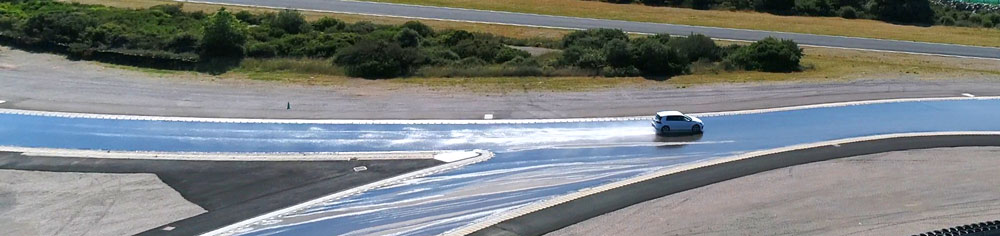
In short, if you're testing ten different tyre patterns, you can be doing upwards of 130 braking tests for dry braking, and another 130 runs for wet braking. You generally don't do as many handling runs for dry and wet handling, but laps take longer than braking runs and you still need to calculate car, driver and track evolution, so it's another hugely time consuming process.
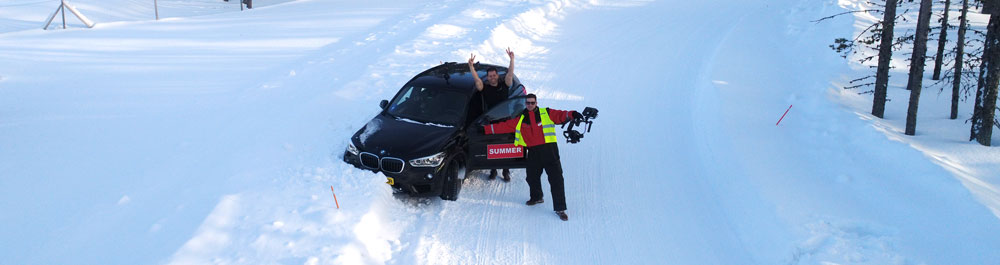
Winter testing adds even more complexities, where you have to regrade the snow between handling runs in order to ensure the surface is as close as possible for each tyre, ensuring good data, and occasionally pull a vehicle out of a snowbank.
Restrictive Seasons for Testing
The other big issue for tyre testing is weather, and temperature.

For summer tyre testing, we have to ensure warm dry conditions, as we can wet a dry track but not dry a wet track. This means we can't do any summer testing until March in Europe, and the season ends around September.
Winter testing is even more specific, as it's possible to have the "wrong type of snow" for Central European all season and winter tyres, so the window is tiny. Plus, the facilities are so far north, often inside the arctic circle, the lack of light to film becomes an issue during the winter months.
Costs
Aside from the obvious costs involved in using these incredibly large, expensive, high-demand, test facilities, there are other costs involved too.
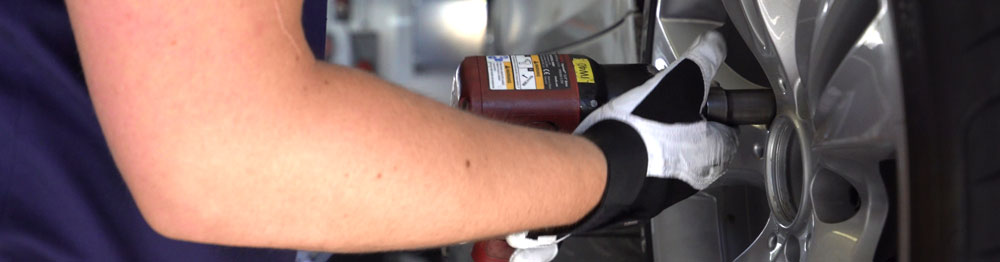
Car hire costs are expensive, but not as much as the insurance required for extreme use. Testing ten different tyre patterns? That'll be 100 tyres as you need ten of each set (four wet testing, four dry testing, and two for rolling resistance / backup.) Then there's a lot of fuel, and at least one set of brakes. Oh, and you can't be fitting tyres during a test as the tyres need to be mounted and settled before testing, so that's ten sets of matching wheels. Then you need people to mount all these tyres, change the wheels, marshall the tracks, support the tests. The list goes on.
And we still haven't discussed paying, and flying at least a two person film crew to a location like the arctic circle for 4 days of filming in -20c. Plus all the insurance involved with flying drones, filming near fast moving cars. Eating food. Sleeping.
Testing in 2019
In short, tyre tests take a long time to orginse, are complicated and are extremely expensive. But that doesn't mean we won't be doing any tyre testing in 2019, in fact this year will be the busiest and most exciting year for tyre testing yet!
Across 2019 we will be covering all the new tyres, including the exciting new Goodyear Eagle F1 SuperSport range, and performing our very own, and worlds first, maximum performance tyre test on video. These tests have already been months in the planning, and are still months away from filming, but they will be a new level of tyre information and detail.
There's also some exciting plans for all season and winter tyres later this year, and some less complicated, more real world tests of road and track tyres, so if you're not already subscribed, please subscribe to the YouTube channel, and above all, please be patient.
If you have any question, or suggestions for future tyre tests, please feel free to ask below.
we want more. we want it now. and we demand it for free!!!!!!!!!
Do you mind if I ask for some advice?
I was stupid enough to not rotate my summer tyres between the front and the back for 5 summer seasons.
Now my fronts have 3 mm tread depth and need changing for new ones, while the backs have 5 mm tread depth and can stay for a season or two. Should I put the new tyres (with presumably 7 mm tread depth) on the front or the back? I've read that you should have the better tyres on the back to avoid snap oversteer in the wet, but better tyres on the front aid in steering control, less understeer and break distance while tending to oversteer when the back loses traction.
Your take on this? I promise I will rotate my tyres from now on.
Not many people rotate their tyres in the UK!
The common wisdom is newer tyres on the back, but at 5mm and 3mm I'd be tempted to now rotate them and wear through the 5mm tyres so I can change all 4 at once. By the time your fronts would be down to 3mm the rears won't have lost more than 1mm.
Thanks for responding!
Yeah my initial plan was to put the 5 mm tyres in the front to wear them down, and put new ones in the rear (that word evaded me yesterday, haha). But then I had second thoughts so I thought I'd ask an expert.
I might do as you suggest for at least this upcoming summer and then reevaluate in 2020. I don't like changing just 2 tyres at a time, but I'm not rich enough to throw away tyres with 5 mm tread after 5 years, so I started thinking about what the best solution would be. The problem is that when you start changing 2 tyres, you get out of sync and need to continue doing that for a long time.
Looking forward to your next test!
have you ever considered doing a review of eco (low rolling resistance) tyres?
i'm running winters at the moment but shopping shortly for summer tyres - i want to maximise my mpg, looking at pirelli cinturato p7 blue vs. conti ecocontact6
both are "A" rated for rolling resistance but i can't find any reviews that pitch these (or similar) against each other?
shopping for low rolling resistance is difficult - most if not all of the web sites don't allow you to filter by rolling resistance which is bizarre.
It's definitely on the list to cover :)
I'd be very interested to see how tyre grip, in Newtons, varied with surface temperature. This could be done in a lab, without a car! When the roads are at sub-zero temperatures how to winter, all-season and summer tyres compare? Are you aware of any testing that has been done? Autobild uses traction as one measure of tyre performance in snow............
Traction tests aren't overly reliable, but we do have the opposite of traction tests available, braking testing :)
Sadly only one company in the world has the ability to modify the temperature of braking tracks, and that's Continental in Germany, and as you might expect temperature changing an entire braking run is very expensive, so its unlikely I would get to use it for my personal project :)
Just going out on the road at different times of the year does not get usable data sadly.
I have subscribed on YouTube and thanks to the time and effort you have taken to provide reviews, invested in my first set of winter tyres! Went with the Continental Wintercontact TS860, 215/40/17. So far they are great, although we haven’t had a proper winter so to speak, I have noticed the difference on the wet and cold days and stopped far quicker then I would have on a set of summers. I appreciate the amount of work that goes into these videos and will wait as long a necessary for the next one. Maybe you could provide more of the info videos, best so and so tyre etc. If they require testing before you can do them, then I’ll wait for those too! Forgot to mention I just got the Michelin PS4’s for the summer, got both sets of tyres through the links on your site. So a big thank you from me and keep up the good work.
Ps. Will leave a review of the conti’s once I have some miles on them.
That's a great couple of tyre choices you've made there, glad I could help :)
There will be some new, good videos this year, I just need to wait for the temperature to warm up a little :)
Is there anyway of assessing a tyres performance on the salty, greasy roads prevalent this time of year in the U.K.? I am running Conti AllSeason atm and they are ok but have a feeling the GY Ultragrip 9 on the wife’s car have more traction. The TS850s I had previously really didn’t seem to cope well despite being highly rated.
Sadly testing like, along with slush and wet mud can be incredibly difficult to keep the surface consistent through a days testing. It's why sites like tyre reviews exist, so people can share their real world experiences :)
Out of interest, is there a forum for this site? or one you would recommend that focuses on tyres?
There used to be a forum, but no one ever used it sadly! Now we have the comments here and on youtube which are very tyre specific, or the big forums like pistonheads.
Keep up the good work, Jon.
The videos are ALWAYS worth the wait.
Thanks Jon :)
I expect some people think you can put together videos as often and as quickly as Jason from the Engineering Explained YT channel. Much easier if half your videos mainly involve just a white board and you get a shed load of sponsorship for the other half.
One thing that a new member mentioned on a motoring forum I'm a member of was whether studded tyres are legal in the UK, and if so, when can they be used. Lots of discussions back and forth and not too much in the way of actual evidence. Most of us thought they should just stick to winter tyres and drive better!
Keep up the great work Jon - it's certainly helped me make some decent choices and helped my driving technique as well, especially in poorer weather (I actually LIKE driving in snow!).
As far as I understand, studs are essentially illegal in the UK. And totally overkill unless you're living up a mountain in the scottish highlands!
That's what we were saying to this guy, but we couldn't find where it said so in law.
There is not actually a law that outright bans their use. The laws around tyres (CUR reg 27) only talk about a tyre that "has a defect which might in any way cause damage to the surface of the road or damage to persons".
As with most UK laws, it is vague to allow common sense or "reasonable practicability" to prevail in extreme cases. Unlike the US where it is the letter of the law that counts and if it isn't written then you can get away with it.
i.e. You would be hard pressed to argue their need in towns and cities and on motorways in between, but could easily justify them in the highlands at this time of year.
As this would prevent you from using the vehicle in a lot of places throughout the year or require you to take a spare set with you everywhere, the general public do not use them.
I live in Scotland and have a friend that volunteers with mountain rescue. She told me that all the rescue vehicles use studded tyres (but i cannot confirm this)
You could also make the case that as the tyres are designed with studs, they are not a "defect".
Thanks Paul :)
If you can sacrifice some dry and wet braking and really need ice grip, modern Nordic winter tyres are getting close to closing the gap with studded tyres. In one brake test on ice, the best studdless winter tyre stopped 3% short of the best studded tyre (190+ studs per tyre). Throw in the fact that the studs litterally lose some of their edge with use, the difference isn't big. Studded will remain better in wet and dry though as the threadblocks can be more stable. But if you want to improve the lowest grip situation, ice, nordic studdless wintertyres are much better on ice than an 'european' winter tyre.
And what about the New Vredestein All-Season who is planned to be launched in April 2019 for the Ultra High Performance Segment. .. :) :) !! there is lots of lots beautiful new tyres to come in 2019 for Tyrefans like me and lots of people here. (its feeling like Christmas =))
Keep up the good work John, Quality is much better then Quantity..!
Best regards from the Snowy Alps - Switzerland - Canton Bern
I'm not sure I know about this tyre, what have Vred got planned? Or is it the Quatrac 6?
I thought so... because it`s very new news =))
I`m not sure about the name they are not saying if it`s gonna be Quatrac 6 or a different name... but a UHP tyre for sure :)
here is the orignal dutch article what you can translate.
https://www.telegraaf.nl/vr...
This is gonna be a very very interesting tyre based on the experience they have with the Wintrac Pro... :) and won from Continental in Autobilds tests.. i look forward of everything to come from Vredestein :)
Perhaps the Quatrac Pro ;)
Jon, fella, if anyone buggers off due to not being fulfilled each week, they arent truly interested but simply want entertaining.
You aren't here for that, well, you are, but its secondary. The vids are getting better (read; more professional/proprietary) as time goes on, and the collaborations you've now had with Michelin and Goodyear speak volumes...
I know you are telling those who dont quite get the intricacies of testing rather than you actually worrying, but, what bit of concern there clearly is, isn't entirely founded! :-)
As always, thanks :) Got some brilliant stuff planned for this year I think you'll really enjoy! :)
Thank you for the time, effort and resilience in puting up with demanding fans. Your videos are much appreciated and a point of reference for many a conversation.
Feel a bit guilty about asking for an "aged tyre" test now.
When you say "maximum performance" test, maximum performance in what respect?
Absolutely no need to thank me, it's the dream job! I just needed to write something to explain to youtube why there isn't a new video every week like some channels!
Maximum performance is our name for the UUHP tyre category, one up from ultra high performance. Effectively the best road tyres you can buy for high performance cars.