Following on from the
27 all season tyre braking shootout, Auto Bild have published their excellent 2018 all season tyre test. Testing the best ten 195/65 R15 all season tyres from the braking test, Auto Bild have done an incredibly thorough job putting all the tyre patterns through the usual array or dry, wet and snow testing.
The New Tyre
The most interesting part of this test must be the inclusion of the new Bridgestone Weather Control A005, as it's the first time this new tyre has featured in a full all season tyre test.
If you're just looking at the results as the overall standings, you'd be forgiven for dismissing the Bridgestone as a purchase option, but for the most of the UK this new tyre might actually be one of the BEST options for year round motoring in the UK.
Why? Because it has significant advantages in wet and dry braking, even beating the dry master the Michelin CrossClimate+, and matches the excellent performance in dry and wet handling. While it's snow performance is it's weakness, it's still significantly better than the reference summer tyre in the test. With the UK climate being dry or wet 99% of the year, the balance of performance the Bridgestone offers is more acceptable to our climate than it is to the German testers.
The Rest
Ignoring the Bridgestone in last place, the top five results aren't surprising. The Goodyear and Continental all season tyres performed excellently as ever, the Nokian was more like a winter tyre and won the snow testing, and the Michelin excellent in the dry.
If you've not already seen our all season tyre recommendation video, we explain the balance of performances between various all season tyres, and explain why for example the Nokian might not be the best idea for the south of the UK, and the Michelin not the best for northern Scotland. Have a watch here.
Dry
As mentioned above, the Bridgestone was the star of the dry testing, winning both the dry braking and dry handling tests. The Michelin CrossClimate also faired extremely well, a significant step ahead of the rest during dry braking, and joint second place during dry handling.
- Reference Summer
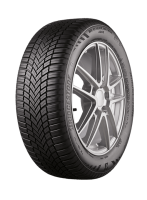
- Bridgestone Weather Control A005
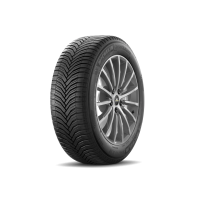
- Michelin CrossClimate Plus
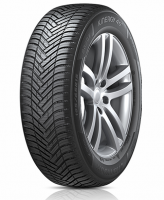
- Hankook Kinergy 4S2
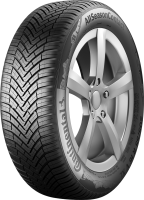
- Continental AllSeasonContact
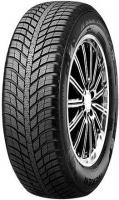
- Nexen N Blue 4 Season
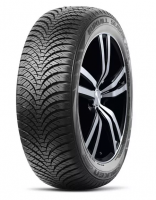
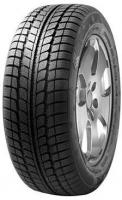
- Falken EUROALL SEASON AS210
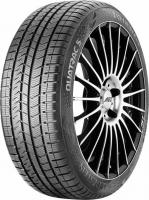
- Vredestein Quatrac 5
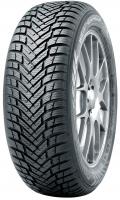
- Nokian WeatherProof
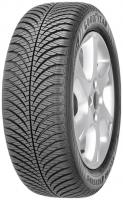
- Goodyear Vector 4 Seasons Gen 2
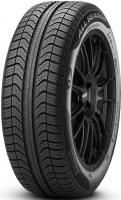
- Pirelli Cinturato All Season Plus
- Reference Winter
- Reference Summer
- Bridgestone Weather Control A005
- Michelin CrossClimate Plus
- Pirelli Cinturato All Season Plus
- Hankook Kinergy 4S2
- Vredestein Quatrac 5
- Nokian WeatherProof
- Falken EUROALL SEASON AS210
- Goodyear Vector 4 Seasons Gen 2
- Continental AllSeasonContact
- Reference Winter
- Nexen N Blue 4 Season
Wet
Wet braking once again saw the Bridgestone leading the way, however no all season tyre could get close to the summer tyre which had a large advantage.
- Reference Summer
- Bridgestone Weather Control A005
- Goodyear Vector 4 Seasons Gen 2
- Hankook Kinergy 4S2
- Michelin CrossClimate Plus
- Vredestein Quatrac 5
- Continental AllSeasonContact
- Falken EUROALL SEASON AS210
- Nexen N Blue 4 Season
- Nokian WeatherProof
- Pirelli Cinturato All Season Plus
- Reference Winter
During the wet handling testing the Goodyear was the best of the all season tyres, with the Bridgestone and Continental in second and third places.
- Reference Summer
- Goodyear Vector 4 Seasons Gen 2
- Bridgestone Weather Control A005
- Continental AllSeasonContact
- Vredestein Quatrac 5
- Michelin CrossClimate Plus
- Hankook Kinergy 4S2
- Pirelli Cinturato All Season Plus
- Nokian WeatherProof
- Reference Winter
- Nexen N Blue 4 Season
- Falken EUROALL SEASON AS210
The Continental again proved it's wet weather credentials and won the aquaplaning testing.
- Continental AllSeasonContact
- Falken EUROALL SEASON AS210
- Hankook Kinergy 4S2
- Nokian WeatherProof
- Goodyear Vector 4 Seasons Gen 2
- Bridgestone Weather Control A005
- Michelin CrossClimate Plus
- Reference Winter
- Reference Summer
- Nexen N Blue 4 Season
- Pirelli Cinturato All Season Plus
- Vredestein Quatrac 5
Snow
While the Bridgestone was exceptional in the dry and wet, it's struggled in the snow testing. The Nokian all season tyre once again showed winter-tyre like qualities in the snow, with the Continental showing an extremely balanced wet/snow performance blend.
- Reference Winter
- Nokian WeatherProof
- Continental AllSeasonContact
- Goodyear Vector 4 Seasons Gen 2
- Nexen N Blue 4 Season
- Falken EUROALL SEASON AS210
- Vredestein Quatrac 5
- Pirelli Cinturato All Season Plus
- Hankook Kinergy 4S2
- Michelin CrossClimate Plus
- Bridgestone Weather Control A005
- Reference Summer
- Nokian WeatherProof
- Reference Winter
- Continental AllSeasonContact
- Falken EUROALL SEASON AS210
- Pirelli Cinturato All Season Plus
- Vredestein Quatrac 5
- Nexen N Blue 4 Season
- Goodyear Vector 4 Seasons Gen 2
- Hankook Kinergy 4S2
- Michelin CrossClimate Plus
- Bridgestone Weather Control A005
- Reference Summer
Value
As in other tests, the Michelin had the best wear scores, but it was the Falken that proved to have the best price / wear balance costing just 4.84 euros per 1,000 km.
- Michelin CrossClimate Plus
- Falken EUROALL SEASON AS210
- Goodyear Vector 4 Seasons Gen 2
- Continental AllSeasonContact
- Vredestein Quatrac 5
- Nexen N Blue 4 Season
- Bridgestone Weather Control A005
- Nokian WeatherProof
- Hankook Kinergy 4S2
- Pirelli Cinturato All Season Plus
- Nexen N Blue 4 Season
- Hankook Kinergy 4S2
- Vredestein Quatrac 5
- Falken EUROALL SEASON AS210
- Pirelli Cinturato All Season Plus
- Nokian WeatherProof
- Bridgestone Weather Control A005
- Goodyear Vector 4 Seasons Gen 2
- Continental AllSeasonContact
- Michelin CrossClimate Plus
- Falken EUROALL SEASON AS210
- Nexen N Blue 4 Season
- Michelin CrossClimate Plus
- Goodyear Vector 4 Seasons Gen 2
- Vredestein Quatrac 5
- Continental AllSeasonContact
- Bridgestone Weather Control A005
- Hankook Kinergy 4S2
- Nokian WeatherProof
- Pirelli Cinturato All Season Plus
Environment
The Nokian had the lowest fuel use, with most of the all season tyres on test beating the summer tyre.
The good value Nexen tyre proved to also be the quietest on test.
- Nexen N Blue 4 Season
- Hankook Kinergy 4S2
- Vredestein Quatrac 5
- Michelin CrossClimate Plus
- Pirelli Cinturato All Season Plus
- Reference Winter
- Reference Summer
- Goodyear Vector 4 Seasons Gen 2
- Nokian WeatherProof
- Continental AllSeasonContact
- Falken EUROALL SEASON AS210
- Bridgestone Weather Control A005
Results
An excellent all round performance, excellent value for money, good steering precision and excellent handling in the snow and wet, safe aquaplaning, good comfort, low wear.
High price.
Total: 82
Dry
10
Wet
12
Snow
12
Comfort
13
Rolling Resistance
11
Noise
11
Wear
13
Excellent in the snow, good steering precision, handling and grip in the wet, very good aquaplaning results, good wear.
Average dry handling.
Total: 78
Dry
10
Wet
12
Snow
12
Comfort
10
Rolling Resistance
12
Noise
10
Wear
12
Winter specialist with the qualities of a winter tyre in snow, good aquaplaning results, lowest rolling resistance.
Average wet grip, high wear.
Total: 76
Dry
10
Wet
10
Snow
13
Comfort
10
Rolling Resistance
14
Noise
10
Wear
9
Safe handling in the wet and dry, best wear on test, very good price to performance ratio.
Average curved aquaplaning, average snow cornering.
Total: 79
Dry
11
Wet
10
Snow
10
Comfort
12
Rolling Resistance
10
Noise
11
Wear
15
Good steering precision, feedback and handling in the wet and dry, good aquaplaning, very comfortable.
Average snow cornering, high wear.
Total: 76
Dry
11
Wet
11
Snow
10
Comfort
12
Rolling Resistance
10
Noise
13
Wear
9
Winter specialist with good traction and sporty snow handling, good aquaplaning result, comfortable, low wear.
Average wet grip, slow steering and significant understeer in the wet, high noise.
Total: 76
Dry
10
Wet
10
Snow
12
Comfort
12
Rolling Resistance
10
Noise
9
Wear
13
A balanced all season tyre with safe handling in all conditions, good steering response and grip in the wet, low noise.
Limited aquaplaning results, slow steering in the dry.
Total: 76
Dry
10
Wet
10
Snow
11
Comfort
11
Rolling Resistance
10
Noise
13
Wear
11
Short braking and good cornering in the snow, low noise, good price to performance ratio.
Limited aquaplaning results, understeer in the dry and wet, high rolling resistance.
Total: 72
Dry
10
Wet
9
Snow
11
Comfort
11
Rolling Resistance
7
Noise
13
Wear
11
Good traction and secure cornering on snow and ice, balanced dry handling, precise steering.
Average aquaplaning, long wet and dry braking, high rolling resistance, high wear.
Total: 69
Dry
10
Wet
9
Snow
11
Comfort
11
Rolling Resistance
9
Noise
11
Wear
8
Dynamic wet and dry handling, shortest braking distances on wet and dry roads.
Poor winter performance on snow and ice.
Total: 71
Dry
12
Wet
12
Snow
6
Comfort
11
Rolling Resistance
11
Noise
9
Wear
10

I am trying to decide if if I should switch from my Falken Eurowinters (HS449) to an all season tyre. I drive a 2009 Volvo V70 estate, which can easily lose its grip in the snow, and I live in Sheffield, full of hills, so though snow is not present all winter, when it comes it does a good job of shutting the place down!). But I am confused by the AutoBild data and indeed your comments on it. Particularly the comments comparing with the Summer reference in wet braking.
For the Winter tyre test (http://www.tyrereviews.co.u... the summer ref is 35.9m and several of the Winter tyres easily beat it. Yet for the data above, even though the Summer ref is higher (41.4m), none of the All Seasons beat it and still they are all presented as better than the Winter ref at 53.4m. In the Winter tyre test, however, the worst winter tyre still manages 38.2m (link above). What's going on? From one test (Winter) I should conclude that Winter tyres are better than Summer in the wet braking, yet in the other I have to conclude that All Seasons are not even though they are better than the Winter ref?!
Let me know who I should contact at Autobild to let them know they need a scientist involved (I am one!). In the meantime, I have one Falken wearing more than the the other 3 (which have a bunch of tread left); to switch to an all season means I am going to have to buy 4 (in stead of just replacing the one Falken); not really worth it, is it?!
Lots of factors change tyre test results, temperature, vehicle, surface type etc. It's a good idea to use lots of data sources and average the results you find.
In short, a good all season or a good winter (such as a TS860) will out perform the falken in most if no all scenarios. I like using a summer bias all season as a winter tyre for most of the UK, but if you see heavy snow and hills, either go with a "normal" all season, or a winter with a good all round ability.
Hello! I'm trying to decide which allseason tyres to fit under my Ford Fiesta 2014. Since I have 16 inch rims, I have to keep height 45, which prohibits me from a Continental or Goodyear all season tyre unfortunately.
I'm currently thinking about the Bridgestone Weather control A005 or the Vredestein Quatrac 5. I'm from the south of the Netherlands and it's mostly dry and wet road conditions here, with maybe a couple of days snow a year. Bridgestone seems the better choice, but I've read reviews saying they're awfull in the snow. Plus they have a higher noise level. Vredestein seems like the more allround with a lower noise level, they perform well in the snow, but less so in the dry and wet than the Bridgestones.
Which should I get?
Both excellent choices! Given the Bridgestones will still be much better in the snow than a summer tyre I wouldn't let you put that off if you see limited snow running.
Alright, thank you! I currently have 195/45 R16 tyres under my Ford Fiesta 2014. Do you think it is possible to put Continental Allseason contact 195/55 R16 tyres on it? Or will the height be to much of a difference?
That would be too much of a height difference for me.
Sinse 99% of driving is happening on wet or dry roads, i would definitely go for the brigestone weather control.
Hi, I currently have Pirelli Scorpion Verde AS tires in size 245 / 50R20 on my car. I am currently looking for new tires. In my size, I found only the Goodyear Eagle Sport AS model. Do you recommend these tires? Will they be better than current Pirelli?
Where in the world do you live?
South of Poland near Wisła. The city of our ski jumper Adam Malysz :) Car with 4x4
In Poland I wouldn't recommend the Eagle Sport AS as it's not a true all season tyre so like the Pirelli will have limited abilities in the snow and ice.
If you are thinking of changing tyre size make sure you have enough suspension clearance etc.
Quatrac 5 will be a better option than the aforementioned two Pirelli and GoodYear? CrossClimate is expensive and I am looking for alternatives.
Tire size 255/45 R20 is acceptable in my car but in option with another engine, so it's not a problem.
The Quatrac will have better capabilities in snow and ice yes, but won't be as good in the dry.
So on a dry Pirelli will be better than Vredestein? I guess it would be wise to buy CrossClimate and have good tires on both snow and dry roads. What do you think ?
The Pirelli is essentially a summer tyre so yes, as a rule any siped tyre is worse than a non-siped tyre during dry braking.
The CrossClimate is a good mix between the two
Thank you so much for your help !
Vredestein Quatrac 5 is weak in snow, its made for an SUV in NL...You should go for one of the 3 best: Goodyear Vector4Seasons, Conti AllSeasonsContact or more summer oriented Michelin Cross Climate+, if available.
where would you position tyres such as the P7 All season/Scorpion Verde All season and the like of Bridgestone el440? I understand that these may be particularly tailored to the US market as a more versatile summer tyre. However the Scorpion Verde All season seems to have a decent amount of sipes.
The US market all season tyres are more usable in the snow than our summer tyres, but nowhere near our all season tyres. There's actually a video on the channel covering different tyre types, might be worth watching.
emergency plan is to change the size of tires to 255 / 45R20. Then there are definitely more options to choose from as the CrossClimate SUV. However, if possible, I would prefer to stay at the factory size 245 / 50R20
I'm going to buy a new set of all-season tyres. I live on the coast, 5Km from the sea (Italy): november-march it's rainy (average temperature 7-12°C) or it's sunny (average temperature 0-4°C in the morning when I go to work), summer very hot (average temperature 25-30°C), the snow is a rare and fast event. I've seen Bridgestone (dry and wet performance, planned and tested in Italy), but also Goodyear is interesting (dry-wet-snow-comfort-noise-wear). I want a tyre good for dry and wet (braking and handling), good aquaplaning performance, snow performance isn't very important. Now I've got Vredestein Quatrac 3: the braking on dry street is poor (ABS usually active), good aquaplaning performance, wear about 43.000Km. I drive on some streets with obbligation for snow tyres. My daily job route (monday-friday) is 18Km on flat land (city and suburban) but 6Km on hill as far as 550m altitude: temperature a little lower, more probality of snowing (3-5 day each year - but the street covered by the snow is impossible), many curves and hairpin bends, it'possible ice on the street. What tyre do you advice me?
Probably the Conti Allseasoncontact :)
?Thank you and happy new year!
all that depends on the outside temperature, doesn't it? what about summer tyre in dry -0C and allseason tyre in dry +30C?
IN the dry the summer tyre should always win, no matter the temperature. In the wet the balance of performance changes as the temperatures drop
I always thought that in cold (e.g. -10°C) summer tyre loses traction as its tread compound rubber properties change to
inflexible plastic, and that ´s reason why winter tyres are significantly softer...
I'm not sure about -10c, but at around 0c the summer tyre will still win as siped tyres have a 15-20% dry braking disadvantage, as shown in this test (ignoring the CrossClimate and A005 as these are special cases)
good to know, thanks
Hi, sorry if I reply to an old post! I'm very interested about the question. For dry conditions, so, summer is always the best (at least, with 0C or high)...but whit wet conditions? What's, more or less, the temperature where siped tyres will become better? Thank you
hi How do you test for comfort is it an objective test or subjective?
Comfort tests are generally subjective, but the scores does sometimes include a noise score which is measured and objective.
We can't choose between the Continental and the Goodyear for our Corsa. It has 15 inch tyres.
We live in the Netherlands and it's raining more than that it's snowing. Seems these tyres are quite even in their performance.
I tend more to Goodyear, but I would like to receive some advice.
As you said, there's very little between the two. The Goodyear is the more proven product, the Conti is the newer tyre, so it depends which side of that fence you sit!
Last year the weather is my region was mostly wet and rarely snowy. But somedays it was really hard to drive because it was snowy and slippery. So tires like the A005 are not worth a discussion in my area. I guess the A005 would be absolute horrible if it don´t have the full tread.
Bridgestone actually don´t have a winter tyre which I can call a winter tyre, the LM001 Evo would probably beaten by most all season tyres in the snow. And it was far away from all other winter tyres in the Michelin 2mm-test
Do you mean it was hard to drive on winters or on summers?
I can even driver very good with summer tires in winter ;) as long it´s not snowing.
The A005 seems to be weak in snow and I guess it would have the same behaviour like the LM001 Evo. The snow-performance would decrease a lot with every lost of tread.
New winter Bridgestone LM005 launched...soon to be tested this year.
So, you can also compare the prices and availability or concrete DOT for delivery from a good dealer...
Looks nice, but is the 2nd clone (after Pirellis Cinturato Winter) of the Conti TS 860
Wow, that Bridgestone Weather control A005 seems to be a fantastic tyre for Southern UK and Dutch climate. Even though it's placed last in this test. Snow handling is just less important in these regions.
That's my current way of thinking!
For Southern UK it may also be a good combination Bridgestones in the front and Goodyears Vector 4 Seasons Gen 2 or Continentals AllSeason Contact in the back to compensate for Bridgestone's lower grip and braking in the snow and ice.
In the wet, the results would be equally great.
In the dry, the ESP could compensate for Goodyear's or Continental's lower grip. The handling wouldn't be as good as with 4 Bridgestones but there's safety enough in the dry if the ESP is on. And, since in the dry emergency braking almost 80% of the braking force is applyed in the front, there wouldn't be much difference in the dry braking compared with a 4 Bridgestone fitting.
I believe this could be valid for a front or a rear wheel drive car but only testing could tell...
I would never ever recommend mixing tyre types (which is essentially what you're doing there), I've a video coming on mixed fitment soon, it's super dangerous in snow and ice!
Looking forward to watch it! I'm sure it will be quite useful!
Did you ever did the video with mixed fitment?
Yep, it's on the channel
it's here
https://www.youtube.com/wat...
Weird how they won or came near the top except the snow test and thus came bottom of the overal score. Maybe its because in Germany snow falls far more regularly, though surely you'd only keep them on if a) the had the 3 peak symbol, and b) the snow in your region wasn't that bad, which is why people buy all-season tyres.
If the snow got really bad, that would be the resaon to use dedicated winter tyres and summer tyres. Surely they didn't test them as if they were going to replace winter tyres? Well, at least they gave a breakdown of the differnt sub-tests so we Brits can decide for ourselves whether its worth going for A, B or C, depending on where we live and the availability/value/performance we want out of the tyres.
I must admit that quite a few (the Contis especially, which would've been on my top 3 list of possibles) are not widely available in the UK, or are quite expensive.
I'd certainly like to see the A005 in more tests before making a firm choice, but as we've covered, the best all season tyre in my mind for the most of the UK is one that is strong in the dry and wet, and works ok in snow. This is why the Michelin CrossClimate has been such a great choice for the UK.
Hi, i'm really indecisive about the A005 or the micheline crossclimate. The A005 seems superior (besides the snow handling but that's not all that important to me) but that main issue seems to be the mileage. the micheline seems to be able to do 60000 km compared to the 40000 km the A005 would be able to handle. Is this accurate? I can both buy them online for around 70 euro's so the micheline seems the better choice mileagewise and still having a good tyre. Any advice? thanks a lot. And awesome website and video's btw. Makes chosing a tyre much more fun and interesting ;-)
The Michelin is proven at this stage, where as the Bridgestone has only been in this one test so right now the Michelin is the safer option if that makes sense.
It does. Thanks a lot. My choice for the Belgian weather has been made ;-) Only one question more; should i opt for the 195/65/R15 version or the 205/55/R16? both fit my car and the 195 is a bit cheaper than the 205 but was wondering if there are any advantages/disadvantages for this or that size. Thanks again. Kind regards. Kris
https://www.youtube.com/wat... might help answer :)
It depends upon how good a ride and the handling capabilities are for your car. I changed my wheels and tyres on my (now) 13yo Mazda3 from 205/55 R16 to 195/65 R15 because I'd driven a pool car (same model) with the smaller tyres and it still handled well (it's a great handling car to start with, given it shares the same floorpan as the Ford Focus mk2, and modern Mazdas are good handling cars).
Doing so saved also me a shed load of money, as I had to change the alloys anyway (and were nearly 2x the cost for 16in OEM replacements). I saved over £300 (€.330) on the wheel and tyre replacements and £100 on the tyres alone, and £25 per tyre for every future replacement (I bought Michelin CrossClimate+'s - H rated for speed, which are slightly cheaper than the V rated ones [but both are allowed on my car for the 15in tyres]).
You also get a smoother ride quality with the higher sidewall 15in tyres, but handling isn't quite as good, but again it depends on the car. The higher sidewall is also more resistant to damage from kerbing and will work better in the snow for stopping and in the wet for aquaplaning, but again, at the expense of general grip. The TR videos referred to about differences in tyre size show this in more detail. To be honest, the really high differences come from changing from wider low profile tyres (17in/18in) down by 2ins on the wheel diameter.
If your wheels are in decent condition and don't need changing any time soon, I'd stick to the 16in wheels and tyres, as the difference on the road won't be likely that much for most cars and the cost to change over the long term won't be much in it. It's only if you're in a similar situation to me that it's worth changing down a size, assuming the smaller wheels fit over the brakes and your insurer allow the change (they should). You may even get lower insurance premiums as a result (I did), if you're lucky.
Solid post :)
If not available in the UK or very expensive then just make a trip to Europe and buy them here cheaper directly or via an e-commerce site.